Johor Health Department Cracks Down on Illegal E-cigarette Products.

Dec.23.2024
Johor Health Department Cracks Down on Illegal E-cigarette Products.
Johor Health Department seizes 989 e-cigarette products worth RM34,158, warns against selling disguised as games or food.

According to a report by Bernama on December 21, the Johor Health Department in Malaysia conducted a special operation on Wednesday (18th) and Thursday (19th), seizing 989 e-cigarette products worth 34,158 ringgit (approximately $7,600 USD). Some of these products were disguised as games and food items.


Johor Health Department Director, Dr. Mohtar Pungut, stated that a total of 11 violation notices were issued in this operation, in accordance with Section 47 of the Control of Tobacco Product Regulations (Regulation 852) under the Public Health Act.


Selling e-cigarette products at any business premises within the jurisdiction of local authorities (PBT) in the state of Johor is in violation of the Licensing, Commercial Trade, and Industrial Enactment Act. Therefore, any violation of this regulation will be considered illegal.


JKNJ strongly advises venue owners and business operators not to sell e-cigarette products in Johor state, especially those disguised as games or food.


This operation aims to ensure compliance with the ban on the promotion, advertising, packaging, and labeling of disposable pod-type vaping products designed to resemble games and food.


The director stated that as of now, authorities have inspected 6,097 locations and issued 1,021 violation notices for various illegal activities.


We welcome news tips, article submissions, interview requests, or comments on this piece.

Please contact us at info@2firsts.com, or reach out to Alan Zhao, CEO of 2Firsts, on LinkedIn


Notice

1.  This article is intended solely for professional research purposes related to industry, technology, and policy. Any references to brands or products are made purely for objective description and do not constitute any form of endorsement, recommendation, or promotion by 2Firsts.

2.  The use of nicotine-containing products — including, but not limited to, cigarettes, e-cigarettes, nicotine pouchand heated tobacco products — carries significant health risks. Users are responsible for complying with all applicable laws and regulations in their respective jurisdictions.

3.  This article is not intended to serve as the basis for any investment decisions or financial advice. 2Firsts assumes no direct or indirect liability for any inaccuracies or errors in the content.

4.  Access to this article is strictly prohibited for individuals below the legal age in their jurisdiction.


Copyright


This article is either an original work created by 2Firsts or a reproduction from third-party sources with proper attribution. All copyrights and usage rights belong to 2Firsts or the original content provider. Unauthorized reproduction, distribution, or any other form of unauthorized use by any individual or organization is strictly prohibited. Violators will be held legally accountable.

For copyright-related inquiries, please contact: info@2firsts.com


AI Assistance Disclaimer


This article may have been enhanced using AI tools to improve translation and editorial efficiency. However, due to technical limitations, inaccuracies may occur. Readers are encouraged to refer to the cited sources for the most accurate information.

We welcome any corrections or feedback. Please contact us at: info@2firsts.com

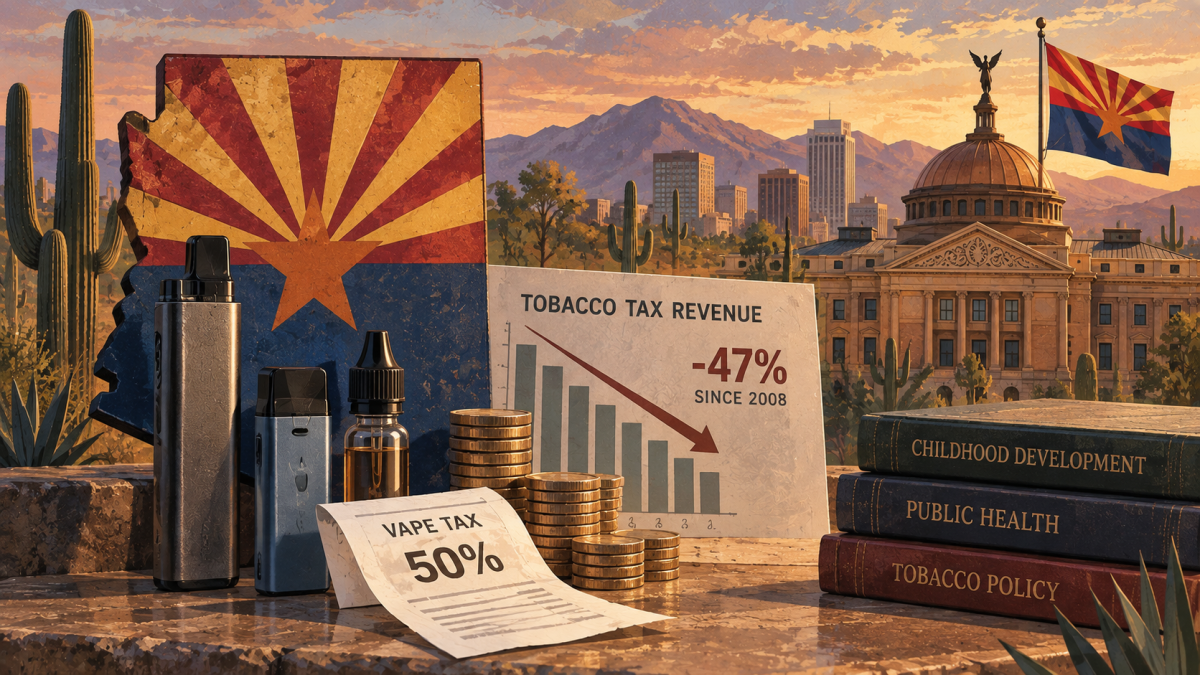
Arizona Turns to a 50% Retail Vape Tax as Tobacco Tax Revenue Falls 47% From 2008
Arizona's First Things First is pushing for an excise tax equal to 50% of the retail price of vaping products, estimating that the measure could generate about $100 million annually. The agency says its tobacco-tax revenue has fallen 47% from 2008 levels. Arizona has attempted to broaden its nicotine tax base in each of the past two years: a 2025 bill proposed a 50% wholesale-price tax, while a 2026 measure shifted to a 50% retail-price tax covering alternative nicotine products and vapor products. Separately, the state enacted HB 4001 this year to establish a new licensing and sales framework for alternative nicotine products.
Sep.21
Ireland’s Vape Tax Raises €22 Million in Nine Months as Government Considers 2027 Budget Changes
According to Irish media outlets Highland Radio and BreakingNews.ie, the Irish government is considering whether to adjust vape tax policy in the 2027 Budget. The tax has generated about €22 million ($24 million) in revenue during its first nine months. While no increase has been confirmed, the revenue performance could influence future fiscal discussions. Any tax rise could increase product costs and potentially affect retail prices.
Aug.12
How Many Nicotine Pouch Factories Does Europe Need? 2Firsts Interviews AIRSCREAM on the OEM Market
At InterTabac 2026, nicotine pouch growth was visible not only in brands but across equipment, raw materials and OEM manufacturing. 2Firsts interviewed AIRSCREAM commercial head Steve Moore on how many pouch factories Europe may ultimately need and where manufacturers can differentiate, from formulation and flavour to pouch materials, production consistency and customer service. The category continues to expand, but questions remain over future capacity, consolidation and the long-term structure of the supply chain.
Sep.18
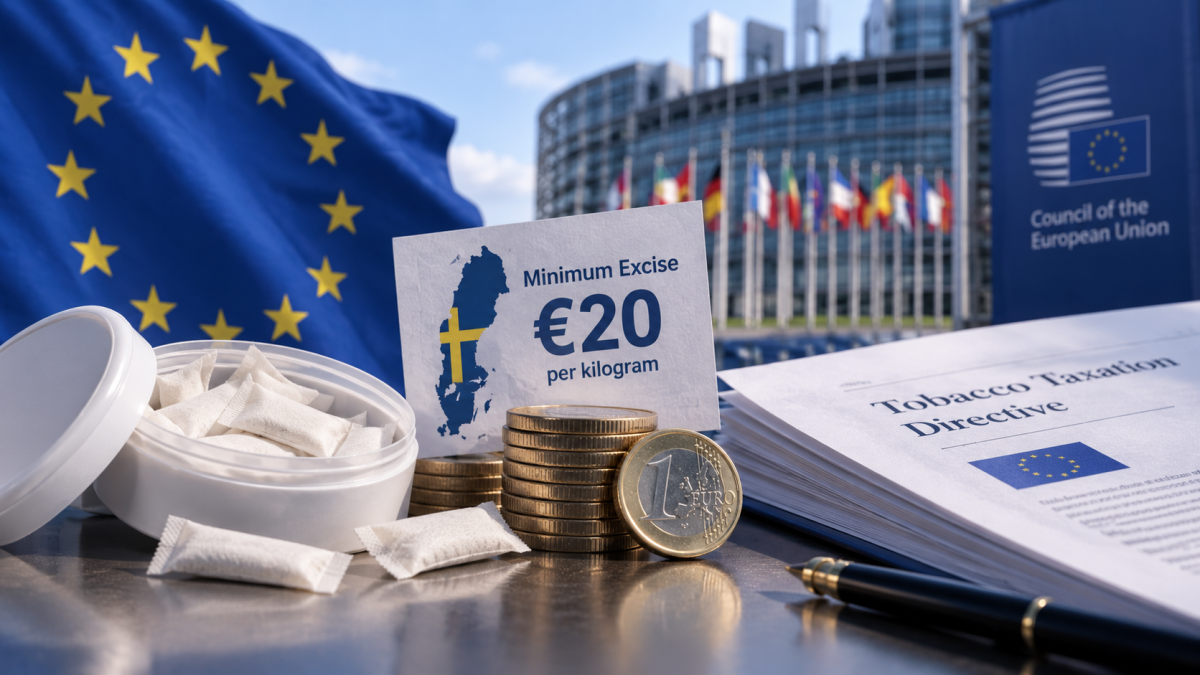
EU Tobacco Tax Reform Targets November Push as Sweden Holds Nicotine-Pouch Minimum at €20 per Kilogram
The Irish presidency of the Council of the European Union is using bilateral talks to push the bloc’s Tobacco Taxation Directive toward a political agreement in November. According to Law360, citing an EU official, Sweden is unwilling to accept a minimum excise threshold above €20 per kilogram for nicotine pouches. Council negotiations have already lowered the European Commission’s original proposal, but a May 2026 presidency compromise still set the minimum at 10% of the tax-inclusive retail price or €30 per kilogram in 2028-29, with higher levels later.
Market
Sep.17 by 2Firsts Perspectives
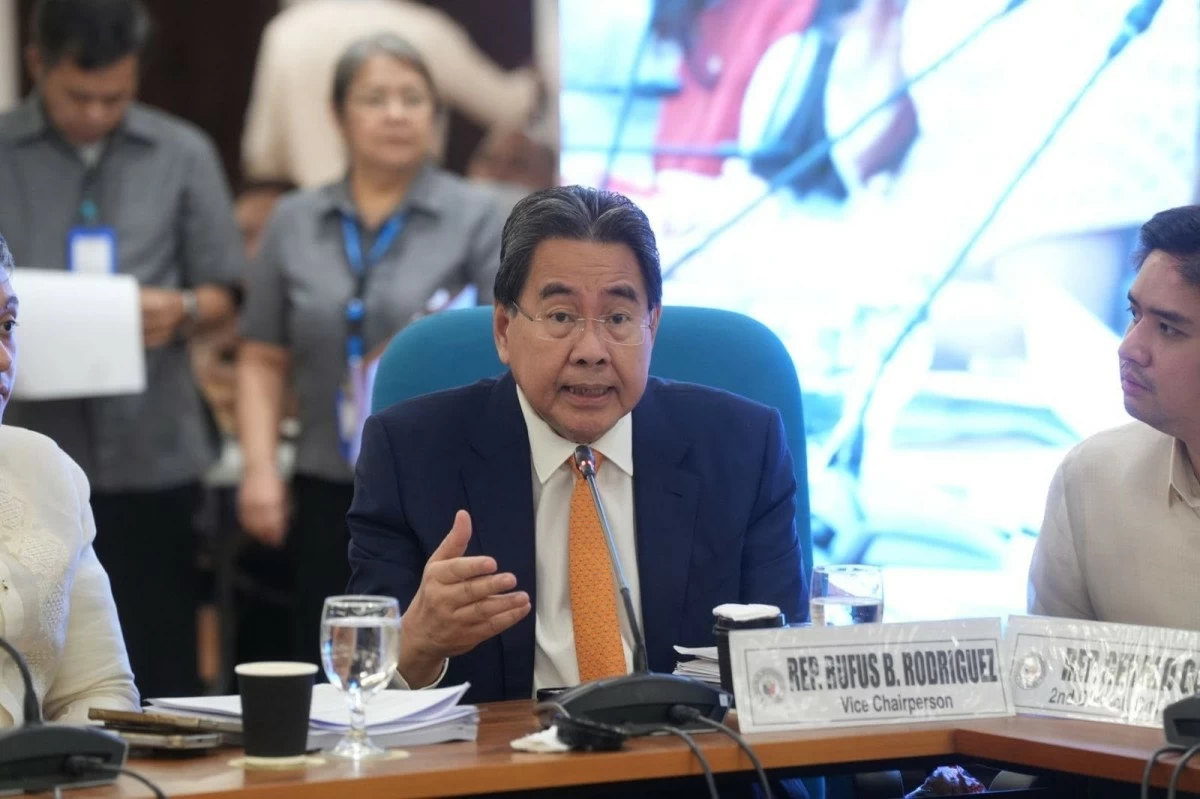
Philippines Weighs Unified Vape Tax as Lawmakers Back Risk-Based Rates and Government Seeks to Fill ₱66 Billion Revenue Gap
Philippine lawmakers are considering an overhaul of the country's vape excise-tax regime to eliminate the wide gap between taxes on nicotine salt and freebase nicotine liquids and reduce incentives for misdeclaration. House Bill 5364, filed by Rep. Rufus Rodriguez and Rep. Maximo Rodriguez Jr., would impose a unified ₱10-per-milliliter tax on vapor products, with 5% annual increases beginning in 2027. Rodriguez says the proposal could generate an average ₱6 billion in annual collections from 2027 through 2030. The debate comes as the Philippine government considers tobacco, vape and other health-tax reforms to help offset around ₱66 billion in revenue expected to be forgone under a proposed tax-relief package.
Aug.18
Reuters Tracks Big Tobacco’s Shift Beyond Cigarettes as Nicotine Pouches Vie for the Next Growth Curve
As cigarette markets face long-term pressure, major tobacco companies are increasingly turning to nicotine pouches in search of growth beyond combustible tobacco. Reuters has examined whether nicotine pouches can become the next strategic growth platform for companies including Philip Morris International, British American Tobacco and Japan Tobacco. PMI strengthened its position through the acquisition of Swedish Match and its ZYN brand, while BAT and JTI continue expanding their own nicotine pouch portfolios. The category has gained attention because of its smoke-free, device-free format, but regulation, youth-use concerns and market scale will determine whether it can become a long-term growth engine.
Regulations
Aug.18 by 2Firsts Perspectives