Malaysia's Terengganu state to ban e-cigarette sales from August 2025.

Apr.25.2025
Malaysia's Terengganu state to ban e-cigarette sales from August 2025.
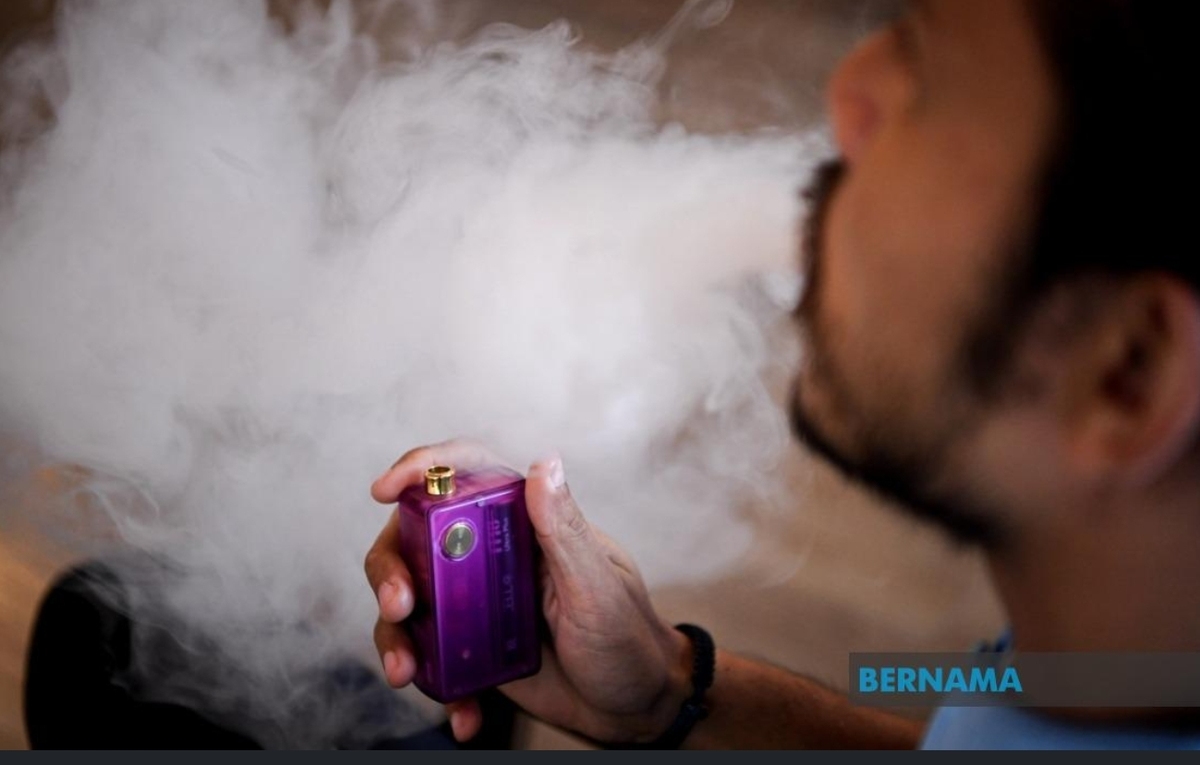
The Terengganu state government in Malaysia has announced a comprehensive ban on the sale of electronic cigarettes (vapes) effective August 2025, alongside stricter commercial licensing regulations. Authorities will impose strict penalties on violators, including fines and license revocation. To mitigate economic impacts, the state will offer entrepreneurship training programs and support for affected businesses to transition to alternative opportunities.

Key points:

·The Terengganu state government in Malaysia has decided to ban the sale of e-cigarettes starting in August 2025 in order to protect public health, especially the younger generation.


·The regulations for business licenses will be strengthened, and any businesses continuing to sell e-cigarettes will face legal sanctions.


·The government is providing training and new business opportunities to e-cigarette industry stakeholders affected by regulations.


According to the Malaysian national news agency (BERNAMA), Datuk Wan Sukairi Wan Abdullah, chairman of the local government, housing, and health committee in Terengganu state, announced that the state executive council has decided to ban the sale of e-cigarette products starting in August 2025.


This decision is seen as a proactive measure by the state government to curb the negative impact of e-cigarettes on public health, especially among the younger generation. The state government will maintain current policies and not approve any commercial premises for the sale of e-cigarette products, in accordance with existing regulations enforced by all local authorities in Terengganu. To ensure a comprehensive ban on the sale of e-cigarettes, requirements for commercial licenses will be further enhanced.


Wan Sukairi stated that businesses continuing to sell e-cigarettes after the ban takes effect will face severe penalties under the Local Government Act 171 of 1976, including fines, closures, and court prosecution. In a show of the government's firm stance, the Terengganu government has decided not to accept any sponsorships from e-cigarette manufacturers or distributors.


Wan Sukai said that there will be a three-month transition period from May 1 to July 31, 2025, before the full implementation of enforcement activities on August 1, 2025. This period will include regulations related to e-cigarette business advertisements.


Currently, the Malaysian government has not completely banned e-cigarettes. However, in December 2015, Sultan Ibrahim of Johor issued a decree to completely ban the sale of e-cigarettes in the state, with the decree officially implemented in 2016, making Johor the first state in Malaysia to ban the sale of e-cigarettes. The Kelantan state government then followed suit and from January 1, 2016, stopped issuing e-cigarette sales licenses in order to gradually enforce a complete ban on e-cigarettes. These three states collectively make up 21% of Malaysia's total population.


We welcome news tips, article submissions, interview requests, or comments on this piece.

Please contact us at info@2firsts.com, or reach out to Alan Zhao, CEO of 2Firsts, on LinkedIn


Notice

1.  This article is intended solely for professional research purposes related to industry, technology, and policy. Any references to brands or products are made purely for objective description and do not constitute any form of endorsement, recommendation, or promotion by 2Firsts.

2.  The use of nicotine-containing products — including, but not limited to, cigarettes, e-cigarettes, nicotine pouchand heated tobacco products — carries significant health risks. Users are responsible for complying with all applicable laws and regulations in their respective jurisdictions.

3.  This article is not intended to serve as the basis for any investment decisions or financial advice. 2Firsts assumes no direct or indirect liability for any inaccuracies or errors in the content.

4.  Access to this article is strictly prohibited for individuals below the legal age in their jurisdiction.


Copyright


This article is either an original work created by 2Firsts or a reproduction from third-party sources with proper attribution. All copyrights and usage rights belong to 2Firsts or the original content provider. Unauthorized reproduction, distribution, or any other form of unauthorized use by any individual or organization is strictly prohibited. Violators will be held legally accountable.

For copyright-related inquiries, please contact: info@2firsts.com


AI Assistance Disclaimer


This article may have been enhanced using AI tools to improve translation and editorial efficiency. However, due to technical limitations, inaccuracies may occur. Readers are encouraged to refer to the cited sources for the most accurate information.

We welcome any corrections or feedback. Please contact us at: info@2firsts.com

U.S. Appeals Court Says BAT Must Face Class Action Over Cigarette Labels
A U.S. appeals court ruled that British American Tobacco (BAT) must continue facing a consumer class action lawsuit over cigarette labels. The ruling allows the case to proceed but does not determine that BAT violated the law or is liable for damages. The case highlights ongoing legal risks facing major tobacco companies related to product labeling, consumer disclosures and product liability claims.
Jul.31
JT Plans ¥800 Billion Investment in Heated Tobacco Over Three Years, Betting on Ploom as Second Growth Engine
Japan Tobacco Inc. (JT) CEO Takehiko Tsutsui said the company plans to invest about ¥800 billion (approximately US$5.4 billion) in heated tobacco products over three years through 2028, aiming to establish Ploom as a second growth engine after combustible cigarettes. Tsutsui said Ploom AURA helped JT increase its share of Japan’s heated tobacco market to 15.8% in the first quarter of 2026. Ploom products are now available in 29 markets, with Ploom AURA sold in 25 markets including Japan. JT also plans to continue its cigarette business while positioning its food operations, particularly frozen noodle products in North America, as another growth opportunity.
Jul.23
2Firsts Data | China’s Vape Exports Rise 3.1% in H1 2026 as 6-Methyl Nicotine-Related Products Surge 65.2%
China’s vape exports showed resilience in the first half of 2026 after a short-term shock from China’s export rebate adjustment. But customs data points to more than a simple recovery: the structure of growth is changing. Vaping devices and atomization hardware emerged as the strongest growth driver, while nicotine-containing vaping products remained broadly stable. Meanwhile, nicotine substitute-related products represented by 6-methyl nicotine expanded rapidly, becoming a new category to watch for both industry and regulators. After the U.S. market went through a cycle of shortages, replenishment and inventory rebuilding in 2025, China’s vape supply chain is entering a new phase of reallocation.
Special Report
Jul.20
Special Report | China Opens Draft Mandatory Heated Cigarette Standard for Comment, Multiple Heating Technologies Remain in Scope
China’s State Tobacco Monopoly Administration (STMA) has released a draft mandatory national standard for heated cigarettes, setting out detailed requirements for tobacco sticks, heating devices and aerosols. The proposal treats the stick and device as parts of the same product system, focuses on minimum safety and quality requirements, and leaves several heating architectures within scope.
Special Report
Jul.29
Canada Vape Enforcement Action Puts VAPME Website, Trademark and China Supply-Chain Links in Focus
Quebec police seized about 300,000 suspected illegal vape products and froze more than C$1.8 million in funds. Local media said vapme.ca, a website selling flavoured vape products, was shut down during the operation.
Regulations
Jun.18
2FIRSTS EXCLUSIVE|China Breaks Up $6.8 Million Illegal Hookah Tobacco Operation as Market Expands
Chinese authorities have dismantled an illegal hookah tobacco operation worth more than 46 million yuan ($6.8 million), detaining five foreign suspects and seizing over 500,000 boxes of tobacco paste. The case comes as hookah expands across China’s nightlife sector and attracts overseas operators, including former vaping entrepreneurs. It also raises a central regulatory question: whether waterpipe tobacco will follow China’s private-sector e-cigarette licensing model or be reserved for the state tobacco system, as with nicotine pouches, in the years ahead.
Jul.31