According to a report from Globe Newswire on December 23rd, the New Civil Liberties Alliance (NCLA) has filed an amicus brief in support of the defendant with the Supreme Court of the United States. In the case of FDA v. Reynolds Tobacco (R.J. Reynolds Vapor Company), NCLA is urging the Supreme Court to reject the FDA's attempt to shift blame.
Although the law allows "any person adversely affected by an FDA order" to challenge the agency's decisions in court, the FDA claims that the ban on e-cigarette sales has not adversely affected such retailers. The FDA is asking the Supreme Court to limit the right to challenge to parties involved in the administrative process. The alliance argues that this restriction would conflict with relevant laws and precedents set by the Supreme Court.
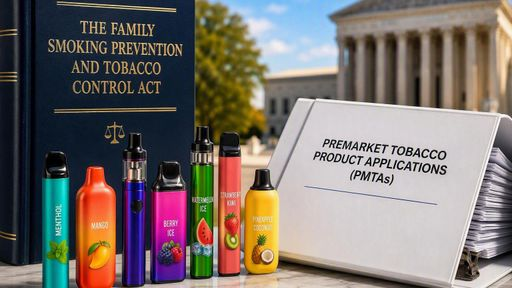
According to the Family Smoking Prevention and Tobacco Control Act (TCA), manufacturers need to obtain FDA approval in order to sell certain e-cigarette products. Reynolds Tobacco applied to sell its "Vuse" e-cigarette, but the FDA rejected the application, meaning all retailers are now prohibited from selling the "Vuse" e-cigarette. However, these products are allowed to be sold during the application review process. As a result, some retailers have filed a petition with the United States Court of Appeals for the Fifth Circuit, claiming that the FDA's decision has caused them financial losses and has had a detrimental impact on their businesses.
However, the FDA rejected their request, believing that under the Family Smoking Prevention and Tobacco Control Act (TCA), the only individuals considered to be "adversely affected" are manufacturers who have submitted applications but were denied. The Fifth Circuit Court of Appeals in the United States rejected the FDA's argument, ruling that retailers are eligible to petition for review of the order. The Supreme Court agreed to hear the case in order to resolve the issue and determine whether the venue court is appropriate.
This case could have far-reaching implications. If the FDA successfully narrows the scope of the judicial review provision of the Family Smoking Prevention and Tobacco Control Act (TCA), similar restrictions could be applied to many other regulations across the country that provide for judicial review of agency actions. This would prevent many individuals and businesses affected by agency actions from seeking relief in federal courts.
NCLA CEO Mark Chenoweth stated,
E-cigarette regulation is not a concern of the NCLA. However, the key issue in this case is whether retailers can sue the FDA for orders prohibiting the sale of their products, or if only manufacturers can challenge such orders. Since Congress has enacted judicial review regulations that encompass retailers, they should be able to sue the FDA directly.
According to reports, NCLA is a nonprofit public interest law firm ranked 501, founded by Columbia Law School professor Philip Hamburger in 2017. The organization aims to challenge what it perceives as the unlawful use of executive power.
We welcome news tips, article submissions, interview requests, or comments on this piece.
Please contact us at info@2firsts.com, or reach out to Alan Zhao, CEO of 2Firsts, on LinkedIn
Notice
1. This article is intended solely for professional research purposes related to industry, technology, and policy. Any references to brands or products are made purely for objective description and do not constitute any form of endorsement, recommendation, or promotion by 2Firsts.
2. The use of nicotine-containing products — including, but not limited to, cigarettes, e-cigarettes, nicotine pouchand heated tobacco products — carries significant health risks. Users are responsible for complying with all applicable laws and regulations in their respective jurisdictions.
3. This article is not intended to serve as the basis for any investment decisions or financial advice. 2Firsts assumes no direct or indirect liability for any inaccuracies or errors in the content.
4. Access to this article is strictly prohibited for individuals below the legal age in their jurisdiction.
Copyright
This article is either an original work created by 2Firsts or a reproduction from third-party sources with proper attribution. All copyrights and usage rights belong to 2Firsts or the original content provider. Unauthorized reproduction, distribution, or any other form of unauthorized use by any individual or organization is strictly prohibited. Violators will be held legally accountable.
For copyright-related inquiries, please contact: info@2firsts.com
AI Assistance Disclaimer
This article may have been enhanced using AI tools to improve translation and editorial efficiency. However, due to technical limitations, inaccuracies may occur. Readers are encouraged to refer to the cited sources for the most accurate information.
We welcome any corrections or feedback. Please contact us at: info@2firsts.com