Disclaimer: The content of this article is based on conversations with professionals from 2Firsts and the Philippines. All information and opinions expressed only represent their personal views. Readers should exercise caution when reading and citing this information.
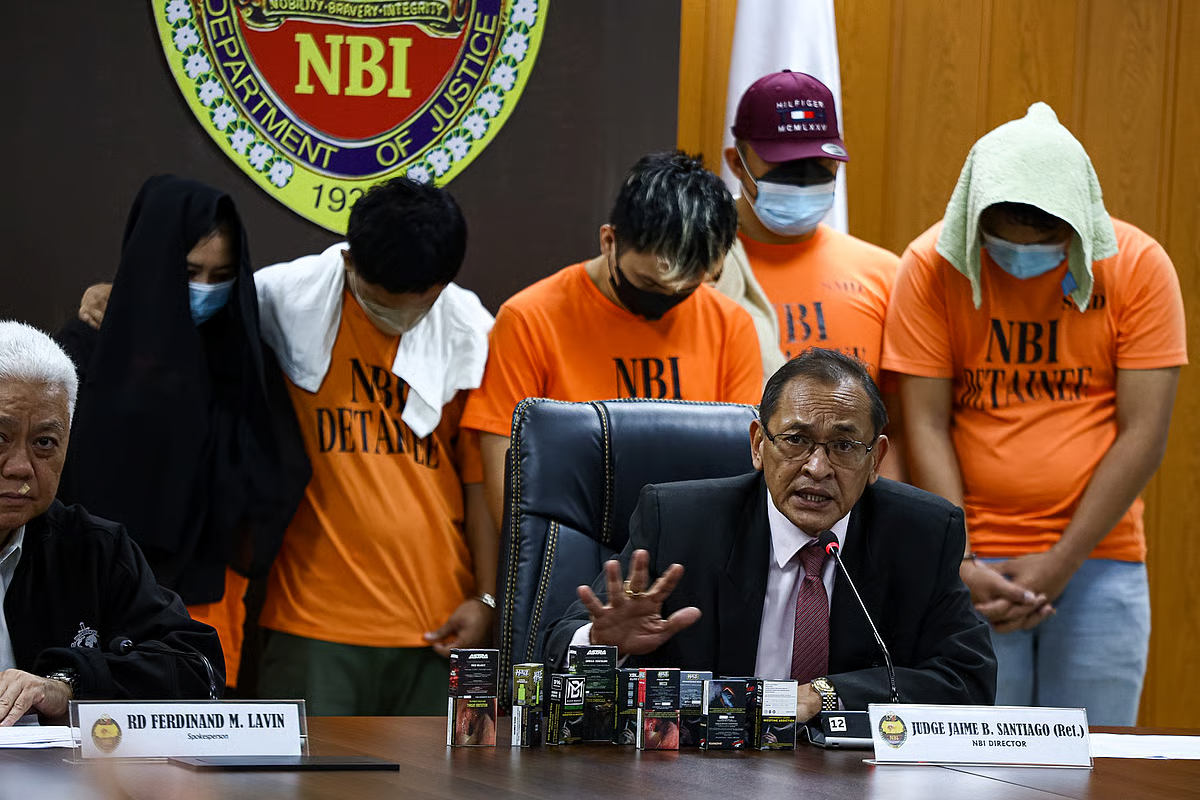
【By 2Firsts, Vincent, from Shenzhen】Since July, the National Bureau of Investigation (NBI) in the Philippines has been actively involved in enforcing e-cigarette laws, launching large-scale operations in multiple areas and seizing illegal e-cigarette products worth over 44 million pesos (approximately $790,000). However, behind the series of raids and arrests is not simply a regulatory crackdown, but rather the Philippine e-cigarette industry entering a period of uncertainty and chaos.
2Firsts had an in-depth discussion with Lucas, who has years of experience in the e-cigarette industry in the Philippines. Lucas, a Chinese national, is involved in e-cigarette trade in the Philippines. In light of the current enforcement storm sweeping through the Philippines, Lucas believes this is not just a simple market regulation, but rather an industry entering a "chaotic period" characterized by political pressure, intensified enforcement, and market instability.
Based on the conversation with Lucas, 2Firsts synthesized his core viewpoints and analysis on the current situation as follows:
Core Change: From Business Fines to Criminal Charges
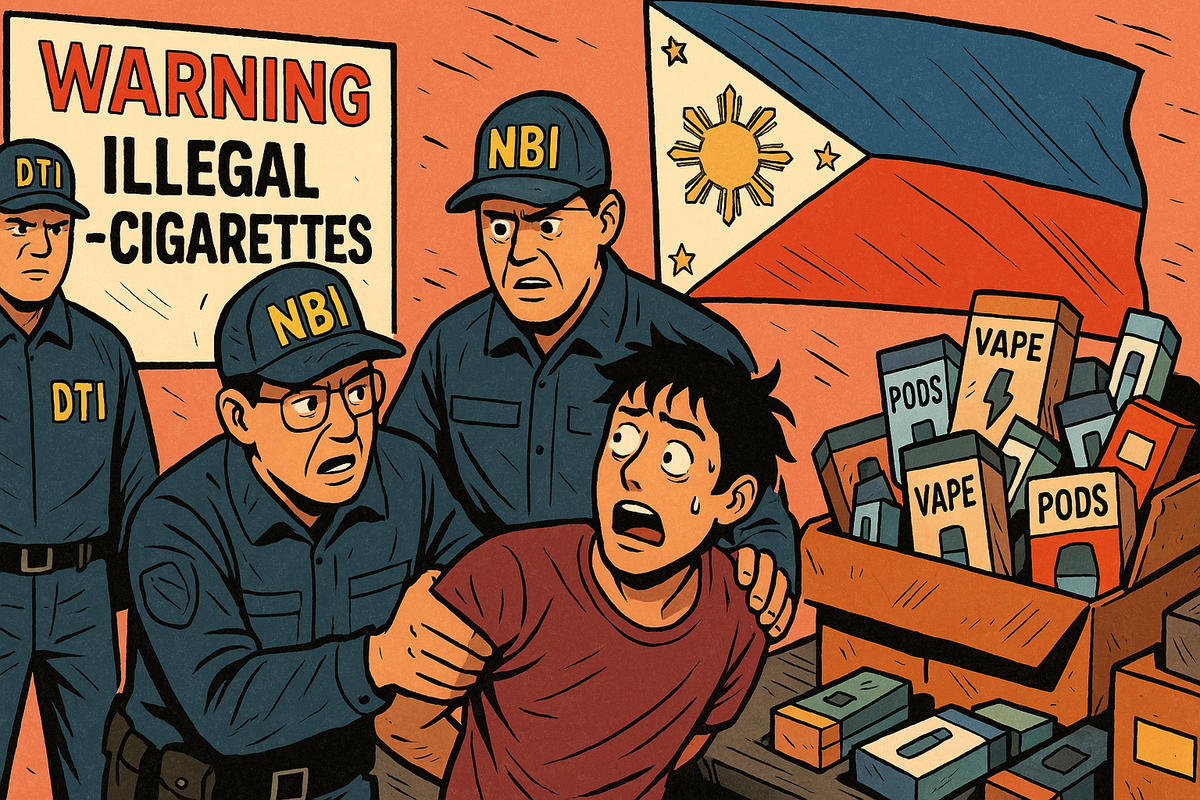
According to Lucas' analysis, the most dangerous signal in recent Philippines e-cigarette enforcement is the transfer of enforcement authority from the DTI (Department of Trade and Industry) to the NBI (National Bureau of Investigation). He pointed out, "This means that e-cigarette violations have shifted from the realm of commerce to being officially classified as criminal offenses with 'smuggling characteristics'".
The key difference lies in the fact that cases handled by the DTI under the E-cigarette law (RA 11900) are mostly commercial violations, typically resulting in fines and product confiscation. On the other hand, the NBI primarily deals with cases of large-scale smuggling, organized crime, and other serious illegal activities, which fall under criminal offenses.
In his view, the direct trigger of this shift was the out-of-control black market of e-cigarettes. When a large number of unregistered products flood the market through online channels, traditional business regulations focused on fines have proven ineffective.
The intervention of the NBI signals the government's determination to use higher levels of judicial force to crack down. Therefore, Lucas emphasizes that when the NBI takes the lead, individuals involved will no longer face just fines, but serious consequences including arrest and criminal charges.
Motivation Behind: Pressure on "achievements" and Interests to "Clear the Field" After Election Losses
Regarding the reason for the significant regulatory changes happening now, Lucas believes that it is closely related to the governance pressure facing the current President Marcos administration.
He analyzed that the Marcos administration did not perform as expected in the midterm elections and needs to present a strong record of governance before the 2028 general elections. Tackling the rampant black market of e-cigarettes, which is highly concerning to the public, has become an ideal starting point.
Furthermore, Lucas also pointed out the complex relationship between politics and business in the Philippines.
"At present, the nine major e-cigarette brands in the Philippines that have obtained legal licenses are more or less affiliated with the factional powers of the Marcos and former President Duterte political families."
He cited an example that the recently legalized "vape" in the Philippines has been linked to the Marcos family, with family members found to be holding positions in the company.
Based on this, Lucas and many industry professionals have reached a consensus: the government may be using the removal of illegal products as an opportunity to clear out existing license holders in order to solidify their market share.

Market Situation: Price Collapse and the Black market of "Diving"
According to Lucas' observations of the market, the price system of e-cigarettes in the Philippines is experiencing a breakdown following the intensive law enforcement in 2024. A large number of authentic, counterfeit, and even excess production "factory goods" from China continue to flood in, triggering a vicious price war.
He cited the popular local brand Black as an example, noting that its pod price has been slashed from over 250 pesos to 150 pesos.
"The entire e-cigarette industry in the Philippines has been severely impacted, especially for Filipino businessmen acting as middlemen, who are hesitant to make purchases."
Faced with a crackdown, the black market has not disappeared but has quickly shifted into a "submerged" state. Lucas observed that many previously public Facebook sales pages have been closed, with transactions moving to private one-on-one chats, creating a highly trust-dependent "regular customer model" where new customers can hardly enter.
In contrast, the situation of legitimate distributors is extremely difficult.
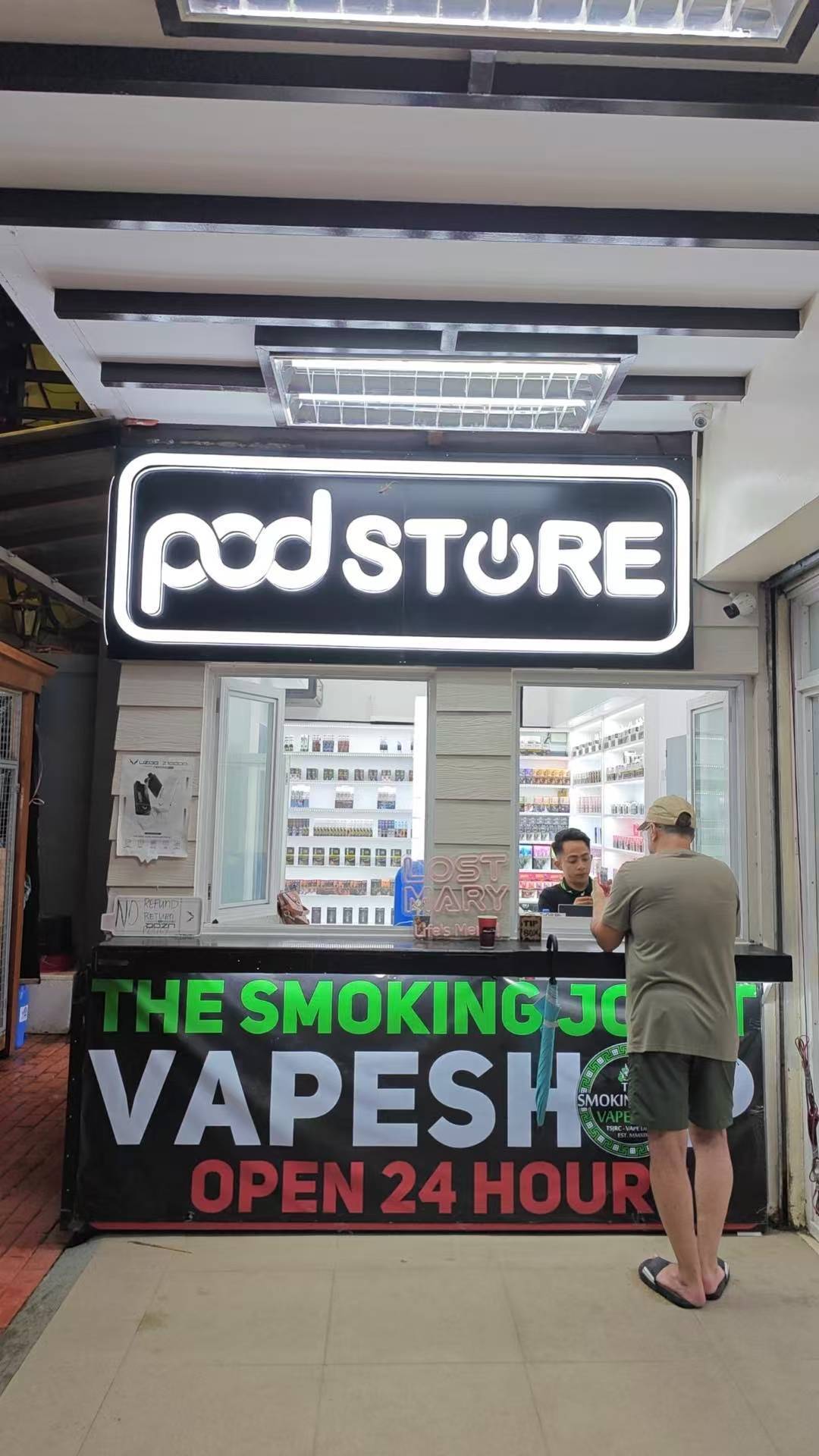
Lucas estimates that the “white market” (legal market) has shrunk by roughly two-thirds to three-quarters, falling into a “chicken ribs” dilemma—unprofitable yet hard to abandon.
Law Enforcement Focus: Targeting the "Rear Warehouses" of the Economic Circle
Lucas also analyzed the geographical targets of the current crackdown.
He pointed out that the operation is focused on provinces surrounding Metro Manila such as Laguna and Cavite, which is not a coincidence. These areas are at the core of the Central Luzon economic zone with a population of nearly 30 million, making them ideal storage bases.
"Adjacent to Manila, these areas have numerous industrial parks and storage facilities, with cheaper rents and convenient transportation," Lucas analyzed, "Goods can be quickly distributed to various corners of Manila from here."
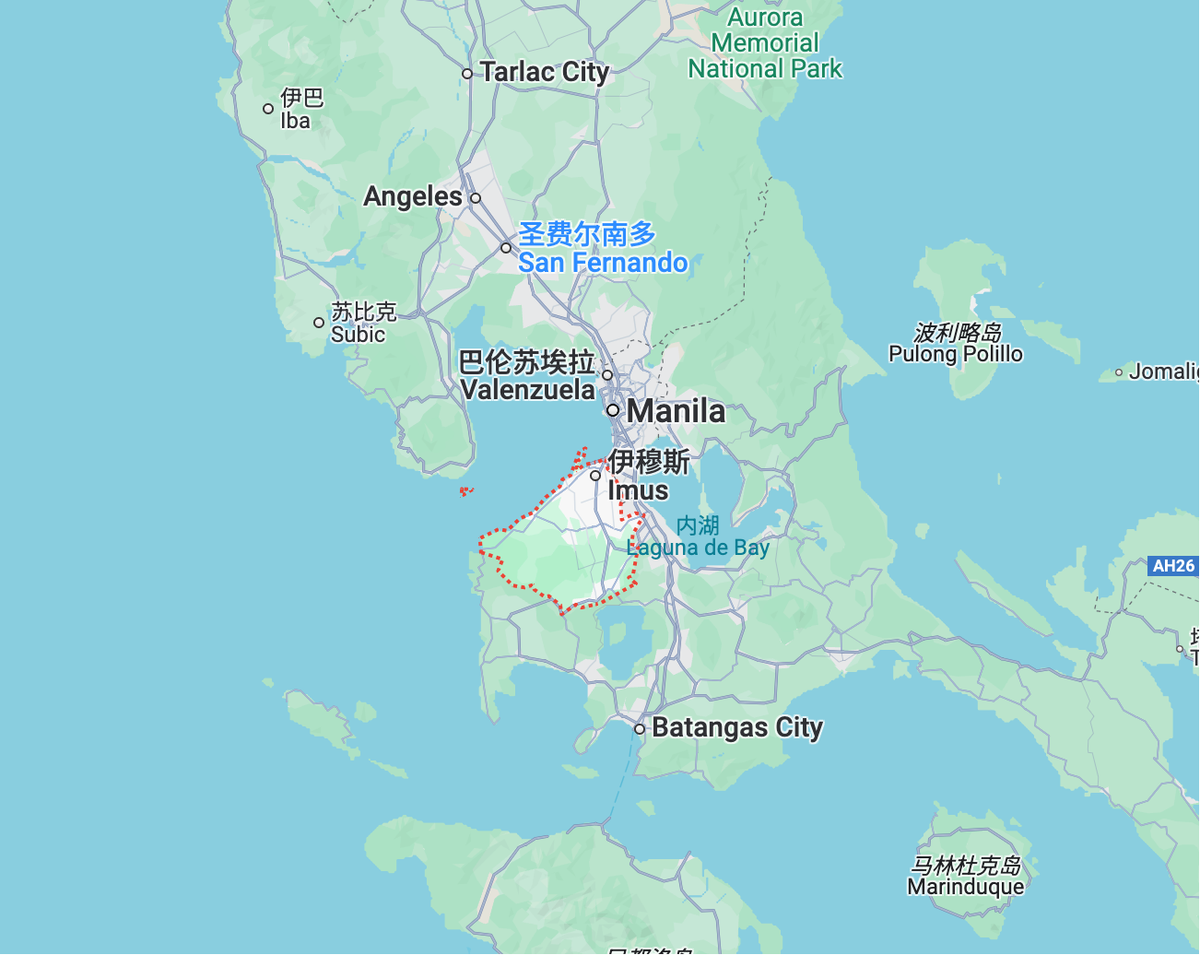
These satellite provinces of Manila are playing the role of "rear warehouses" in providing goods to the capital's huge consumer market. Therefore, the NBI's direct crackdown on these warehouses is aimed at cutting off the illegal supply chain at its source.
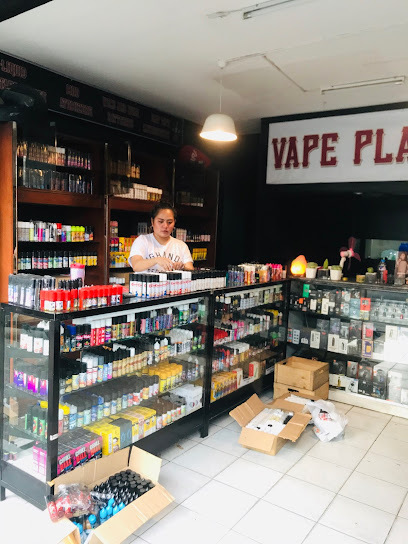
Lucas is not optimistic about the future of the industry. He believes that the market is currently in a "period of chaos", and until the regulatory system is solidified, it poses high risks and uncertainties for all professionals. The e-cigarette market in the Philippines is likely to continue moving forward amidst turmoil.
2Firsts will continue to focus on reporting on the Philippine market. By delivering more comprehensive, accurate facts and forward-looking perspectives, we aim to further drive the development of compliant markets. If you have any news tips or comments, please contact us at: info@2firsts.com.
We welcome news tips, article submissions, interview requests, or comments on this piece.
Please contact us at info@2firsts.com, or reach out to Alan Zhao, CEO of 2Firsts, on LinkedIn
Notice
1. This article is intended solely for professional research purposes related to industry, technology, and policy. Any references to brands or products are made purely for objective description and do not constitute any form of endorsement, recommendation, or promotion by 2Firsts.
2. The use of nicotine-containing products — including, but not limited to, cigarettes, e-cigarettes, nicotine pouchand heated tobacco products — carries significant health risks. Users are responsible for complying with all applicable laws and regulations in their respective jurisdictions.
3. This article is not intended to serve as the basis for any investment decisions or financial advice. 2Firsts assumes no direct or indirect liability for any inaccuracies or errors in the content.
4. Access to this article is strictly prohibited for individuals below the legal age in their jurisdiction.
Copyright
This article is either an original work created by 2Firsts or a reproduction from third-party sources with proper attribution. All copyrights and usage rights belong to 2Firsts or the original content provider. Unauthorized reproduction, distribution, or any other form of unauthorized use by any individual or organization is strictly prohibited. Violators will be held legally accountable.
For copyright-related inquiries, please contact: info@2firsts.com
AI Assistance Disclaimer
This article may have been enhanced using AI tools to improve translation and editorial efficiency. However, due to technical limitations, inaccuracies may occur. Readers are encouraged to refer to the cited sources for the most accurate information.
We welcome any corrections or feedback. Please contact us at: info@2firsts.com