Smoking epidemic in Tunisia: Urgent need for action

Jun.05.2024
Smoking epidemic in Tunisia: Urgent need for action
Tunisia faces smoking epidemic with half of deaths caused by smoking, urges stricter laws and public engagement for prevention.

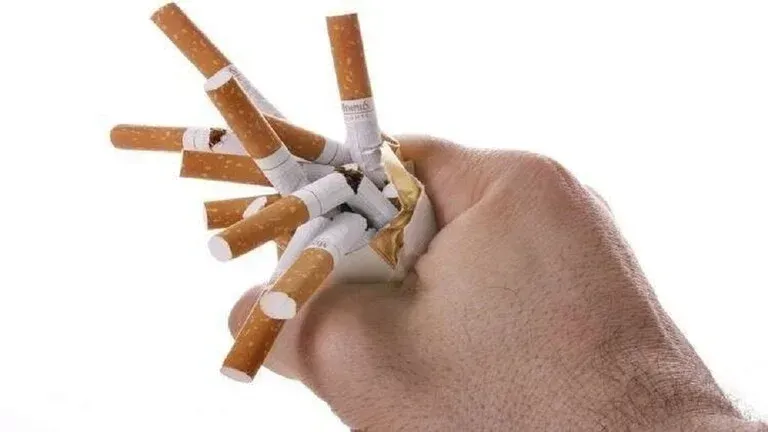
According to a recent report by Mustaqila, Alfa Saiedi, Head of Noncommunicable Diseases and Mental Health at the World Health Organization office in Tunisia, stated that nearly half of the death cases in Tunisia are caused by smoking, accounting for 20% of the country's total number of deaths.


The official mentioned that new tobacco products, especially e-cigarettes and "heated tobacco," are particularly popular among adolescents aged 15 to 17. A study conducted by the Tunisian Ministry of Health in 2021 found that in this age group, the prevalence of e-cigarette use has reached 17%, surpassing traditional cigarette use at 14%. Moreover, smoking is becoming increasingly common among women in Tunisia, with 25% of adolescents aged 15 to 17 being smokers.


Despite the Tunisian government's active efforts to reduce the harm of smoking, the implementation of Law No. 17 of 1998 on preventing smoking hazards still has deficiencies at the enforcement level. Although the law explicitly prohibits smoking, the sale of tobacco to minors, especially in educational and university institutions, has not been effectively curbed.


In response to World No Tobacco Day, the Tunisian Ministry of Health is working to revise anti-smoking laws. In light of this, Sayidi is calling on all parties to actively participate, including the government in implementing and enforcing strict laws, international organizations to provide professional support, civil society to carry out related awareness campaigns, and individuals to consistently reject smoking and uphold a healthy lifestyle.


We welcome news tips, article submissions, interview requests, or comments on this piece.

Please contact us at info@2firsts.com, or reach out to Alan Zhao, CEO of 2Firsts, on LinkedIn


Notice

1.  This article is intended solely for professional research purposes related to industry, technology, and policy. Any references to brands or products are made purely for objective description and do not constitute any form of endorsement, recommendation, or promotion by 2Firsts.

2.  The use of nicotine-containing products — including, but not limited to, cigarettes, e-cigarettes, nicotine pouchand heated tobacco products — carries significant health risks. Users are responsible for complying with all applicable laws and regulations in their respective jurisdictions.

3.  This article is not intended to serve as the basis for any investment decisions or financial advice. 2Firsts assumes no direct or indirect liability for any inaccuracies or errors in the content.

4.  Access to this article is strictly prohibited for individuals below the legal age in their jurisdiction.


Copyright


This article is either an original work created by 2Firsts or a reproduction from third-party sources with proper attribution. All copyrights and usage rights belong to 2Firsts or the original content provider. Unauthorized reproduction, distribution, or any other form of unauthorized use by any individual or organization is strictly prohibited. Violators will be held legally accountable.

For copyright-related inquiries, please contact: info@2firsts.com


AI Assistance Disclaimer


This article may have been enhanced using AI tools to improve translation and editorial efficiency. However, due to technical limitations, inaccuracies may occur. Readers are encouraged to refer to the cited sources for the most accurate information.

We welcome any corrections or feedback. Please contact us at: info@2firsts.com

Italy and Greece Oppose Ireland’s Nicotine Product Bill, Raising EU Regulatory Concerns
Italy and Greece have opposed Ireland’s proposed nicotine product regulations, arguing that the measures could affect EU market coordination and the free movement of products. Ireland plans to introduce stricter rules covering nicotine products including vapes and nicotine pouches, with measures involving packaging, marketing and sales controls. The dispute highlights differences among EU member states between stronger public health protections and maintaining regulatory consistency within the bloc’s single market.
Jul.29
Nicotine Pouches Gain Ground in U.S. Convenience Stores as Vape Unit Sales Fall 14%
According to convenience retail publication CStore Decisions, U.S. convenience store tobacco categories are undergoing a structural shift. Based on Circana OmniMarket Total U.S. Convenience data for the 52 weeks ending June 14, 2026, cigarettes remained the largest category with $50.8 billion in sales, but unit sales declined 5.3%. Electronic smoking devices and vaping products also declined, while modern oral nicotine products continued to grow, with nicotine pouch sales rising 29% in dollars and 17% in units. Retailers said changing consumer preferences are reshaping tobacco product assortments at convenience stores.
Regulations
Aug.07
UK HMRC Plans 30,000 Retail Enforcement Actions as Illegal Tobacco and Vape Sellers Face Tougher Crackdown
The UK government has announced that HM Revenue & Customs (HMRC) will carry out more than 30,000 interventions targeting businesses and retail premises during the 2026-2027 financial year. The actions will focus on tax fraud, illegal goods sales and businesses involved in unlawful activities through retail channels. The government said illegal tobacco and illegal vape sales remain areas of concern. The move shows that UK enforcement against illegal nicotine products is expanding from import and supply channels toward retail-level oversight, alongside the upcoming introduction of the Vaping Products Duty.
Jul.24
Special Report | Russia, Ukraine and Belarus Launch Fresh Push to Rein in Vaping
Russia, Ukraine and Belarus are tightening vape regulation through different tools, from Ukraine’s stronger enforcement push and Belarus’s proposed advertising restrictions to Russia’s new GOST standard and regional sales-ban mechanism. As black-market concerns persist, some Russian experts argue that China’s tightly controlled but legalised model — built around licensing, traceability and taxation — may offer a more effective alternative to blanket prohibition.
Jul.15
JAMA Issues First U.S. Clinical Guidance on Vaping for Smoking Cessation, Urging Complete Switch From Cigarettes
JAMA has published a Special Communication offering systematic recommendations for U.S.-based clinicians on the use of nicotine e-cigarettes in adult smoking cessation. Developed by the Harm Reduction Workgroup of the Society for Research on Nicotine and Tobacco’s Treatment Research Network, the paper recommends including e-cigarettes alongside FDA-approved cessation medications in risk-benefit discussions. It cites high-certainty evidence that nicotine e-cigarettes achieve higher quit rates than nicotine replacement therapy and evidence suggesting efficacy comparable to highly effective medications such as varenicline and cytisine. For adults who choose vaping to quit, the authors recommend FDA-authorized products, sufficient nicotine delivery and a rapid, complete transition away from cigarettes rather than prolonged dual use.
Aug.13
 Arizona Rules Extend Across Alternative Nicotine Supply Chain, With Licensing From 2028
Arizona Rules Extend Across Alternative Nicotine Supply Chain, With Licensing From 2028
Arizona Governor Katie Hobbs has signed HB 4001, bringing alternative nicotine products under a new state regulatory framework that will require maker and distributor licensing from 2028 and ban packaging designs that could appeal to minors.
Regulations
Jun.23