South Korean Ministry of Economy and Finance Denies Pushing for Amendments to Tobacco Business Act or Tax Measures to Fill Fiscal Gap

Nov.13.2024
South Korean Ministry of Economy and Finance Denies Pushing for Amendments to Tobacco Business Act or Tax Measures to Fill Fiscal Gap
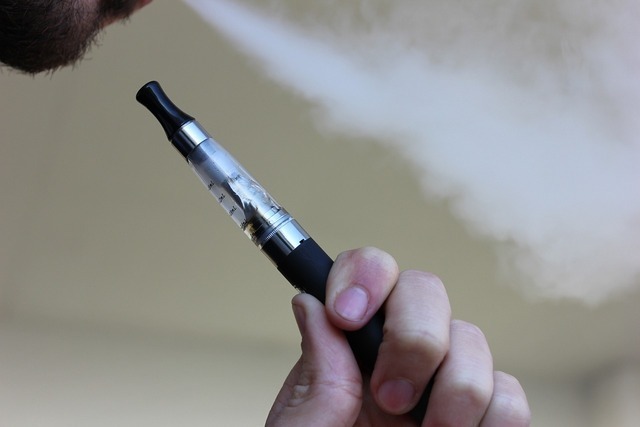
The South Korean Ministry of Economy and Finance has denied rumors that e-cigarette taxes would be used to fill the fiscal gap, emphasizing that the authority to make taxation decisions lies with the National Assembly and that the related legislative process is unrelated to the fiscal deficit.

According to a report on Korea.KR, the official South Korean e-government website, on November 12, there were previous reports suggesting that a study on the harmful effects of vapes, initiated by the South Korean government, could potentially be used as the basis for vape taxation. Some viewpoints speculated that this could be preparation for "filling the tax revenue gap." (Read more: South Korea speeds up synthetic nicotine legislation, regulatory report due year-end)


In response, the Ministry of Planning and Finance clarified that the decision on the taxation of synthetic nicotine vapes falls within the legislative domain of the National Assembly. The reports claiming that the government is pushing for amendments to the Tobacco Business Act and strengthening taxation to fill the fiscal gap are false.

We welcome news tips, article submissions, interview requests, or comments on this piece.

Please contact us at info@2firsts.com, or reach out to Alan Zhao, CEO of 2Firsts, on LinkedIn


Notice

1.  This article is intended solely for professional research purposes related to industry, technology, and policy. Any references to brands or products are made purely for objective description and do not constitute any form of endorsement, recommendation, or promotion by 2Firsts.

2.  The use of nicotine-containing products — including, but not limited to, cigarettes, e-cigarettes, nicotine pouchand heated tobacco products — carries significant health risks. Users are responsible for complying with all applicable laws and regulations in their respective jurisdictions.

3.  This article is not intended to serve as the basis for any investment decisions or financial advice. 2Firsts assumes no direct or indirect liability for any inaccuracies or errors in the content.

4.  Access to this article is strictly prohibited for individuals below the legal age in their jurisdiction.


Copyright


This article is either an original work created by 2Firsts or a reproduction from third-party sources with proper attribution. All copyrights and usage rights belong to 2Firsts or the original content provider. Unauthorized reproduction, distribution, or any other form of unauthorized use by any individual or organization is strictly prohibited. Violators will be held legally accountable.

For copyright-related inquiries, please contact: info@2firsts.com


AI Assistance Disclaimer


This article may have been enhanced using AI tools to improve translation and editorial efficiency. However, due to technical limitations, inaccuracies may occur. Readers are encouraged to refer to the cited sources for the most accurate information.

We welcome any corrections or feedback. Please contact us at: info@2firsts.com

South Korea Vape Strategies Diverge as BAT Reconsiders Exit and PMI Takes VEEV to About 14,000 Stores
BAT Rothmans says it previously considered exiting South Korea's vaping market because of competitive pressure from unregulated products, but is now reassessing conditions following changes to the country's nicotine regulatory framework. Vuse and other BAT vaping products remain available through existing distribution channels. The statement followed a South Korean media report that interpreted BAT's broader withdrawal from selected Vapour markets as a full exit from South Korea. Meanwhile, Philip Morris International launched VEEV inPRIME in the country in June and began expanding distribution to around 14,000 convenience stores and other retail channels in July. The contrasting moves highlight differing investment strategies as South Korea's regulated vaping market evolves.
Aug.14
VEEV Arrives in South Korea, Completing PMI’s IQOS-ZYN-VEEV Portfolio
Philip Morris Korea has officially launched its VEEV e-vapor brand in South Korea, introducing both the VEEV inPRIME device and VEEBI inPRIME pods. The launch further expands PMI’s smoke-free portfolio in Korea, alongside its IQOS heated tobacco products and ZYN nicotine pouches.
Jun.16
Special Report | China Opens Draft Mandatory Heated Cigarette Standard for Comment, Multiple Heating Technologies Remain in Scope
China’s State Tobacco Monopoly Administration (STMA) has released a draft mandatory national standard for heated cigarettes, setting out detailed requirements for tobacco sticks, heating devices and aerosols. The proposal treats the stick and device as parts of the same product system, focuses on minimum safety and quality requirements, and leaves several heating architectures within scope.
Special Report
Jul.29
Ohio Supreme Court Weighs Whether State Consumer Law Can Restrict Flavored Vape Sales
The Ohio Supreme Court is hearing a case involving flavored vape sales and whether state authorities can use consumer protection laws to take action against retailers selling unauthorized vape products. Ohio officials argue that selling unauthorized flavored vapes may constitute consumer deception, while retailers argue that tobacco product regulation falls under federal Food and Drug Administration (FDA) authority and that states cannot impose additional restrictions through consumer laws. The case could affect the scope of state-level vape regulation across the United States.
Aug.06
JTI Makes Third Bet on South Korea as Ploom AURA Enters a Market Dominated by lil and IQOS
Japan Tobacco International is stepping up its heated tobacco push in South Korea with Ploom AURA. Since its official launch in April 2026, the device's limited First Edition and Glacier White version have sold out, while distribution has expanded across Seoul, Incheon, Gyeonggi Province and airport duty-free channels. The rollout marks JTI's third major attempt to build a stronger heated tobacco position in South Korea, following Ploom TECH in 2019 and Ploom X Advanced in 2024. At the group level, JT plans to invest about ¥800 billion, approximately $5 billion, in reduced-risk products from 2026 through 2028, with heated products and Ploom identified as its primary investment priority.
Aug.14
UK Proposes Stricter Vape Packaging Rules as Retailers Warn of £330 Million Impact
The UK government has launched a nationwide consultation on vape packaging, appearance and retail displays, proposing tighter rules to reduce youth appeal while industry groups warn of significant compliance costs.
Innovation
Jul.20