Key Points
- Public health groups, pediatricians and parents sued the FDA on July 14, 2026.
- The lawsuit challenges the FDA’s May 2026 enforcement-priorities guidance for unauthorized ENDS and nicotine pouch products.
- The FDA says it does not intend to prioritize enforcement against certain pending-application products under specific conditions.
- Plaintiffs say the policy violates the Tobacco Control Act and the Administrative Procedure Act.
- The FDA guidance states that enforcement discretion is not marketing authorization and does not predict future authorization.
2Firsts
July 15, 2026
According to Reuters, a coalition of public health organizations, pediatricians and parents sued the U.S. Food and Drug Administration on July 14, 2026, challenging the agency’s May enforcement policy for e-cigarettes and nicotine pouches. The lawsuit, filed in the U.S. District Court for the District of Maryland, targets FDA guidance on enforcement priorities for certain products marketed without premarket authorization.
Plaintiffs Say FDA Policy Allows Unauthorized Products to Remain on the Market
A statement from Truth Initiative says the lawsuit challenges the FDA’s new enforcement policy, which the plaintiffs say allows e-cigarette and nicotine pouch products to be marketed and sold without the scientific review and marketing authorization required by federal law.
The plaintiffs argue that the FDA’s May 2026 enforcement guidance violates federal law by permitting the marketing of unauthorized tobacco products, including products the FDA has repeatedly found to pose substantial risks to youth.
The plaintiffs include the Campaign for Tobacco-Free Kids, the American Academy of Pediatrics, the American Cancer Society Cancer Action Network, the American Heart Association, the American Lung Association, Truth Initiative, Parents Against Vaping, a pediatrician with expertise in adolescent tobacco use, and a parent whose children became addicted to nicotine after using flavored e-cigarettes.
FDA Guidance Sets Conditions for Lower Enforcement Priority
The FDA website shows that the agency issued its guidance, titled “Enforcement Priorities for Certain New Tobacco Products Marketed Without Premarket Authorization,” on May 8, 2026. The guidance applies to certain electronic nicotine delivery systems, or ENDS, and oral nicotine pouch products marketed without premarket authorization.
According to the FDA, for unauthorized ENDS and nicotine pouch products, the policy describes circumstances in which the agency does not intend to prioritize enforcement. These include products with pending applications that have been accepted and filed, or products with pending and accepted supplemental PMTAs, provided that, for non-tobacco-flavored ENDS products, the FDA has determined the application contains data needed to evaluate whether the product is appropriate for the protection of public health.
The FDA said it may still prioritize enforcement against products with elements presumed to appeal to minors, such as cartoon-like fictional characters, products disguised as something other than vaping products, or products resembling children’s toys, phones or gaming platforms. The agency also said it would consider factors such as high nicotine content, serious adverse experiences, lack of child-resistant packaging or potential fire hazards.
Core Dispute: Enforcement Discretion or Market Safe Harbor
The plaintiffs argue that the FDA’s guidance effectively creates an enforcement safe harbor for certain unauthorized e-cigarette and nicotine pouch products. Truth Initiative’s statement says the lawsuit alleges that the guidance permits potentially thousands of tobacco products to enter or remain on the market without the marketing granted order required by the Tobacco Control Act.
The plaintiffs also argue that the policy violates the Administrative Procedure Act because the FDA bypassed public notice-and-comment requirements before issuing the policy. They further argue that the guidance is arbitrary and capricious because it provides no meaningful justification for creating an enforcement safe harbor or changing the agency’s longstanding approach to flavored products.
Another point of dispute is the FDA’s planned public list. The agency says it will create and maintain a public webpage identifying manufacturers and products that it does not intend to prioritize for enforcement under the policy. Plaintiffs argue that such a list could facilitate the continued sale of unauthorized products.
FDA Says the Policy Is Not Marketing Authorization
The FDA states in the guidance that the fact an e-cigarette or nicotine pouch product falls within the policy has no bearing on whether the product is likely to receive premarket authorization. In other words, lower enforcement priority is not the same as marketing authorization and does not mean that the product has passed PMTA review.
The FDA says it remains committed to combating illicit tobacco products and will focus on the most deceptive and dangerous products, worst actors and egregious conduct involving unauthorized ENDS and nicotine pouch products, including products that fail to submit PMTAs, counterfeit products and misdeclared products.
The agency also said it will continue working with the U.S. Department of Justice, Customs and Border Protection and other federal agencies to seize and destroy illegal products at the border before they reach shelves or underage users.
Same Court Previously Rejected FDA’s 2017 E-Cigarette Transition Policy
The plaintiffs noted that the lawsuit was filed in the U.S. District Court for the District of Maryland, the same court that struck down a 2017 FDA guidance that had allowed most e-cigarettes to remain on the market for an extended period without authorization. In that earlier case, the court found that the agency exceeded its statutory authority and that the policy contributed to rising youth e-cigarette use.
That history gives the new lawsuit broader regulatory significance. The dispute is not only about whether specific products may remain on shelves, but also about whether the FDA can use enforcement discretion to alter the market-access status of unauthorized new tobacco products.
FDA Policy Had Already Drawn Internal and External Scrutiny
The Associated Press previously reported that senior officials at the FDA’s tobacco center were blindsided by the new guidance, which was seen as opening the door to more unauthorized e-cigarettes and nicotine pouches entering the U.S. market. AP reported that some enforcement officials were not consulted before the policy was issued and that the guidance bypassed the public comment process.
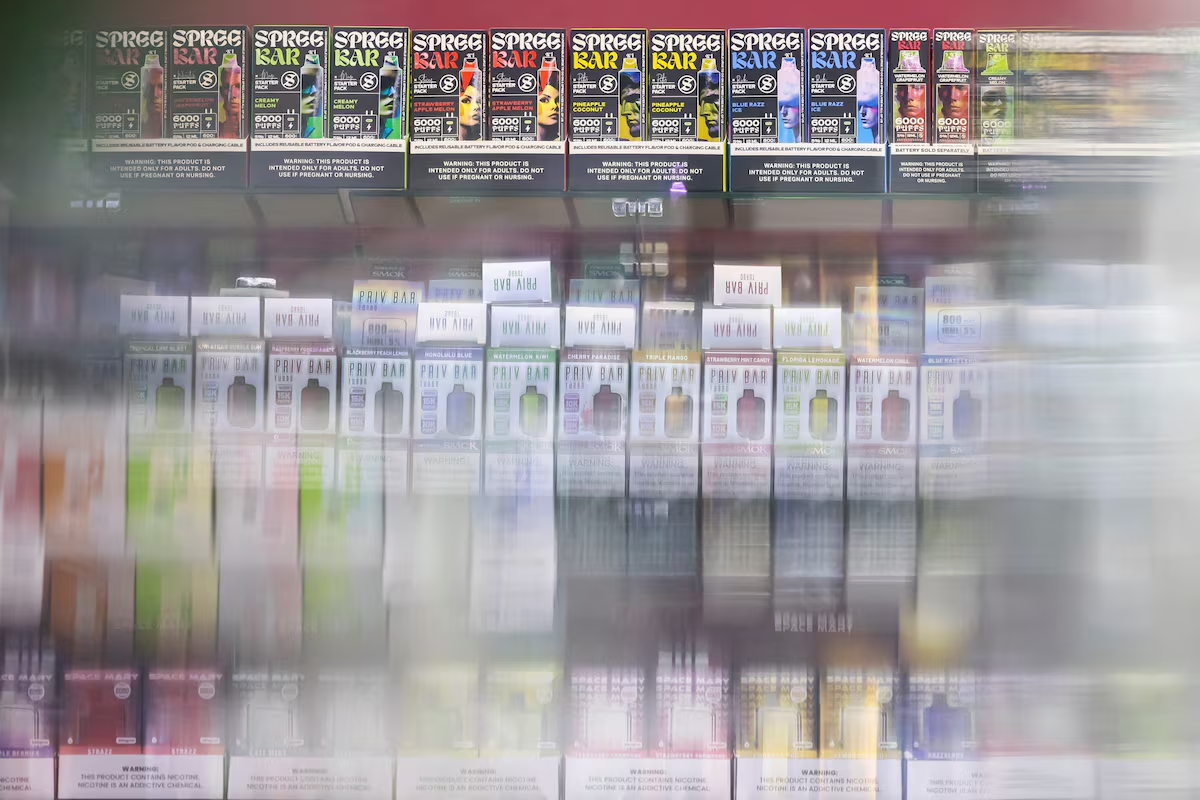
AP also reported that the FDA has struggled for years to police the U.S. vaping market. The agency has authorized vaping products from a small number of companies while rejecting many applications, largely because fruit, candy and other sweet flavors were deemed appealing to minors. Unauthorized disposable flavored vapes, however, remain widely available in U.S. retail channels.
The lawsuit shows that the U.S. debate over e-cigarette and nicotine pouch regulation has moved from administrative policy to judicial review. For industry participants with pending PMTAs or supplemental PMTAs, the case could affect whether products receive de facto market space during review. For public health groups, the central question is whether the FDA has weakened the premarket scientific review system required by the Tobacco Control Act.
Follow 2Firsts for the latest updates on global tobacco harm reduction, nicotine products and regulatory developments.
Cover Image source: Reuters
Disclaimer
This article is provided solely for professional research, industry discussion, and informational purposes. Any references to brands, companies, products, technologies, or policies are made for factual reporting and analytical purposes only, and do not constitute endorsement, recommendation, promotion, or advertising by 2Firsts.
Nicotine-containing products, including but not limited to cigarettes, e-cigarettes, heated tobacco products, and nicotine pouches, carry significant health risks. Readers are responsible for complying with all applicable laws and regulations in their respective jurisdictions, including age restrictions and access limitations.
The information contained in this article should not be regarded as investment, legal, medical, regulatory, or commercial advice. While 2Firsts strives to ensure the accuracy and reliability of its content, it does not assume liability for any direct or indirect loss arising from errors, omissions, inaccuracies, or reliance on the information contained herein.
This article is not intended for individuals below the legal age for accessing tobacco or nicotine-related information in their jurisdiction.
Copyright Notice
This article is either original content produced by 2Firsts or content reproduced, translated, summarized, or adapted from third-party sources with attribution where applicable. The intellectual property rights of the original content remain with 2Firsts or the respective original rights holders.
No individual or organization may copy, reproduce, distribute, republish, modify, translate, or otherwise use this content without prior authorization. Any unauthorized use may result in legal action.
For copyright-related inquiries, corrections, or removal requests, please contact: info@2firsts.com.
AI-Assisted Translation and Editing Notice
Portions of this article may have been translated, edited, or reviewed with the assistance of artificial intelligence tools to improve efficiency and readability. Due to the limitations of AI-assisted translation and editing, discrepancies, omissions, or inaccuracies may exist when compared with the original source.
Where applicable, readers are advised to refer to the original source for the most complete and accurate information. If you identify any errors or believe that any content infringes upon your rights, please contact us at info@2firsts.com, and we will review and address the matter promptly.