Teens Are Four Times More Likely to Smoke When Parents Do

MarketInnovation
Jul.21.2022
Top medical experts have warned that teens whose parents or primary caregivers smoke, are four times more likely to take up smoking than than their peers whose parents do not.

UK government campaign titled “Better Health Smoke Free” aims to educate adult smokers about how their habit can influence younger people to take up smoking.
Teens Are Four Times More Likely to Smoke When Parents Do

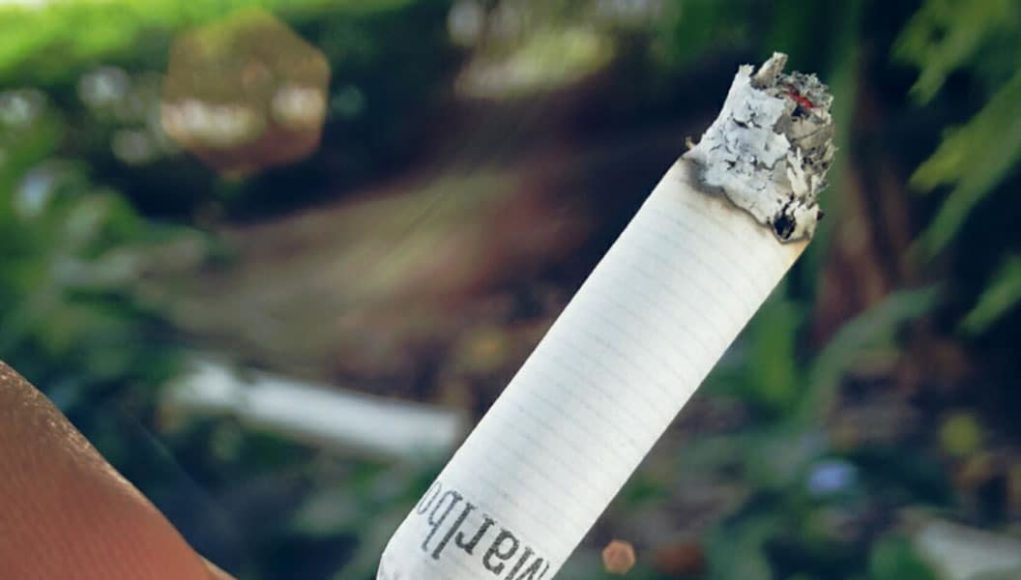
A new campaign released by the UK government titled “Better Health Smoke Free” aims to educate on how adult smokers can influence younger people to take up the habit. Featuring a number of experts on the topic, the Better Health Smoke Free campaign explains that research has shown that teens whose primary caregiver smoked were more than twice as likely to have tried cigarettes (26% vs 11% ) and four times as likely to be a regular smoker (4.9% vs 1.2%).


In a film released last year, the NHS and behavioural health experts discussed the link between smoking parents and the subsequent likelihood of their children to smoke. The speakers included GP Dr Nighat Arif, child psychologist Dr Bettina Hohnen, and smoking cessation experts Professor Nick Hopkinson and Dr Anthony Laverty of Imperial College London, who urged parents to act as positive role models by quitting smoking.


Parliamentary Under Secretary of State and Minister for Vaccines and Public Health, Maggie Throup MP, added that now a particularly good time to give up smoking is the new year. “We know that many people make a quit attempt in January, and while there are so many good reasons to stop smoking for yourself, we hope that this new campaign – by highlighting the inter-generational smoking link with parents influencing their children – will be the added motivation many need to ditch the cigarettes for good this year,” she said.


“With so much help and support available for parents, carers and anyone looking to quit – including the NHS Quit Smoking app, support on Facebook, daily emails and texts, and an online Personal Quit Plan – you won’t be alone in your New Year’s resolution.”


Pregnant women should be offered financial incentives


In other news, the Royal College of Physicians (RCP) said that pregnant women who are unable to quit smoking should be offered financial incentives to help them achieve the goal. The RCP said that at any point of contact with the NHS, smokers should be provided with “opt-out smoking cessation services.” Moreover, said the group, bearing in mind that most smokers are often from “lower socio-economic groups”, pregnant women should be given financial incentives to motivate them in achieving the goal.


These suggestions were put forward as part of a report compiled by the RCP, addressing what can be done to achieve the government’s “Smoke Free 2030” target. Sadly recent data has indicated that as it stands the goal will not actually be achieved until 2050.


“The ability of the UK and other countries to rise to major public health challenges is beyond doubt; the Covid-19 pandemic, by far the biggest new challenge to UK and global health in decades, has attracted a public health and economic response of a scale unique in the modern era,” read the report. “Yet in 2020, when Covid-19 killed around 80,000 UK citizens, tobacco smoking killed 94,000.”


The content excerpted or reproduced in this article comes from a third-party, and the copyright belongs to the original media and author. If any infringement is found, please contact us to delete it. Any entity or individual wishing to forward the information, please contact the author and refrain from forwarding directly from here.

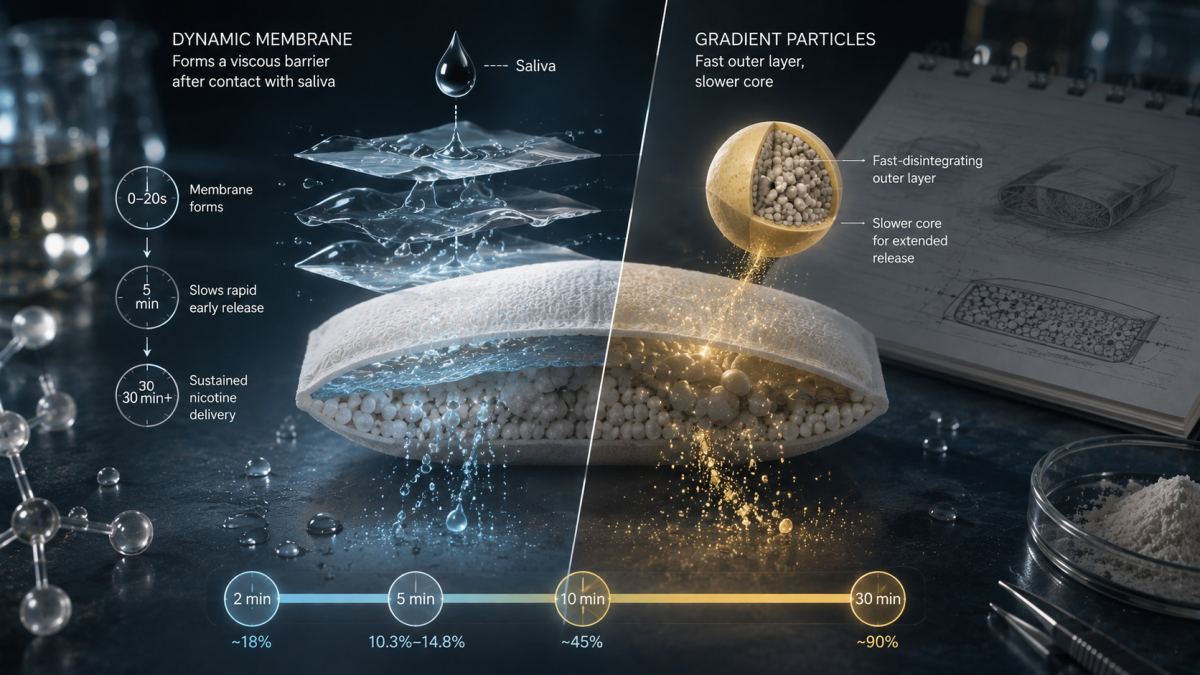
China Tobacco Hubei explores staged nicotine pouch delivery, using dynamic membranes to slow early release and gradient particles to sustain later delivery
China Tobacco Hubei Industrial Co., Ltd. disclosed several oral nicotine-related patent applications in August 2026, including two that approach staged nicotine release from different directions. One uses a high-viscosity membrane that forms inside the pouch after contact with saliva to slow rapid early release, while the other uses gradient particles with a faster-disintegrating outer layer and a slower core to create a fast-to-sustained release profile. Together, the filings explore how nicotine pouches could balance initial delivery with release later in use.
Sep.03
China’s Zhengzhou Tobacco Research Institute develops end-to-end heated tobacco analysis to trace aerosol compound origins
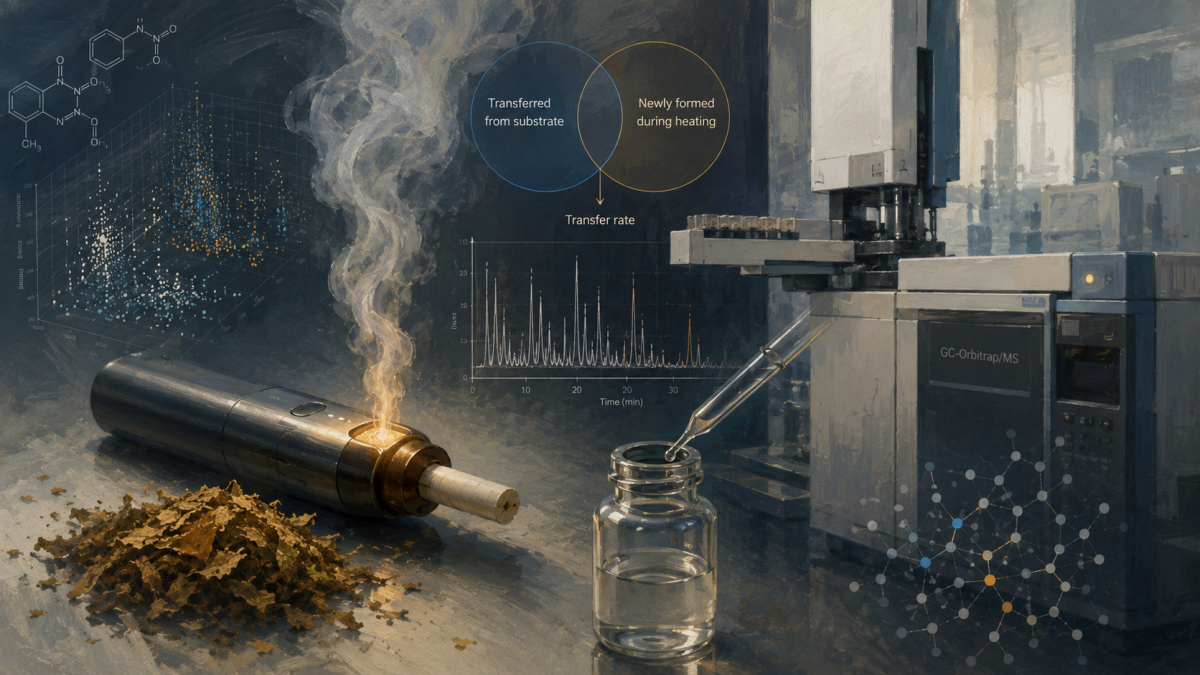
The Zhengzhou Tobacco Research Institute of China National Tobacco Corporation has filed a patent application for an end-to-end method to analyze the migration and transformation of chemical compounds in heated tobacco products. Using GC-Orbitrap/MS non-targeted analysis, the method compares tobacco substrate and aerosol samples to distinguish compounds transferred directly from the substrate from those newly formed during heating, while also calculating transfer rates. In an example involving nine heated tobacco products, the patent identified 17 newly formed thermal decomposition compounds and 38 transferred compounds.
Aug.13
FDA Revises Import Alert 98-07 Rules, Bringing May Enforcement Priorities Into Unauthorized ENDS Detentions
The U.S. Food and Drug Administration has revised the rules under Import Alert 98-07 to incorporate its May 2026 enforcement-priority policy for certain electronic nicotine delivery systems marketed without premarket authorization. The alert continues to allow detention without physical examination, or DWPE, for ENDS lacking required marketing authorization, while directing field divisions to apply the May risk-based framework. When necessary, detention or refusal decisions must also undergo review by the FDA's Center for Tobacco Products. Products including PACHA and Vuse Pro have already emerged as industry examples of the May policy, although enforcement discretion does not constitute FDA marketing authorization.
News
Sep.28 by 2Firsts Perspectives
NAS 2026 | Former FDA Tobacco Chief Mitch Zeller Calls for Shift From “End Game” to “End State”
At the 2026 New Approaches Summit in New York, former FDA Center for Tobacco Products Director Mitch Zeller called for the tobacco harm reduction debate to shift from the traditional “end game” toward defining a desired “end state.” He also highlighted unresolved concerns around dual use, argued that biomarkers of exposure may be more meaningful than cigarettes-per-day in assessing risk reduction, and said nicotine misperceptions remain a major barrier to public health progress.
Sep.25
Altria’s USSTC Starts $250 Million Kentucky Expansion, Adding More Than 200 Jobs
U.S. Smokeless Tobacco Company, an Altria Group company, has broken ground on an approximately $250 million manufacturing expansion in Hopkinsville, Kentucky. The roughly 270,000-square-foot facility is expected to create more than 200 jobs and absorb processing, manufacturing and packaging operations currently split between Hopkinsville and Nashville, Tennessee. USSTC previously said production at its Nashville facility is expected to wind down by early 2028. The project forms part of Altria’s broader effort to modernize and consolidate its U.S. smokeless tobacco manufacturing network.
Sep.10
Product | JNR Launches Shisha Hookah 70K E-Hookah With 60ml E-Liquid and 0.6% Nicotine
JNR has introduced the Shisha Hookah 70K, a high-capacity rechargeable disposable vape designed around a hookah-inspired experience. The device comes prefilled with 60ml of e-liquid at 6mg/ml (0.6%) nicotine strength, alongside a 1,000mAh rechargeable battery and a 0.38Ω single mesh coil. It also features adjustable airflow and battery and e-liquid level displays. JNR claims the device can deliver up to 70,000 puffs and offers more than 20 flavors. Retail listings for the product have appeared in markets including Tunisia.
Market
Aug.24 by 2Firsts Perspectives