Key points:
·Congressional Standoff: Senate Advocates for a total ban on e-cigarettes to protect youth health, while House of Representatives suggests regulating legalization to control smuggling and increase tax revenue.
·Health Organizations: Health organizations support the Senate's ban, but concerns about independence and one-sided health perspectives uncover complex issues and spark discussions.
·Decision-making Deadlock: Currently, there is no substantial solution, and the new government faces a balancing test. The issue will continue to be a focus in the future.
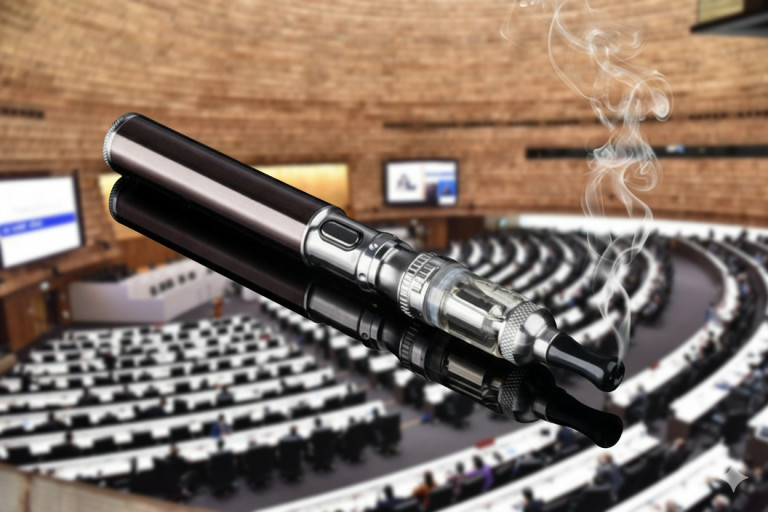
According to a report by siamrath on September 25, 2025, the issue of e-cigarettes has become a new focus in the Thai Parliament with the operation of the new government. The Senate and the House of Representatives are at odds over policy proposals for regulating e-cigarettes.
Last week, a hot topic of debate in the Senate was the report from the Senate Public Health Committee and the House Special Committee on Researching Thailand's e-cigarette laws and measures. These two reports revealed drastically contrasting views on how Thailand should regulate e-cigarettes. The Senate report advocated for a complete ban on the import and sale of e-cigarettes, while the House report proposed an alternative solution of legalizing e-cigarettes. Despite Thailand's ban on e-cigarettes for over a decade, issues of smuggling and sales continue to pose a threat to society, particularly to young people. The starkly different policy conclusions of the two reports reflect a lack of clear direction and solutions in addressing the issue of e-cigarette regulation.
A report from the House of Representatives acknowledges concerns about the health impacts of e-cigarettes and the access of teenagers to them, but points out that a total ban on e-cigarettes may not solve the issue of illegal imports and could result in loss of national tax revenue. The report suggests allowing the legal import and sale of e-cigarettes under strict regulation. This proposal has received support from a majority of members of the People's Party, including measures for nicotine control, restrictions on teen access, and product standards. This approach is similar to the practices of many developed countries such as the UK, New Zealand, Europe, and the US, which have embraced e-cigarettes as an alternative to smoking.
On the contrary, the core idea of the Senate report is to prioritize public health, particularly the health of young people, and to view e-cigarettes as a new threat that needs strict regulation. The report cites data showing that e-cigarettes contain nicotine and other harmful chemicals, and could potentially serve as a "gateway to addiction" for people who have never smoked before. The report emphasizes that this approach is in line with the measures recommended by the World Health Organization (WHO).
It is worth noting that health organizations have influenced the Senate report. These organizations play a crucial role in promoting and raising public awareness of the risks of e-cigarettes, often emphasizing the health risks of e-cigarettes for adolescents. This information is completely consistent with the report from the Senate committee.
However, the conclusion of the Senate report is evidently in line with the practices of health organizations, raising questions about whether such decisions are based on comprehensive information or ideological influences. The role of these organizations is worth noting, as solely health-based initiatives may fail to consider other complex aspects of choices and impacts, such as addressing corruption issues, teenagers accessing illegal products through various channels, and the economic impact of establishing black markets and underground markets, all of which are not taken into consideration.
We welcome news tips, article submissions, interview requests, or comments on this piece.
Please contact us at info@2firsts.com, or reach out to Alan Zhao, CEO of 2Firsts, on LinkedIn
Notice
1. This article is intended solely for professional research purposes related to industry, technology, and policy. Any references to brands or products are made purely for objective description and do not constitute any form of endorsement, recommendation, or promotion by 2Firsts.
2. The use of nicotine-containing products — including, but not limited to, cigarettes, e-cigarettes, nicotine pouchand heated tobacco products — carries significant health risks. Users are responsible for complying with all applicable laws and regulations in their respective jurisdictions.
3. This article is not intended to serve as the basis for any investment decisions or financial advice. 2Firsts assumes no direct or indirect liability for any inaccuracies or errors in the content.
4. Access to this article is strictly prohibited for individuals below the legal age in their jurisdiction.
Copyright
This article is either an original work created by 2Firsts or a reproduction from third-party sources with proper attribution. All copyrights and usage rights belong to 2Firsts or the original content provider. Unauthorized reproduction, distribution, or any other form of unauthorized use by any individual or organization is strictly prohibited. Violators will be held legally accountable.
For copyright-related inquiries, please contact: info@2firsts.com
AI Assistance Disclaimer
This article may have been enhanced using AI tools to improve translation and editorial efficiency. However, due to technical limitations, inaccuracies may occur. Readers are encouraged to refer to the cited sources for the most accurate information.
We welcome any corrections or feedback. Please contact us at: info@2firsts.com