Dilemma of BAT: Slayed Camel is the Last Straw to Crush Investors

BAT by 2FIRSTS.ai
Dec.11.2023
Dilemma of BAT: Slayed Camel is the Last Straw to Crush Investors
English tobacco company faces difficult choices as traditional business struggles and new sustainable ventures emerge.

In industries such as tobacco that are facing long-term decline, companies are confronted with critical strategic choices. They can extract maximum value from traditional assets, divest their equity, or they can seek to build new sustainable businesses.


Attempting to do both of these things brings about execution risks. The British American Tobacco company is facing a dilemma.


Its traditional business - which accounts for more than 85% of its total sales and generates all of its profits - is facing difficulties. BAT prefers to describe it as its burning business rather than tobacco. On Wednesday (December 6th), it disclosed market data which showed that the $2.5 billion write-down of assets in its US division and lower growth expectations have "incinerated" nearly one-tenth of the company's value.


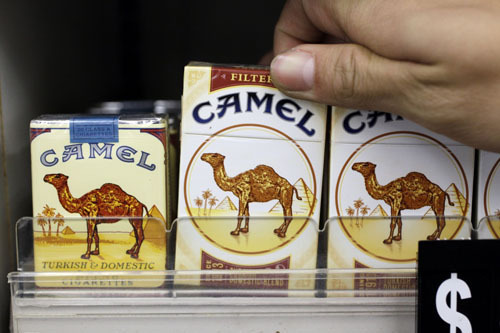
Especially in the United States, the surge in living costs and the emergence of disposable e-cigarettes have led to an 11% decline in cigarette sales in 2022. Tobacco companies like British American Tobacco have introduced luxury brands such as Camel to the consumer market, but they have not performed well.


The company's sales are expected to only meet the lower end of the 3-5% growth range this year. However, increasing prices has become challenging as sales have significantly declined. British American Tobacco currently projects below-average growth trends until 2026, which is also a factor reflected in its stock price.


In the rather murky world of accounting, this signifies that the conglomerate no longer considers its American brand to have perpetual value. By shortening its economic lifespan to 30 years, British American Tobacco has reduced the evaluation of its American brand from £67 billion to £25 billion, which was assessed when it acquired Reynolds American in 2017.


In a significant move, the BAT (Baidu, Alibaba, Tencent) invested $49.4 billion to acquire an additional 57.8% stake, thereby surpassing a total enterprise value of $100 billion, including debt. Although this write-down does not impact cash flow, it still represents half of British American Tobacco's current market capitalization.


E-cigarettes, heated tobacco products, and modern oral nicotine pouches are expected to break even this year, earlier than anticipated.


In reality, these smaller-scale businesses require a significant investment in marketing expenses, which has weakened their profit margins. The government's skepticism towards smokeless products also does not help improve the situation. Nevertheless, the British American Tobacco company still hopes for the popularity of smokeless products before the tobacco market phases out.


Given the poor shareholder return this year, even with a 10% yield, only a decrease in global interest rates can attract investors back to British American Tobacco.


We welcome news tips, article submissions, interview requests, or comments on this piece.

Please contact us at info@2firsts.com, or reach out to Alan Zhao, CEO of 2Firsts, on LinkedIn


Notice

1.  This article is intended solely for professional research purposes related to industry, technology, and policy. Any references to brands or products are made purely for objective description and do not constitute any form of endorsement, recommendation, or promotion by 2Firsts.

2.  The use of nicotine-containing products — including, but not limited to, cigarettes, e-cigarettes, nicotine pouchand heated tobacco products — carries significant health risks. Users are responsible for complying with all applicable laws and regulations in their respective jurisdictions.

3.  This article is not intended to serve as the basis for any investment decisions or financial advice. 2Firsts assumes no direct or indirect liability for any inaccuracies or errors in the content.

4.  Access to this article is strictly prohibited for individuals below the legal age in their jurisdiction.


Copyright


This article is either an original work created by 2Firsts or a reproduction from third-party sources with proper attribution. All copyrights and usage rights belong to 2Firsts or the original content provider. Unauthorized reproduction, distribution, or any other form of unauthorized use by any individual or organization is strictly prohibited. Violators will be held legally accountable.

For copyright-related inquiries, please contact: info@2firsts.com


AI Assistance Disclaimer


This article may have been enhanced using AI tools to improve translation and editorial efficiency. However, due to technical limitations, inaccuracies may occur. Readers are encouraged to refer to the cited sources for the most accurate information.

We welcome any corrections or feedback. Please contact us at: info@2firsts.com

After Apple Business Decline, South Korea’s ITM Semiconductor Expands KT&G Vape Supply Chain as Vape Revenue Rises 24.8%
South Korean electronics component supplier ITM Semiconductor is reshaping its business portfolio after a decline in Apple-related protection circuit business, expanding its supply of vape devices and cartridges to KT&G. According to News1 on August 18, 2026, ITM’s vape-related revenue rose 24.8% year on year to 75.5 billion won in the first half of 2026. The company began mass production of vape devices at its Cikarang, Indonesia facility in January 2026, strengthening export manufacturing capacity. Meanwhile, Samsung-related protection circuit sales continued to grow, providing support during the transition.
Aug.20
China Tobacco Hubei explores staged nicotine pouch delivery, using dynamic membranes to slow early release and gradient particles to sustain later delivery
China Tobacco Hubei Industrial Co., Ltd. disclosed several oral nicotine-related patent applications in August 2026, including two that approach staged nicotine release from different directions. One uses a high-viscosity membrane that forms inside the pouch after contact with saliva to slow rapid early release, while the other uses gradient particles with a faster-disintegrating outer layer and a slower core to create a fast-to-sustained release profile. Together, the filings explore how nicotine pouches could balance initial delivery with release later in use.
Sep.03
Special Report | Can Nicotine Be Replaced? 6-MN Is Already on the Market While Key Human Evidence Is Still Missing
Nicotine analogues such as 6-methylnicotine are already appearing in e-cigarettes and oral pouches, even as key human evidence remains limited. A new Nixodine-S study adds nonclinical data showing differences from nicotine in cytotoxicity and receptor activity, while independent studies point to a more complex toxicological picture. With supply-chain activity growing and FDA seeking clearer authority over nicotine analogues, the industry now faces a larger question: what evidence is needed before these substances can credibly replace nicotine?
SCIENCE
Sep.23
2Firsts On-Site | PMI Brings IQOS, ZYN, VEEV and Marlboro Together at Its “Boulevard” at InterTabac 2026
At InterTabac 2026 in Dortmund, PMI is presenting multiple brands and products along “The PMI Boulevard,” including IQOS, ZYN, VEEV and Marlboro. On-site images captured by 2Firsts show dedicated spaces including the IQOS Boutique, ZYN Café, PMI Gallery and Marlboro Office
Market
Sep.16 by 2Firsts Perspectives
EU Tobacco Tax Reform Targets November Push as Sweden Holds Nicotine-Pouch Minimum at €20 per Kilogram
The Irish presidency of the Council of the European Union is using bilateral talks to push the bloc’s Tobacco Taxation Directive toward a political agreement in November. According to Law360, citing an EU official, Sweden is unwilling to accept a minimum excise threshold above €20 per kilogram for nicotine pouches. Council negotiations have already lowered the European Commission’s original proposal, but a May 2026 presidency compromise still set the minimum at 10% of the tax-inclusive retail price or €30 per kilogram in 2028-29, with higher levels later.
Market
Sep.17 by 2Firsts Perspectives
Australia’s One Nation Proposes 75% Tobacco Tax Cut, Says Lower Prices Could Hit Illicit Market
Australia’s One Nation party has proposed cutting tobacco excise by 75%, arguing that lower legal cigarette prices could narrow the gap with illicit tobacco and reduce demand for black-market products. The proposal comes as Australia continues expanding enforcement against illicit tobacco supply chains through border controls, retail inspections and organised-crime investigations. Supporters argue high taxes have contributed to illicit-market growth, while opponents warn that lower tobacco prices could undermine public-health goals. The proposal is a party policy position and has not been adopted by the Australian government.
Aug.18