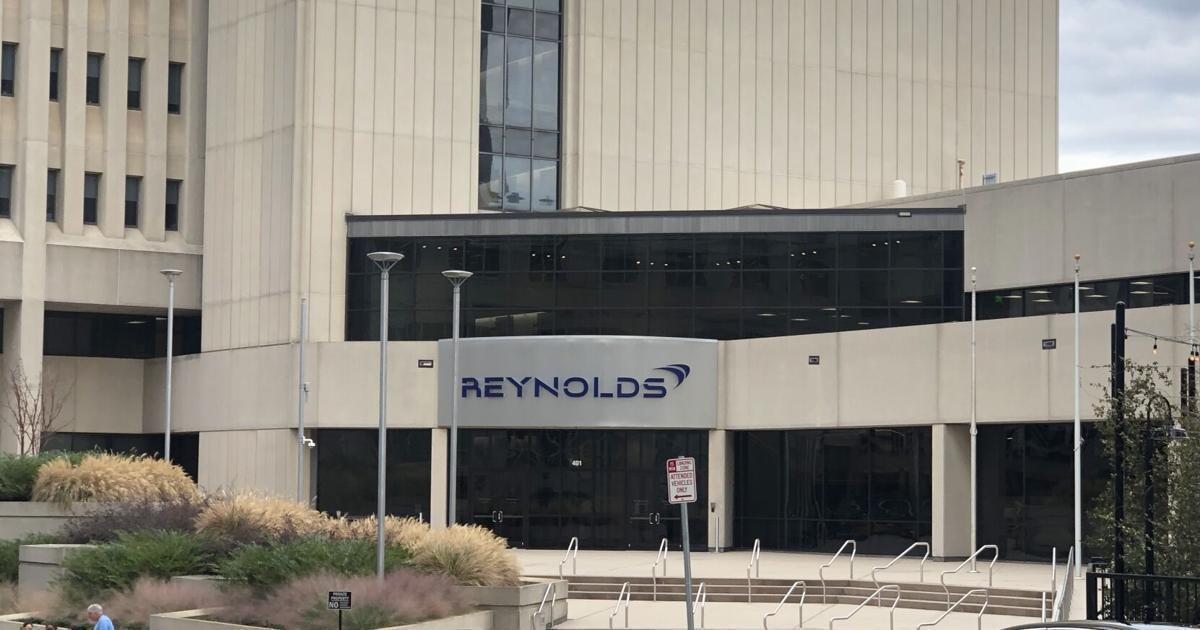
According to overseas media Journalnow on May 24, the U.S. Federal Appeals Court has rejected a challenge by R.J. Reynolds Tobacco Co. and ITG Brands against a ruling by three judges on March 21. This decision means that unless the U.S. Supreme Court accepts a possible appeal, the ruling of the Fifth Circuit Court of Appeals will require tobacco manufacturers to add graphic warning labels to all traditional cigarette packs and marketing materials.
Tobacco manufacturers cited their First Amendment rights in their appeal. Reynolds stated, "We do not comment on ongoing litigation." ITG company found it difficult to immediately comment on the ruling.
At the same time, the U.S. Food and Drug Administration (FDA) has introduced 11 warning graphics including diseased lungs, males after heart-lung surgery, and children wearing oxygen masks. One of the labels also mentions erectile dysfunction. Compared to the images of smoke coming out of a tracheostomy hole, dead bodies, and men with severe diseases that the FDA first attempted in 2012, the current warnings have been significantly toned down. Three legal experts believe that the current FDA warnings are "factual and non-controversial" and do not violate the First Amendment.
Yolanda Richardson, President and CEO of the anti-smoking advocacy group "Smoke-Free Kids Movement," stated, "The court's decision is another significant victory for public health and a failure for the tobacco industry. In light of this ruling, the tobacco industry should end its appeals, and the FDA should enforce the graphic warnings required by Congress as far back as 2009.
According to a congressional mandate, graphic warnings are required to cover the top half of the front and back of cigarette packs, as well as 20% of tobacco advertisements. The FDA initially set a deadline of June 18, 2021 for the labels. However, manufacturers and retailers were granted a reprieve after a federal judge in the Eastern District of Texas, Campbell Barker, issued an order in December of last year overturning the FDA's approval decision on a new set of 11 graphic warning labels in March 2020. Barker responded to manufacturers' challenges citing the First Amendment to provide them with relief.
The Federal Appeals Court stated that the FDA "should individually consider each warning and separate constitutional provisions from non-constitutional provisions." The coalition of public health and anti-smoking advocacy organizations argued that graphic warnings are "crucial, as existing text warnings have become outdated and ignored since the last update in 1984." They are supported by a wealth of scientific evidence showing that graphic warnings are most effective in increasing public understanding of the serious health consequences of smoking.
The federation claimed, "Now is the time for the United States to adopt this best practice policy along with the rest of the world to reduce tobacco use and save lives." The court also determined, contrary to the plaintiff's claims, that warnings have been proven effective.
In addition, the federal court for public health and anti-tobacco organizations sued the FDA in October 2016, alleging "unlawful withholding" or "unreasonably delaying" the release of final rules on graphic warning labels. In May 2020, the FDA stated that the new images "depict some lesser-known serious health risks of smoking," such as the risk of blindness, reduced blood flow to limbs, and type 2 diabetes. In April 2020, R.J. Reynolds Tobacco Co., Philip Morris USA, ITG Brands LLC, and Liggett Group LLC jointly filed a request for a temporary injunction to prevent the enforcement of the labels and a motion to prohibit enforcement. The manufacturers reiterated that these labels violated the First Amendment. They argued in federal court that any final deadlines imposed by the FDA were overly burdensome due to the financial and logistical impacts of the COVID-19 pandemic since mid-March 2020. The manufacturers stated in legal documents: "The resources invested to meet the requirements of the regulation result in irreparable harm, as the plaintiffs would be unable to receive monetary compensation if the graphic warning requirements in the regulations and/or the Tobacco Control Act were cancelled." The manufacturers successfully persuaded the court to postpone the implementation at least 11 times.
We welcome news tips, article submissions, interview requests, or comments on this piece.
Please contact us at info@2firsts.com, or reach out to Alan Zhao, CEO of 2Firsts, on LinkedIn
Notice
1. This article is intended solely for professional research purposes related to industry, technology, and policy. Any references to brands or products are made purely for objective description and do not constitute any form of endorsement, recommendation, or promotion by 2Firsts.
2. The use of nicotine-containing products — including, but not limited to, cigarettes, e-cigarettes, nicotine pouchand heated tobacco products — carries significant health risks. Users are responsible for complying with all applicable laws and regulations in their respective jurisdictions.
3. This article is not intended to serve as the basis for any investment decisions or financial advice. 2Firsts assumes no direct or indirect liability for any inaccuracies or errors in the content.
4. Access to this article is strictly prohibited for individuals below the legal age in their jurisdiction.
Copyright
This article is either an original work created by 2Firsts or a reproduction from third-party sources with proper attribution. All copyrights and usage rights belong to 2Firsts or the original content provider. Unauthorized reproduction, distribution, or any other form of unauthorized use by any individual or organization is strictly prohibited. Violators will be held legally accountable.
For copyright-related inquiries, please contact: info@2firsts.com
AI Assistance Disclaimer
This article may have been enhanced using AI tools to improve translation and editorial efficiency. However, due to technical limitations, inaccuracies may occur. Readers are encouraged to refer to the cited sources for the most accurate information.
We welcome any corrections or feedback. Please contact us at: info@2firsts.com