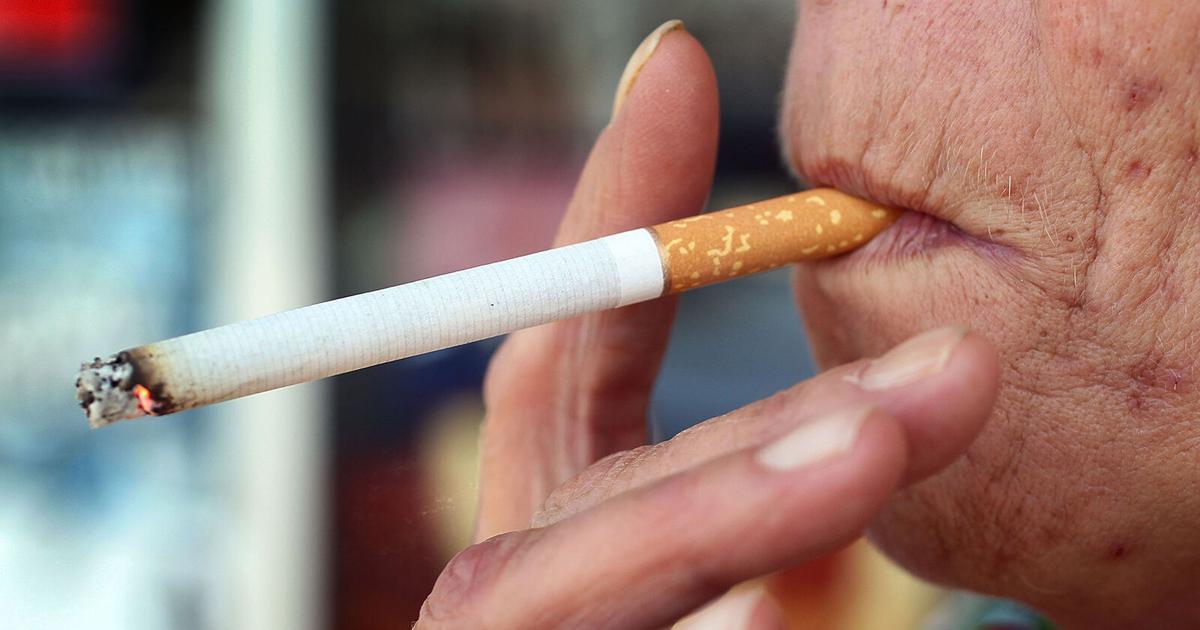
According to the US media GMToday, the US government's plan to ban menthol cigarettes and flavored cigars seems to have been delayed once again. The target set by the administrative department to complete the relevant regulations by March has been missed. Controversy has particularly surrounded the potential political risks of a ban on menthol cigarettes, which the Food and Drug Administration (FDA) proposed in April 2022.
Although the federal government has delayed the implementation of the smoking ban plan from August to March of the next year, the Office of Management and Budget still has one final meeting on the regulation scheduled for April 2 with representatives from the tobacco giant Altria and the lobbying firm Forbes Tate Partners.
This is the FDA's third attempt to restrict menthol cigarettes, first in 2013, then again in 2018, with the possibility of further delay until after the November 2024 election, when President Joe Biden may face a tough battle against former President Donald Trump. According to Gallup data, Biden currently has a 40% approval rating.
The FDA estimates that about 18.5 million people, including teenagers, use menthol, with menthol cigarettes being particularly popular among Black smokers. According to data from the Centers for Disease Control and Prevention, in 2020, approximately eight out of ten Black adult smokers reported using menthol.
This issue has led to a conflict between law enforcement agencies and public health advocates, sparking advertising campaigns and dividing black legislators and interest groups. Concerns include increased regulation of minority smokers - a theory that many public health advocates dismiss as industry alarmism.
Industry opposes the ban on menthol, arguing that it is ineffective.
Just like the prohibition of the 1920s, the FDA's proposal to ban menthol cigarettes will create an unregulated black market, encourage criminal activity, and threaten the integrity of the regulatory system - the FDA did not consider the consequences," wrote the owner of Marlboro cigarettes, Altria, in a letter to the FDA when the regulation was first proposed.
Critics of the proposed ban also point out the lack of resources to help current smokers quit, including the FDA's continued refusal to regulate flavored e-cigarettes. Many manufacturers are questioning the denial of these products in court.
On Thursday, Representatives Ann McLane Kuster and Larry Bucshon wrote a letter to Health and Human Services Secretary Xavier Becerra, urging greater attention to bringing new smoking cessation therapies to market.
Until now, there have only been three FDA-approved smoking cessation therapies," lawmakers wrote. "No new treatment methods have been approved in nearly 20 years. While these therapies are effective, there should be encouragement for more effective treatment methods.
Public health advocates are urging Biden to take action, emphasizing how the ban will strengthen the government's commitment to health equity and the Cancer Moonshot initiative.
Chief Executive Officers of the American Cancer Society and the American Cancer Society Cancer Action Network, Karen Knudsen, stated: "There is no scientific evidence to support the federal government's decision to not completely ban menthol flavoring in cigarettes and all flavors in cigars." "This continued inaction shows shocking deference to the tobacco industry, which continues to profit from products that cause death."
There is absolutely no reason to further delay a policy that the FDA has been studying for over 12 years, a policy that is supported by overwhelming scientific evidence and will save the lives of hundreds of thousands of people," said Yolonda Richardson, President and CEO of the organization.
We welcome news tips, article submissions, interview requests, or comments on this piece.
Please contact us at info@2firsts.com, or reach out to Alan Zhao, CEO of 2Firsts, on LinkedIn
Notice
1. This article is intended solely for professional research purposes related to industry, technology, and policy. Any references to brands or products are made purely for objective description and do not constitute any form of endorsement, recommendation, or promotion by 2Firsts.
2. The use of nicotine-containing products — including, but not limited to, cigarettes, e-cigarettes, nicotine pouchand heated tobacco products — carries significant health risks. Users are responsible for complying with all applicable laws and regulations in their respective jurisdictions.
3. This article is not intended to serve as the basis for any investment decisions or financial advice. 2Firsts assumes no direct or indirect liability for any inaccuracies or errors in the content.
4. Access to this article is strictly prohibited for individuals below the legal age in their jurisdiction.
Copyright
This article is either an original work created by 2Firsts or a reproduction from third-party sources with proper attribution. All copyrights and usage rights belong to 2Firsts or the original content provider. Unauthorized reproduction, distribution, or any other form of unauthorized use by any individual or organization is strictly prohibited. Violators will be held legally accountable.
For copyright-related inquiries, please contact: info@2firsts.com
AI Assistance Disclaimer
This article may have been enhanced using AI tools to improve translation and editorial efficiency. However, due to technical limitations, inaccuracies may occur. Readers are encouraged to refer to the cited sources for the most accurate information.
We welcome any corrections or feedback. Please contact us at: info@2firsts.com