Utah Considers Allowing Higher Nicotine Levels in Vapes

Jun.19.2023
Utah Considers Allowing Higher Nicotine Levels in Vapes
Utah may allow higher nicotine levels in e-cigarettes after a settlement with manufacturers. Limits would still apply.

On June 18th, according to a report by KSL News Radio, the state of Utah in the United States is considering allowing e-cigarette manufacturers to increase the nicotine content in products sold in the state. Under the proposed regulations, if an e-cigarette product is authorized through a pre-market tobacco product application (PMTA) by the US Food and Drug Administration (FDA), Utah retailers will be allowed to sell e-cigarettes with nicotine concentrations higher than the current legal level.


According to official Braden Ainsworth of the Utah Department of Health, the department is authorized to amend tobacco laws and set nicotine restrictions for "sealed tobacco products (vapor products)" by a 2020 law.


He said:


Although the Utah Department of Health's move is aimed at aligning itself with the FDA's pre-market tobacco product application process and requirements, we still do not recommend the use and consumption of e-cigarettes and vaping products.


According to Answoth, the department's primary objective is to create policies that provide Utah residents with "fair and equitable opportunities to lead safe and healthy lives.


In September 2021, it was mandated that the nicotine content of each container is limited to "3% of the weight of the container" and the concentration should not exceed 36mg/mL. This is in accordance with regulatory requirements.


Answorthy stated that the assessment and decision regarding the regulation were proposed during the litigation period and that this is part of a settlement agreement. "However, regardless of whether a settlement is reached, the department will revise the regulation and modify the policy for aerosol products in some way.


According to revised regulations, products that are sealed by manufacturers may contain any quantity approved by the FDA, but nicotine content is limited to "5% by weight per container" and concentration should not exceed "59mg/mL". The regulations indicate that the approved products in 2022 will have a concentration range of "1.5% to 6%".


According to Answorth, there has been a decrease in the use of e-cigarettes among youth in Utah. State data shows that in 2019, 12.4% of teens were using e-cigarettes, whereas in 2021, the proportion has dropped to 7.8%. He also mentioned that several policy changes were made in 2020 aimed at addressing the issue of youth vaping, including flavor restrictions.


References:


The Utah Health Department is contemplating the possibility of raising the permitted quantity of nicotine in vape pens.


This document has been generated through artificial intelligence translation and is provided solely for the purposes of industry discourse and learning. Please note that the intellectual property rights of the content belong to the original media source or author. Owing to certain limitations in the translation process, there may be discrepancies between the translated text and the original content. We recommend referring to the original source for complete accuracy. In case of any inaccuracies, we invite you to reach out to us with corrections. If you believe any content has infringed upon your rights, please contact us immediately for its removal.
Make Your Brand Understood by the People Who Matter
Feb.02
Research Summary | NHANES Study: Smoking or E-Cigarette Use Linked to Higher Prevalence of Elevated Blood Pressure and Hypertension
A cross-sectional analysis based on the US NHANES 2021–2023 cycle, including 6,262 participants aged over 12, found that compared with people who neither smoke nor vape, those who smoke and/or use e-cigarettes had a higher prevalence of elevated blood pressure and hypertension. After full adjustment, smoking/vaping was associated with elevated blood pressure (aOR 1.34) and hypertension (aOR 1.46), and with a 1.05 mmHg higher diastolic blood pressure.
Feb.09 by 2FIRSTS.ai
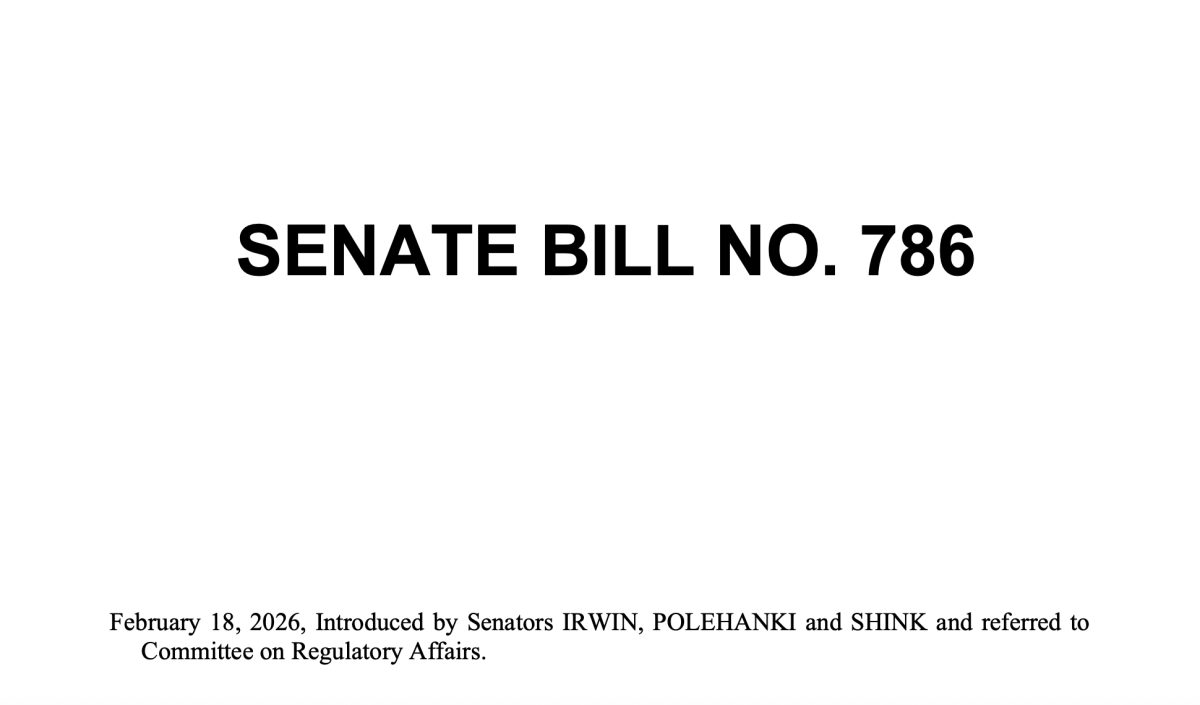
Michigan Senate Bill 786 Seeks to Ban Sale of Vapes With Metal Heating Elements
Michigan lawmakers introduced Senate Bill 786 on February 18, 2026, proposing to prohibit the sale or transfer of vapor products that contain heating elements unless those elements are made of or encased in glass or ceramic materials
Regulations
Feb.21
Philippine DTI Says Flavored Vape Products With Minor-Appealing Descriptors Are “100 Percent Smuggled”
A Philippine Department of Trade and Industry official told a Senate hearing on vaping regulations that flavored vape products marketed with descriptors attractive to minors are “100 percent smuggled” and did not pass the agency’s licensing process.
Mar.16 by 2FIRSTS.ai
Arizona Lawmaker Pushes Alternative Nicotine Product Bill as Enforcement Concerns Emerge
Arizona Representative Jeff Weninger’s HB 4001 is being presented as a new tool to crack down on retailers that sell vaping devices and other nicotine products to minors. The bill would create a licensing system for manufacturers and distributors of “alternative nicotine products” and impose fines for sales to people under 21, with penalties reaching USD 10,000 for a fourth violation within 24 months.
Mar.25 by 2FIRSTS.ai
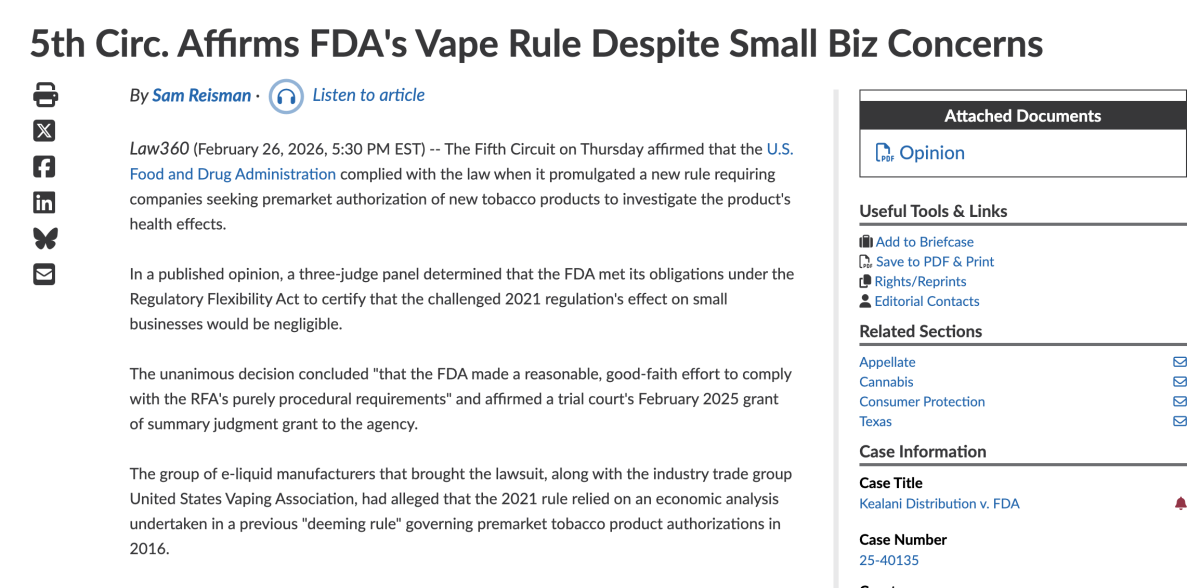
Fifth Circuit Upholds FDA’s 2021 PMTA Rule, Citing Statutory Health-Study Requirements
A Fifth Circuit panel upheld the U.S. Food and Drug Administration’s 2021 final rule requiring companies seeking premarket authorization for new tobacco products to include information on health-risk investigations. In a published opinion, the court found FDA satisfied the Regulatory Flexibility Act’s procedural requirements and reasonably relied on the economic analysis from the 2016 “deeming rule” as a factual basis to certify limited impact on small businesses.
Feb.27 by 2FIRSTS.ai