WIRED Investigation: Chinese-Made Vapes Turn to 6-Methyl-Nicotine and Other Analogs, Challenging U.S. Regulation

Jul.27
WIRED Investigation: Chinese-Made Vapes Turn to 6-Methyl-Nicotine and Other Analogs, Challenging U.S. Regulation
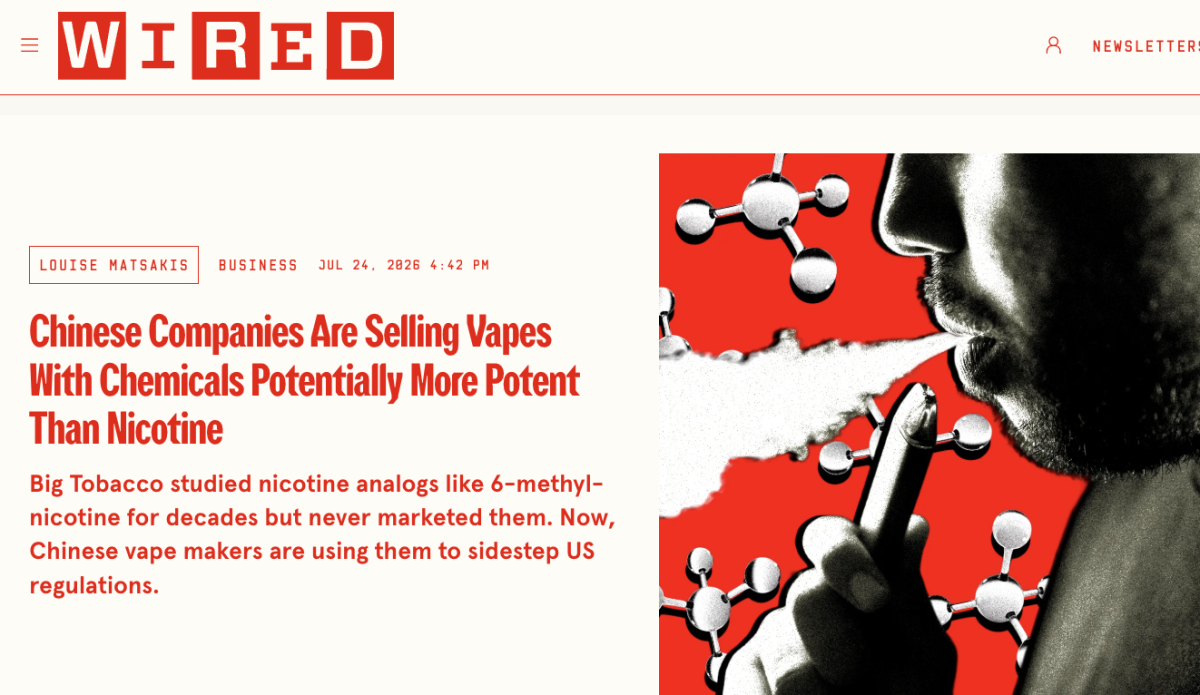
U.S. technology and investigative publication WIRED has examined how nicotine analogs are emerging as a new challenge for the country’s vape regulatory framework. The article argues that after the U.S. expanded federal oversight of nicotine products in 2022, some manufacturers began using nicotine-like compounds such as 6-methyl-nicotine that may fall outside existing definitions. Researchers cited by WIRED said some nicotine analogs could be more potent than traditional nicotine, although human health impacts remain unclear. U.S. policymakers are considering broader definitions of nicotine to bring these compounds under federal oversight.

Key Points

  • WIRED examined nicotine analogs as a new issue in U.S. vape regulation.
  • 6-methyl-nicotine has become one of the compounds drawing regulatory attention.
  • Research suggests some nicotine analogs may have higher potency, but human data remains limited.
  • Several U.S. states have expanded tobacco definitions to cover nicotine-like compounds.
  • Federal policymakers are considering broader nicotine definitions.

2Firsts

July 27, 2026

U.S. technology and investigative publication WIRED recently examined how nicotine analogs are becoming a new challenge for the country’s vape regulatory system. The article argues that as regulators tighten oversight of traditional and synthetic nicotine products, new chemical compounds are emerging as another factor complicating enforcement.

WIRED said the U.S. vape market has long involved a tension between regulatory definitions and product innovation. After Congress expanded federal oversight of nicotine products in 2022 to include synthetic nicotine, some manufacturers began exploring other compounds designed to mimic nicotine effects.

The article’s assessments are based on reporting, researcher interviews and expert commentary, and do not establish that all companies using such compounds have violated regulations.

Nicotine Analogs Become New Focus of Vape Regulation

According to WIRED, some vape products have increasingly used nicotine analogs, compounds that resemble nicotine in structure or effects but may not fully fall within existing federal tobacco definitions.

One compound receiving attention is 6-methyl-nicotine.

The article said U.S. regulatory frameworks have historically focused on the legal definition of nicotine, creating potential gaps for emerging compounds.

Robert Jackler, an emeritus professor at Stanford University, said regulators are often forced to respond to rapidly changing product strategies as companies seek new ways to navigate rules.

However, research into the long-term human effects of nicotine analogs remains limited.

Studies Raise Questions Over 6-Methyl-Nicotine Potency

WIRED cited research suggesting that animal studies have found 6-methyl-nicotine may have greater potency and dependence potential than traditional nicotine.

Researchers have also emphasized that available evidence remains insufficient to determine long-term human health effects.

The article also referenced a 2024 study that found some nicotine analog vape products contained additional unlabeled ingredients, including artificial sweeteners and cooling agents, raising questions about inhalation risks.

Jackler said discrepancies between product labels and actual ingredients could create challenges for regulators and consumers.

Tobacco Companies Researched Similar Compounds Decades Ago

WIRED noted that nicotine analogs are not a new scientific concept.

Since the 1970s, major tobacco companies have researched nicotine-like compounds as potential alternatives to nicotine.

A 2005 review of previously confidential tobacco industry documents found that companies had explored such compounds partly because they believed they could help address future regulatory challenges.

However, these compounds were never widely commercialized in mainstream tobacco products.

They have now reappeared in some vape products, renewing regulatory attention.

U.S. Regulators Consider Expanding Nicotine Definition

Federal regulation of nicotine analogs remains incomplete in the United States.

WIRED reported that California, Nebraska, Indiana and Tennessee have expanded tobacco product definitions to include certain nicotine-like compounds.

The article also noted that the U.S. government’s proposed Fiscal Year 2027 budget includes a legislative proposal to expand the definition of nicotine, allowing nicotine analogs to be regulated by the FDA.

The proposal states that such compounds could be “more potent, addictive, and cytotoxic than nicotine.”

If enacted, the change could create new compliance requirements for vape and nicotine product companies.

Vape Regulation Moves Toward Chemical Definitions

The nicotine analog debate shows that U.S. vape regulation is moving beyond products and into chemical composition and legal definitions.

Historically, regulators focused on:

  • product authorization;
  • tobacco compliance;
  • youth access concerns.

Future oversight may increasingly examine:

  • specific chemical compounds;
  • the scope of nicotine definitions;
  • potential risks of emerging substances.

For vape companies, future competition will depend not only on product innovation but also on regulatory adaptability, ingredient transparency and compliance systems.

Follow 2Firsts for the latest updates on global tobacco and nicotine regulation, industry developments and market trends.

Cover Image source: WIRED


2FIRSTS | Former ATF Official’s Claims on Chinese Vape Companies and 6-Methyl Nicotine Fuel US Regulatory Debate
Former ATF Deputy Director Edgar Domenech has warned that some Chinese vape companies may be using 6-methyl nicotine, a nicotine analogue, raising new questions over how US regulators should classify emerging nicotine compounds.
www.2firsts.com

2FIRSTS | 2Firsts Data | China’s U.S. Vape Exports Have Yet to Regain Previous Growth Momentum in H1 2026, but Hardware Grew 15.2% and 6-Methyl Nicotine-Related Products Rose 234.7%
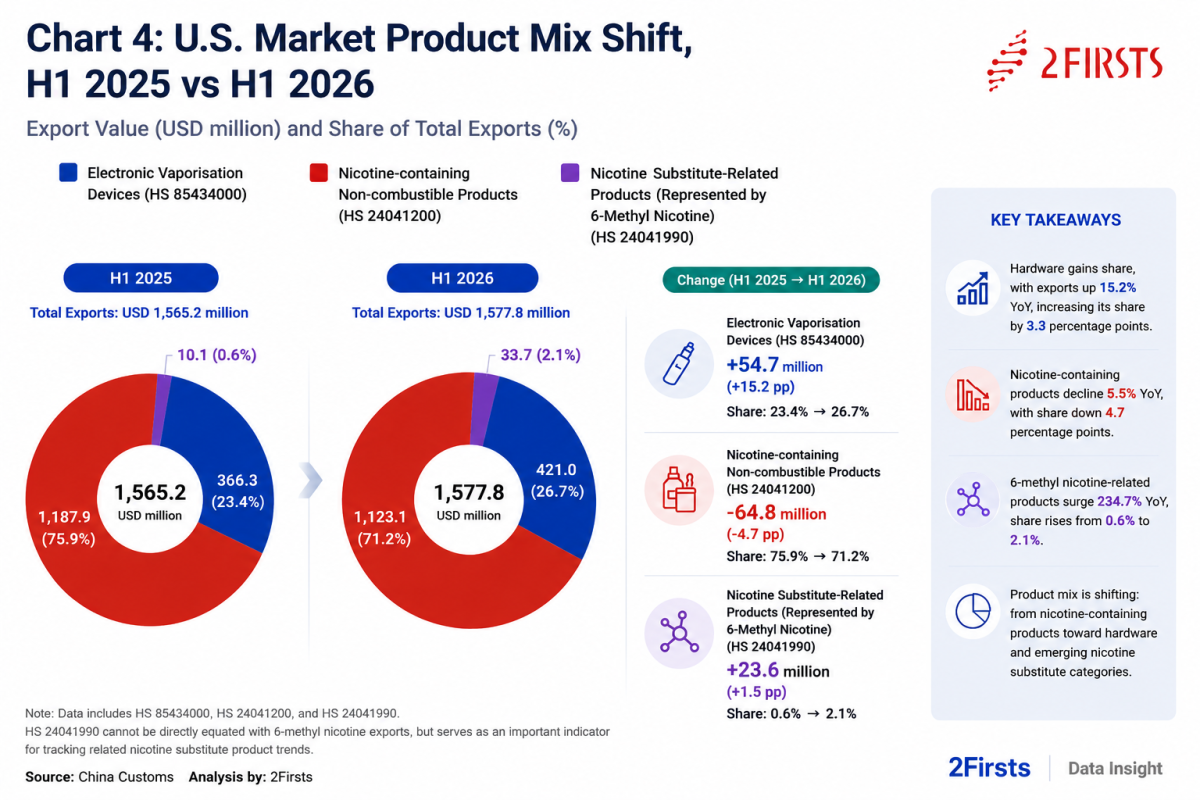
China’s vape exports to the U.S. reached approximately $1.58 billion in the first half of 2026, remaining broadly stable from a year earlier but still below previous growth momentum. 2Firsts’ analysis of China Customs data shows that the U.S. market has not simply returned to its previous trajectory after the enforcement shock and inventory-driven swings of 2025. Instead, export momentum is shifting across product categories. Vaping devices and atomization hardware increased 15.2% year over year, while 6-methyl nicotine-related and other nicotine substitute products surged 234.7%. Meanwhile, traditional nicotine-containing vaping products continued to face pressure.
www.2firsts.com

South Korea’s Cigarette Smoking Rate Falls to 17.9%, E-Cigarette Use Continues to Rise
Data released by the Korea Disease Control and Prevention Agency (KDCA) showed South Korea’s conventional cigarette smoking rate fell to 17.9% in 2025, while heated tobacco and liquid e-cigarette use continued to rise, particularly among young adults and women.
Jun.01
U.S. FDA: Youth E-Cigarette Prevention Campaign Prevented About 444,000 Initiations and Reduced Illegal Vape Sales
The U.S. Food and Drug Administration (FDA) said its youth e-cigarette prevention campaign, “The Real Cost,” prevented about 444,000 U.S. youth from starting e-cigarette use between 2023 and 2024 and blocked more than $42 million in unauthorized e-cigarette sales that would have been used by youth.
Market
Jun.25
 BAT Raises Growth Outlook for Smokeless Products as Velo and Vuse Gain Momentum
BAT Raises Growth Outlook for Smokeless Products as Velo and Vuse Gain Momentum
British American Tobacco (BAT) has raised its growth outlook for smokeless products, forecasting “mid-teens” growth for its new category portfolio, including vaping and nicotine pouch products, while global cigarette volumes are expected to decline further.
BAT
Jun.02
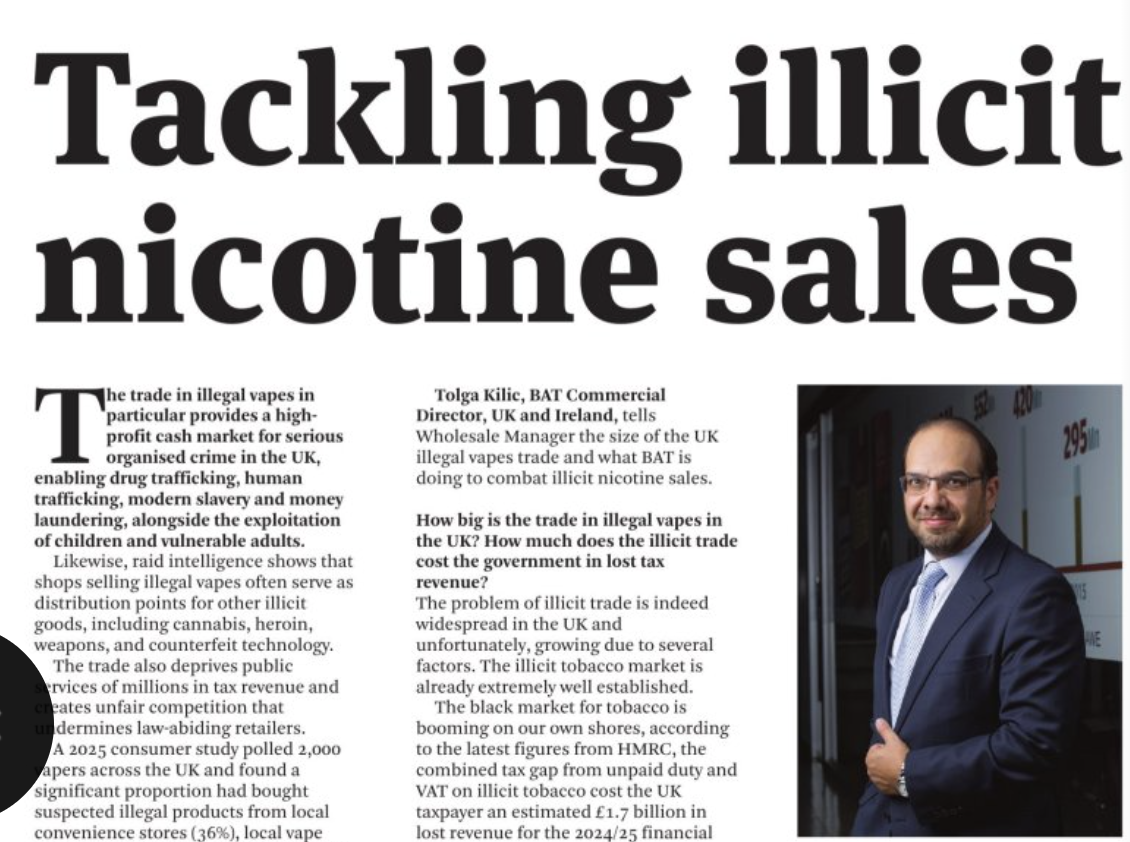
BAT UK Director Tolga Kilic Says Illicit Nicotine Market Squeezes Legal Retailers Amid Rising Compliance Costs
UK retail publication Grocery Trader has published a viewpoint article from Tolga Kilic, Commercial Director for BAT UK & Ireland, discussing the impact of illicit nicotine products on legitimate retail channels. Kilic said illegal vapes and other illicit nicotine products create competitive pressure for compliant retailers and called for stronger market controls and supply-chain oversight. The comments come as the UK advances policies including the disposable vape ban and Vaping Products Duty, creating a more complex operating environment for legal vape retailers.
Jul.28
French Vape Distributor Kumulus Vape Yields About 3% as Earnings Growth Stalls
Listed French vape distributor Kumulus Vape will trade ex-dividend on June 26, 2026, and pay an annual dividend of €0.10 per share on June 30, with Simply Wall St saying the payout is covered by profit and free cash flow, while weak earnings growth remains a concern.
Industry InsightMarketNews
Jun.24
Nasdaq-Listed Vape Company iSpire Technology Restructures Leadership as Tuanfang Liu Becomes Sole CEO, BTIG Initiates Coverage on ODM Growth Opportunity
Nasdaq-listed vape company iSpire Technology has restructured its leadership team, with Tuanfang Liu becoming the company’s sole chief executive officer (CEO) and Michael Wang appointed CEO of Aspire North America. The move ends iSpire’s previous co-CEO structure and creates clearer responsibilities between group strategy and regional execution. Separately, BTIG initiated coverage on iSpire Technology with a Buy rating and a $3.50 price target, identifying ODM growth opportunities as a key investment factor.
Jul.27