New Zealand Government Passes Strict Anti-Smoking Regulations

Dec.13.2024
New Zealand Government Passes Strict Anti-Smoking Regulations
New Zealand government urgently passes anti-smoking regulations, including ban on disposable e-cigarettes and stricter sales restrictions.

According to a report by Radio New Zealand on December 13th, the New Zealand government has urgently passed a series of new regulations on smoking.


The bill prohibits disposable e-cigarettes and introduces further restrictions on the sale of e-cigarettes, including display restrictions. The maximum fine for retailers selling e-cigarettes to those under 18 years old will increase from the current 10,000 New Zealand dollars (5,800 US dollars) to 100,000 New Zealand dollars (58,000 US dollars). Specialty e-cigarette retailers must be at least 100 meters away from early childhood service facilities, with a distance restriction of 300 meters from schools and community centers.


Casey Costello, Deputy Minister of Health for New Zealand, stated that the Smoke-free Environments and Regulated Products Amendment Act 2020 aims to prevent adolescents from vaping e-cigarettes and introduces several practical changes and stricter regulatory measures.


The new law mainly includes four major changes: prohibiting the production, sale, supply, and distribution of disposable e-cigarettes; increasing fines for selling regulated products to minors; imposing restrictions on the retail display of e-cigarette products; and adding further distance restrictions for specialized e-cigarette retail stores.


Costello added that manufacturers, importers, or large retailers who violate the ban could face fines of up to $400,000 NZD ($230,000 USD), while individuals could face fines of up to $50,000 NZD ($30,000 USD). The new visibility restrictions require retailers exclusively selling e-cigarettes to not display e-cigarette products and packaging outside of their stores. Regular e-cigarette retailers such as supermarkets, gas stations, and convenience stores will be required to "follow the same regulations currently in place for other regulated products such as cigarettes.


She stated that the ban on disposable e-cigarettes and display restrictions will come into effect six months from now, giving retailers time to prepare for the new regulations.


During this period, efforts will also be made to recruit and train more smoking enforcement officers, so that the new regulations and stricter penalties can be more effectively enforced.


We welcome news tips, article submissions, interview requests, or comments on this piece.

Please contact us at info@2firsts.com, or reach out to Alan Zhao, CEO of 2Firsts, on LinkedIn


Notice

1.  This article is intended solely for professional research purposes related to industry, technology, and policy. Any references to brands or products are made purely for objective description and do not constitute any form of endorsement, recommendation, or promotion by 2Firsts.

2.  The use of nicotine-containing products — including, but not limited to, cigarettes, e-cigarettes, nicotine pouchand heated tobacco products — carries significant health risks. Users are responsible for complying with all applicable laws and regulations in their respective jurisdictions.

3.  This article is not intended to serve as the basis for any investment decisions or financial advice. 2Firsts assumes no direct or indirect liability for any inaccuracies or errors in the content.

4.  Access to this article is strictly prohibited for individuals below the legal age in their jurisdiction.


Copyright


This article is either an original work created by 2Firsts or a reproduction from third-party sources with proper attribution. All copyrights and usage rights belong to 2Firsts or the original content provider. Unauthorized reproduction, distribution, or any other form of unauthorized use by any individual or organization is strictly prohibited. Violators will be held legally accountable.

For copyright-related inquiries, please contact: info@2firsts.com


AI Assistance Disclaimer


This article may have been enhanced using AI tools to improve translation and editorial efficiency. However, due to technical limitations, inaccuracies may occur. Readers are encouraged to refer to the cited sources for the most accurate information.

We welcome any corrections or feedback. Please contact us at: info@2firsts.com

Philippines Mandates Safety Certification for Nicotine Pouches, Gives Industry 12 Months to Comply
The Philippines Department of Trade and Industry has placed nicotine pouches under mandatory product certification through Department Administrative Order No. 26-07, Series of 2026. Nicotine pouches must obtain a Philippine Standard, or PS, license before they can be manufactured, imported, packed, distributed or sold in the country. The regime requires testing for nicotine content, pH and water activity, while packaging must disclose nicotine strength, ingredients, allergens, batch information, the PS certification mark and prescribed health warnings. Existing market participants have a 12-month transition period to comply.
Regulations
Oct.12
Japan Survey Finds 49.5% Would Cut Tobacco Use if Prices Rise, 64.6% Show Interest in Nicotine-Free Alternatives
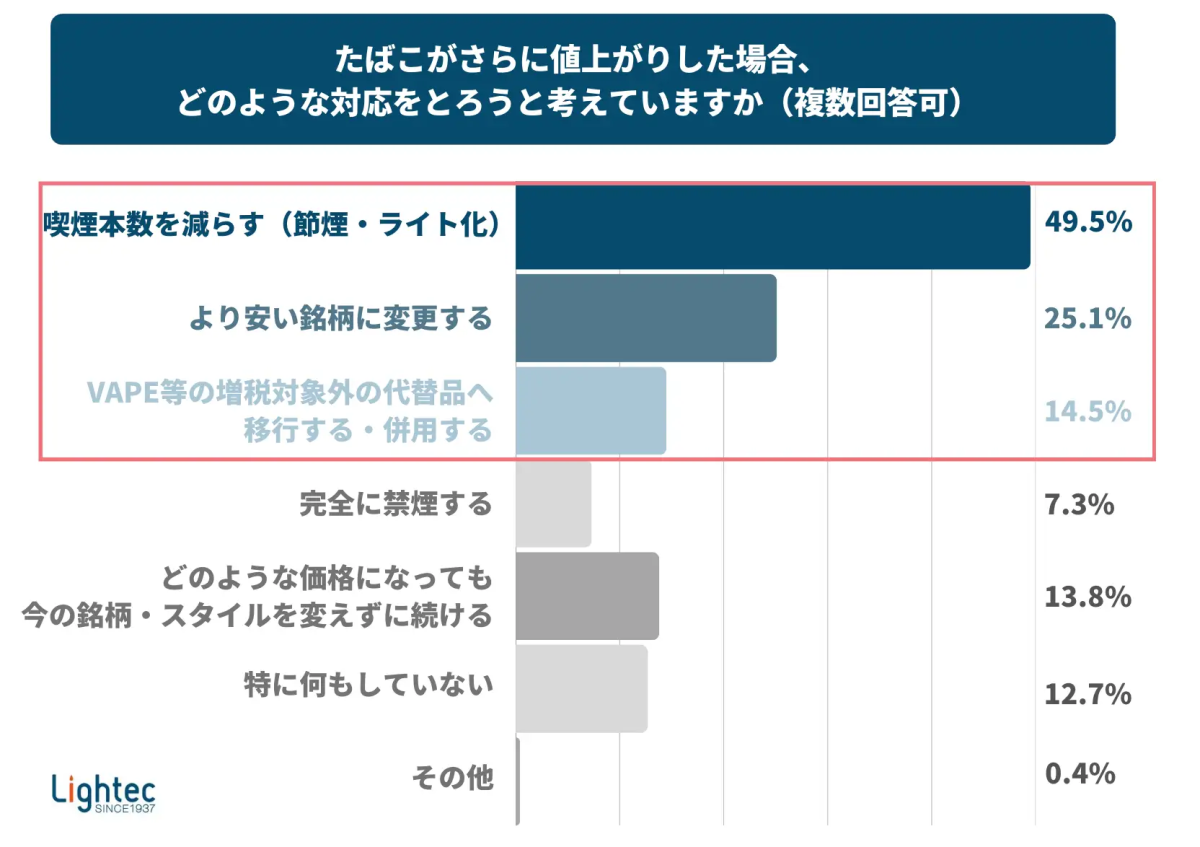
A September online survey commissioned by Japanese smoking-accessories company Lightec found that 49.5% of respondents would consider reducing tobacco use if prices rose further, while 25.1% would consider switching to cheaper brands and 14.5% would consider using or combining alternatives such as vapes and nicotine-free herbal sticks. Another 64.6% expressed some level of interest in such alternatives. The survey covered 1,088 respondents aged 20 to 70 and was conducted by a company that sells NICOLESS nicotine-free vaping and herbal-stick products, meaning its findings should not be treated as representative of Japan's smoking population.
DATA
Oct.12
Philippines BIR Steps Up Illicit Vape Enforcement Ahead of Christmas Shopping
The Philippines’ Bureau of Internal Revenue is intensifying enforcement against illicit vape and tobacco products ahead of the Christmas shopping season, directing regional and enforcement offices to strengthen monitoring of production sites, warehouses, distribution channels and retail outlets. The BIR destroyed 240,550 illicit vape products in August with an estimated tax liability of about PHP1.53 billion. A nationwide tax-compliance operation in July also inspected 3,590 businesses involved in tobacco and vapor products.
Regulations
Sep.17 by 2Firsts Perspectives
GAO Audit Finds Nearly 132,000 FDA Tobacco Applications Waiting an Average 1,266 Days as Nicotine Pouch Pilot Practices Move Into Vape PMTA Reviews
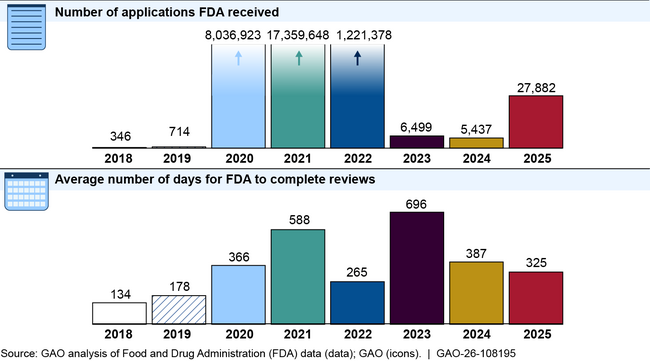
A U.S. Government Accountability Office audit found that 131,915 tobacco product applications submitted to the FDA since 2018 remained without a final review as of December 31, 2025, with pending applications waiting an average of 1,266 days. GAO also found FDA lacks the data needed to systematically determine whether scientific reviews meet applicable timelines. HHS agreed to upgrade the agency's tracking systems. At the same time, FDA has begun applying lessons from its nicotine pouch PMTA pilot to e-cigarette reviews, while changes to enforcement policy and electronic submissions are making the specific stage of a PMTA increasingly relevant to market access.
FDA
Oct.03
JUUL Purchasers Ask Ninth Circuit to Preserve Antitrust Classes in Case Over Altria’s $12.8 Billion Investment
Private antitrust litigation stemming from Altria's 2018 $12.8 billion investment for a 35% economic interest in JUUL is advancing before the U.S. Court of Appeals for the Ninth Circuit. Direct purchasers, indirect purchasers and indirect resellers of JUUL products filed answering briefs this week seeking to preserve class certifications granted by a California federal court in February. Altria and JUUL argue that individual consumers and large distributors differ too much in purchasing terms to remain in a single direct-purchaser class, while a separate dispute concerns whether California antitrust law can apply to indirect purchasers across 27 jurisdictions. A September trial has been put on hold during the appeal.
Sep.23
South Korea Fully Reviews Nicotine-Analog and Nicotine-Free Vape Liquid Imports, With Over 99% From China and Chinese Supply-Chain Documents Under Scrutiny
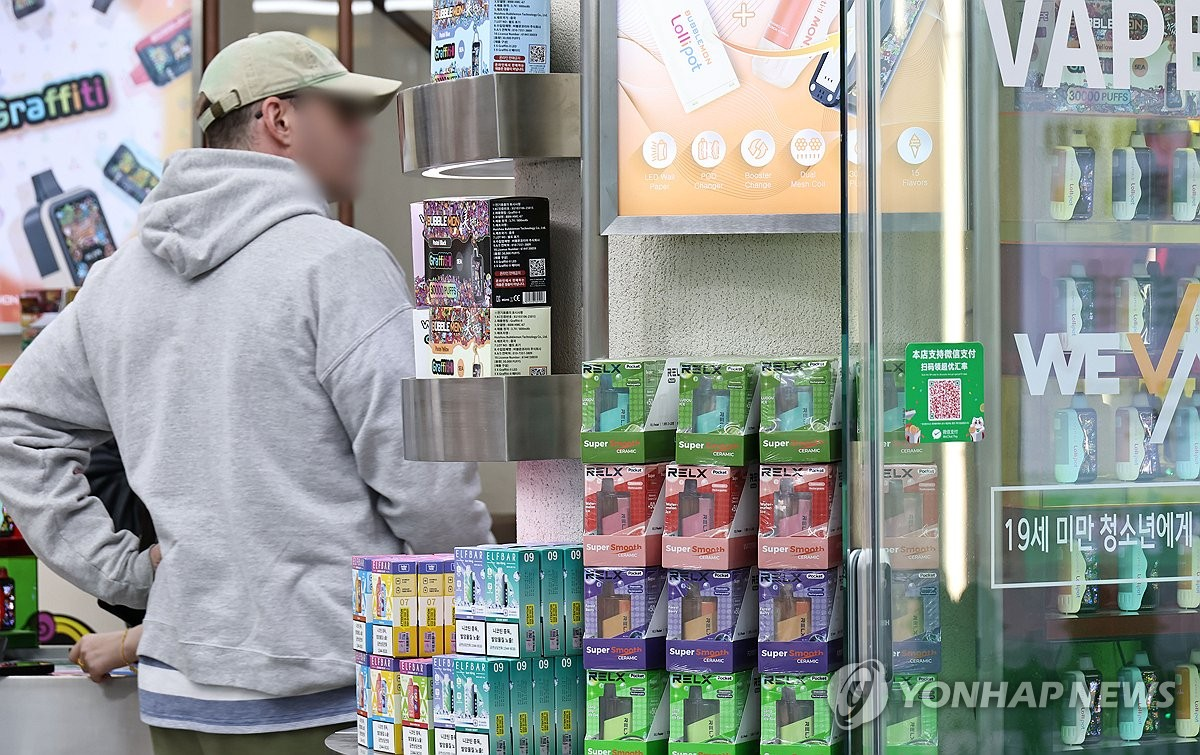
Korea Customs Service has tightened import controls on nicotine-analog and nicotine-free e-cigarette liquids, placing the products under 100% document review and subjecting all e-cigarette liquid import declarations to pre-clearance ingredient analysis. As of September 20, 2026, South Korea had imported about 15 metric tons of nicotine-analog liquids, 99.99% from China, and about 316 metric tons of nicotine-free liquids, including roughly 315 metric tons, or 99.7%, from China. The measures follow South Korea's April expansion of its tobacco definition to include synthetic nicotine products and include new checks on Chinese manufacturing, transaction and export documentation.
Sep.24