Australia Welcomes and Implements New E-Cigarette Reform Regulations

Regulations by 2FIRSTS.ai
Dec.04.2023
Australia Welcomes and Implements New E-Cigarette Reform Regulations
The Australian government welcomes new e-cigarette reform regulations to curb usage, including import bans and improved access for medical use.

According to a report by news-medical, the Australian government has welcomed and pledged to commit to new e-cigarette reform regulations. This move aims to suppress the use of e-cigarettes in Australia.


Starting from January 1, 2024, the government will enforce a ban on the importation of disposable e-cigarettes, while also improving the accessibility of medical e-cigarettes for individuals attempting to quit smoking.


Starting from March 1, 2024, further reform measures are expected to be implemented, including: ceasing the importation of personal e-cigarettes; banning the importation of non-therapeutic use e-cigarettes; requiring importers and manufacturers of therapeutic e-cigarettes to report to the Australian Government's Therapeutic Goods Administration about the conformity of their products to relevant product standards; and mandating importers to obtain permits and authorizations from the Australian Government's Office of Drug Control before importing the products.


We welcome news tips, article submissions, interview requests, or comments on this piece.

Please contact us at info@2firsts.com, or reach out to Alan Zhao, CEO of 2Firsts, on LinkedIn


Notice

1.  This article is intended solely for professional research purposes related to industry, technology, and policy. Any references to brands or products are made purely for objective description and do not constitute any form of endorsement, recommendation, or promotion by 2Firsts.

2.  The use of nicotine-containing products — including, but not limited to, cigarettes, e-cigarettes, nicotine pouchand heated tobacco products — carries significant health risks. Users are responsible for complying with all applicable laws and regulations in their respective jurisdictions.

3.  This article is not intended to serve as the basis for any investment decisions or financial advice. 2Firsts assumes no direct or indirect liability for any inaccuracies or errors in the content.

4.  Access to this article is strictly prohibited for individuals below the legal age in their jurisdiction.


Copyright


This article is either an original work created by 2Firsts or a reproduction from third-party sources with proper attribution. All copyrights and usage rights belong to 2Firsts or the original content provider. Unauthorized reproduction, distribution, or any other form of unauthorized use by any individual or organization is strictly prohibited. Violators will be held legally accountable.

For copyright-related inquiries, please contact: info@2firsts.com


AI Assistance Disclaimer


This article may have been enhanced using AI tools to improve translation and editorial efficiency. However, due to technical limitations, inaccuracies may occur. Readers are encouraged to refer to the cited sources for the most accurate information.

We welcome any corrections or feedback. Please contact us at: info@2firsts.com

China’s HTP Exports Fell 14.3% in H1 2026 as Russia and Belarus Accounted for 76% Lead
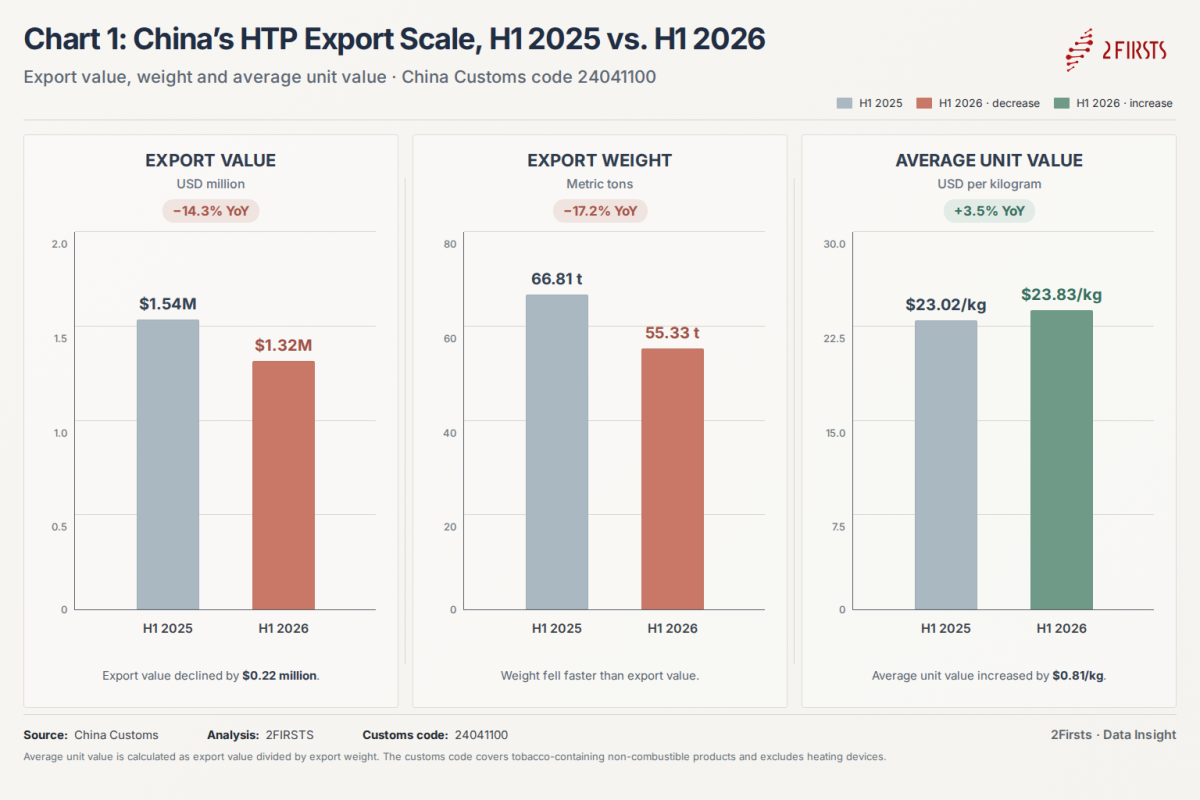
In H1 2026, China’s HS 24041100 exports stood at $1.32 million, down 14.3% YoY, with volume falling 17.2% to 55.33 tons. Market distribution shifted drastically amid overall export drops. Exports to Russia and Belarus totaled $1 million, taking 76.0% of all shipments versus 29.5% in H1 2025. Belarus became the top destination with export value jumping 177.5%, while the Philippines, Singapore and Indonesia’s combined share slumped from 49.3% to 11.2%.Domestically, Yunnan led exporter registrations; Jiangsu and Shanghai were key suppliers, yet Anhui and Sichuan had no exports. Heavy concentration means order or declaration changes for Russia/Belarus greatly affect national aggregate data. The data shows customs entry points (not end markets), covering tobacco consumables only, excluding heating equipment and the complete HTP supply chain.
Aug.11
Imperial Brands Acquires Helwit Owner Yoik Group for SEK 515 Million, More Than Doubling Swedish Nicotine Pouch Share
Imperial Brands has agreed to acquire 100% of Swedish modern oral nicotine company Yoik Group AB for an initial SEK515 million, equivalent to about US$53.9 million, plus a deferred payment linked to performance over the next two years. Yoik owns nicotine pouch brand Helwit, which held about 3.4% of Sweden’s modern oral nicotine market over the past 12 months. Imperial says the acquisition will more than double its existing share of the Swedish market. Helwit is also sold elsewhere in the Nordics, through European online channels and in selected UK retail outlets.
Sep.08
Former Roche Neuroscience and Rare Diseases Communications Director Ria Kioupritzi Joins PMI as Scientific Affairs Director
Eleftheria (Ria) Kioupritzi, a biopharmaceutical professional with more than 15 years of experience, has joined Philip Morris International as Director Scientific Affairs within Corporate Affairs. She previously served at Roche as Senior Scientific Communications Director for Neuroscience and Rare Diseases and worked extensively in spinal muscular atrophy. Her earlier career also covered competitive intelligence, clinical and regulatory monitoring, pipeline development and launch preparation. During her time working in Roche's SMA field, Evrysdi passed through several U.S. FDA milestones, including its initial approval, an expanded indication for younger infants and approval of a tablet formulation. Public records do not show that Kioupritzi herself led the FDA submissions.
Sep.22
SMOORE’s DOJO by VAPORESSO to Launch New Global Brand Identity on September 1
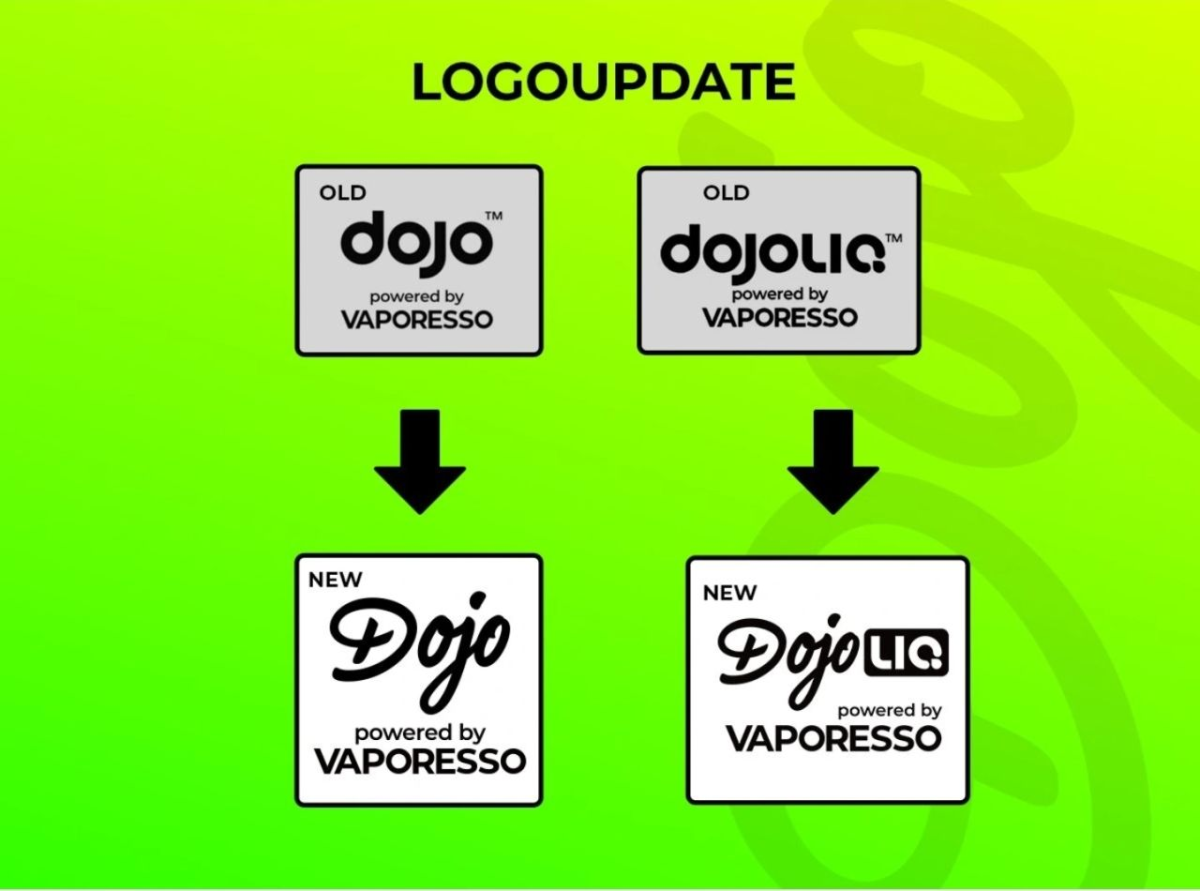
According to recent LinkedIn posts from people at VAPORESSO, SMOORE and a German distribution partner, vape brand DOJO will begin rolling out a new global brand identity on September 1, 2026, led by a redesigned handwritten logo. The new visual system will be gradually applied across product packaging, marketing materials and digital assets over the following months. Fabio Corsaro, Head of Marketing and Purchasing at MG Wesel GmbH, said the rebrand was related to trademark issues, but that explanation has not been publicly confirmed by DOJO, VAPORESSO or SMOORE. DOJO is currently promoting its Blast X product in Germany.
Aug.31
Australia Brings in Deloitte to Support Illicit Tobacco and Vape Enforcement Across Data, Processes and Project Delivery
Australia’s Department of Home Affairs has hired Deloitte to provide data analytics, business-process, communications and project-delivery support to the Office of the Illicit Tobacco and E-Cigarette Commissioner. The government says Deloitte personnel do not provide policy advice to the Commissioner or the Australian government, with policy development and decision-making remaining with public officials. The arrangement has nevertheless drawn scrutiny because Deloitte has previously provided professional services to several tobacco and vaping companies.
Sep.03
India Duty-Free Nicotine Pouch Sales Face Regulatory Test as ZYN, FOX Classification Remains Open
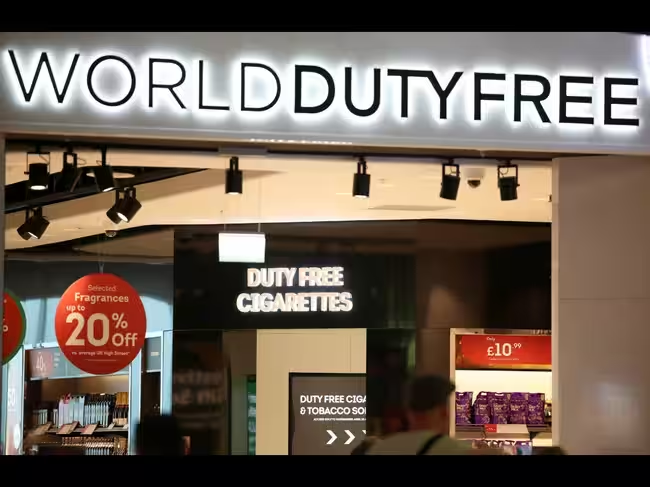
The Bombay High Court has ruled that airport duty-free shops are not exempt from India's domestic regulatory laws merely because they operate beyond the customs barrier, leaving in place a sales halt covering ZYN and FOX nicotine pouches at Mumbai's international airport. The court, however, did not determine that the products necessarily qualify as "drugs" under India's Drugs and Cosmetics Act. The retailers have four weeks to submit product information to the appropriate authorities, including CDSCO, which must complete its review within 30 days of receiving the submissions.
Sep.24