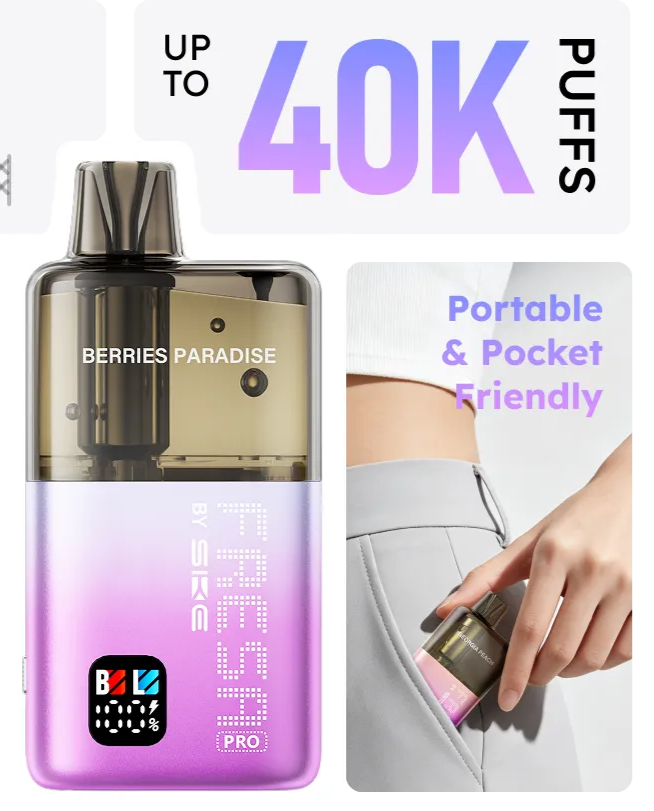
According to The Sydney Morning Herald on June 24th, the Australian government has withdrawn its plan to allow e-cigarettes to be sold commercially. E-cigarettes will not require a prescription to be purchased in pharmacies.
Minister of Health Mark Butler reached an agreement with the Green Party on Monday, June 24th, to relax the ban on e-cigarettes scheduled to take effect in July. This was in order to pass legislation in the Senate to prohibit retail sales, as the initially stricter proposal did not have the support of the majority of senators.
According to sources familiar with the agreement, after the ban on e-cigarettes takes effect in July, consumers will still need a doctor's prescription to purchase e-cigarettes. However, in the future, adults will not need a prescription from a general practitioner to buy e-cigarettes from pharmacies. They will only need to speak with a pharmacist and can purchase them over the counter.
At the same time, individuals under the age of 18 are allowed to purchase e-cigarettes with a prescription from a clinician if deemed appropriate.
The government has promised to provide additional funding to support young people in quitting e-cigarettes.
E-cigarettes sold in pharmacies will still be regulated and must comply with standard packaging requirements.
Butler's adjustment is a concession to the substantial political capital invested in the success of the e-cigarette ban. He will announce the full details of the changes later today.
Butler previously proposed the idea of allowing people to purchase e-cigarettes from pharmacies without a prescription, but he stated that this would only be considered if the prescription drug model is not successful.
He stated in November of last year,
Health ministers are interested in exploring whether e-cigarettes can be provided solely by pharmacists in pharmacies, where similar products are often located behind the counter and require interaction with a pharmacist but not a doctor's prescription.
We have not made a decision yet, but I have said that if the proposed reform does not adequately ensure that people with genuine treatment needs can access e-cigarettes, we will consider other options.
Both the Greens and the National Party have expressed doubt about the proposal put forward by the Labor Party to ban all retail sales of e-cigarettes and require a prescription from a general practitioner to obtain them from a pharmacy. This is a stricter version of the law first proposed by former Coalition Health Minister Greg Hunt in 2021.
The Green Party and the two major political parties are aligned in their desire to prevent children from purchasing e-cigarettes from unlicensed stores.
However, the Greens' health spokesperson, Jordon Steele-John, expressed concerns about the difficulties and costs of quitting smoking for those who need to make an appointment with a general practitioner in order to get a prescription. The Department of Health's analysis of Butler's original plan indicates that 450,000 Australians per year will seek e-cigarette prescriptions, requiring nearly one million visits to general practitioners.
John also expressed skepticism towards the prohibition model, pointing out that drug bans have proven to be ineffective.
Many young Australians are using e-cigarettes, banning the sale of e-cigarettes could potentially become a political issue.
No one should be punished for personal use of e-cigarettes. Prohibition policies for drugs have failed. Many people under the age of 18 are becoming addicted to nicotine. We need to ensure there are proper resources in place to help these individuals quit using e-cigarettes.
We welcome news tips, article submissions, interview requests, or comments on this piece.
Please contact us at info@2firsts.com, or reach out to Alan Zhao, CEO of 2Firsts, on LinkedIn
Notice
1. This article is intended solely for professional research purposes related to industry, technology, and policy. Any references to brands or products are made purely for objective description and do not constitute any form of endorsement, recommendation, or promotion by 2Firsts.
2. The use of nicotine-containing products — including, but not limited to, cigarettes, e-cigarettes, nicotine pouchand heated tobacco products — carries significant health risks. Users are responsible for complying with all applicable laws and regulations in their respective jurisdictions.
3. This article is not intended to serve as the basis for any investment decisions or financial advice. 2Firsts assumes no direct or indirect liability for any inaccuracies or errors in the content.
4. Access to this article is strictly prohibited for individuals below the legal age in their jurisdiction.
Copyright
This article is either an original work created by 2Firsts or a reproduction from third-party sources with proper attribution. All copyrights and usage rights belong to 2Firsts or the original content provider. Unauthorized reproduction, distribution, or any other form of unauthorized use by any individual or organization is strictly prohibited. Violators will be held legally accountable.
For copyright-related inquiries, please contact: info@2firsts.com
AI Assistance Disclaimer
This article may have been enhanced using AI tools to improve translation and editorial efficiency. However, due to technical limitations, inaccuracies may occur. Readers are encouraged to refer to the cited sources for the most accurate information.
We welcome any corrections or feedback. Please contact us at: info@2firsts.com