Australia's New Vaping Law Leads to the Collapse of the Legal Market and a Surge in Black - market Transactions

Jun.23.2025
Australia's New Vaping Law Leads to the Collapse of the Legal Market and a Surge in Black - market Transactions
Australia’s new vaping law has led to the collapse of the legal market and a surge in black - market transactions. The new regulations, which limit sales to pharmacies, have seen low participation and transaction volumes in the legal market, while black - market dealings have soared. Critics say the policy has fueled organized crime, and experts are calling for legalization and regulation to address the crisis.

Key Points:


·Legal market shrinking: After the implementation of the new law, monthly sales of legal e-cigarettes are less than 6,000, while black market transactions exceed 10 million, mainly dominated by disposable e-cigarettes from China. 


·Policy flaws: Regulations restrict flavors, packaging, and sales channels, and failed to consult with pharmacies in advance, leading to the reluctance of most pharmacies (only 700) to participate. 


·Black market expansion: The Minister of Health claims that legislation will "eliminate the black market," but the actual effect is the opposite, fueling organized crime and reducing tax revenue. 


·Calls for reform: Experts criticize the current policies as failing and suggest comprehensive legalization and consumer-oriented regulation to replace the black market and reduce public health risks.


According to a report by The Telegraph, Australia's strict pharmacy-only e-cigarette laws have caused the legal e-cigarette market to collapse, giving organized crime power. Government data shows that out of 1700 e-cigarette transactions, only 1 was legal.


According to documents obtained by the newspaper, pharmacists report legal sales of e-cigarettes to be fewer than 6,000 per month, while over 10 million e-cigarettes flow into the black market every month - mostly Chinese disposable e-cigarettes sold in convenience stores and tobacco shops.


In 2024, the law allows nicotine e-cigarettes to be sold only in pharmacies without a prescription, but under strict restrictions: limited flavors, simple packaging, and no consumer-friendly branding. However, prior to the law being passed, pharmacies were not consulted so out of 5900 pharmacies, less than 700 have stocked the products.


Minister of Health Mark Butler claims that the legislation will "eliminate the black market," however, Jim McDonald writes:


“Butler's "world-leading" e-cigarette restrictions, combined with Australia's astonishingly high tobacco taxes, have decimated the legal e-cigarette industry, fueled the already massive black market, resulted in a decline in tobacco tax revenues, and encouraged organized crime to become involved in the e-cigarette market.”


Experts and critics are calling for comprehensive legalization and consumer market regulation to replace the black market and reduce harm.


Welcome to submit articles, contact for interviews, or submit comments to 2Firsts. Please contact: info@2firsts.com or connect with 2Firsts CEO Alan Zhao on LinkedIn.


We welcome news tips, article submissions, interview requests, or comments on this piece.

Please contact us at info@2firsts.com, or reach out to Alan Zhao, CEO of 2Firsts, on LinkedIn


Notice

1.  This article is intended solely for professional research purposes related to industry, technology, and policy. Any references to brands or products are made purely for objective description and do not constitute any form of endorsement, recommendation, or promotion by 2Firsts.

2.  The use of nicotine-containing products — including, but not limited to, cigarettes, e-cigarettes, nicotine pouchand heated tobacco products — carries significant health risks. Users are responsible for complying with all applicable laws and regulations in their respective jurisdictions.

3.  This article is not intended to serve as the basis for any investment decisions or financial advice. 2Firsts assumes no direct or indirect liability for any inaccuracies or errors in the content.

4.  Access to this article is strictly prohibited for individuals below the legal age in their jurisdiction.


Copyright


This article is either an original work created by 2Firsts or a reproduction from third-party sources with proper attribution. All copyrights and usage rights belong to 2Firsts or the original content provider. Unauthorized reproduction, distribution, or any other form of unauthorized use by any individual or organization is strictly prohibited. Violators will be held legally accountable.

For copyright-related inquiries, please contact: info@2firsts.com


AI Assistance Disclaimer


This article may have been enhanced using AI tools to improve translation and editorial efficiency. However, due to technical limitations, inaccuracies may occur. Readers are encouraged to refer to the cited sources for the most accurate information.

We welcome any corrections or feedback. Please contact us at: info@2firsts.com

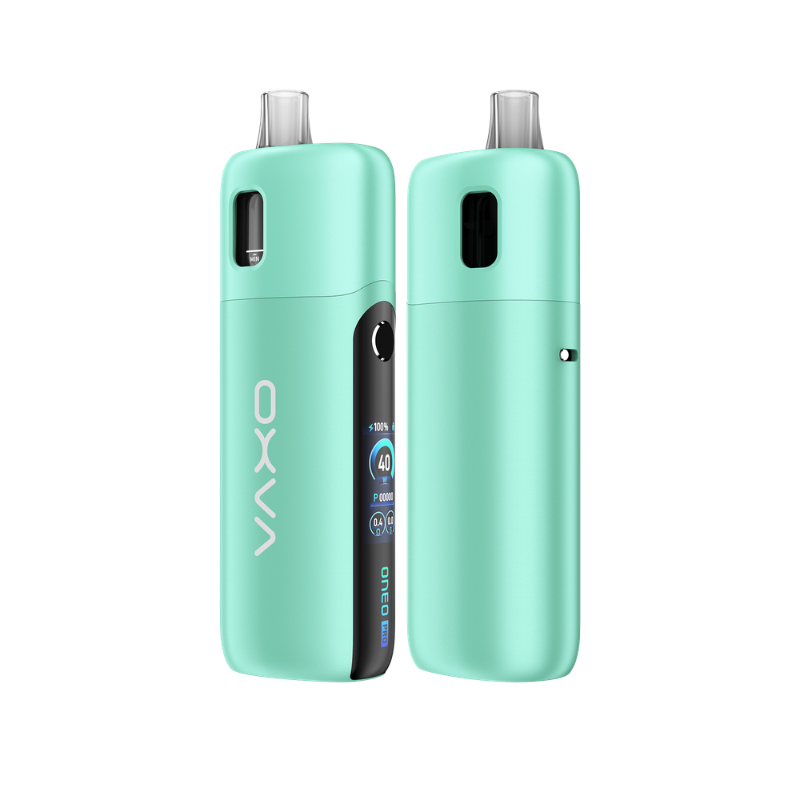
Product | OXVA Launches ONEO Pro in France, Upgrading Its Open-Pod Platform
Vape brand OXVA has introduced the ONEO Pro, a refillable open-pod system that entered the French market in July 2026. The device features a 2,100mAh battery, up to 40W output, a 4ml refillable cartridge, multiple coil options and a 0.96-inch color TFT display. The launch reflects continued performance upgrades within the refillable open-pod segment, with brands adding higher capacity, adjustable output and smarter device interaction.
Aug.03
Cochrane 2026 Update Adds Nine Trials, Keeps High-Certainty Finding That Nicotine E-Cigarettes Improve Quit Rates Over NRT
Cochrane’s 2026 update of its living review on electronic cigarettes for smoking cessation included 80 randomized controlled trials involving 29,861 adult smokers, with nine trials added in this update. The review retained its high-certainty conclusion that nicotine e-cigarettes increase smoking cessation rates compared with nicotine replacement therapy. In absolute terms, about 10 in 100 people using nicotine e-cigarettes may quit smoking for at least six months, compared with about 6 in 100 using NRT. The review found no clear difference in serious adverse event rates between the two groups, while longer-term safety and the relative effectiveness of newer device types remain less certain.
Sep.07
Germany Probes 7.6 Million Illegal Vape Case With Estimated €33.3 Million Tax Loss; Four Chinese Manufacturer Employees Under Investigation, Some Packaging in Enforcement Images Resembles FUMOT Products
German prosecutors and customs authorities are conducting a criminal investigation into an alleged cross-border organised vape network. Authorities say that between January 2024 and March 2025, four employees of an unnamed Chinese e-cigarette manufacturer allegedly built a network of sales agents and wholesalers that brought more than 7.6 million nicotine disposable vapes into Germany, causing an estimated €33.3 million in excise-tax losses. The manufacturer has not been named. Some products visible in enforcement images have packaging resembling products from FUMOT’s portfolio. European regulatory records from 2024, FUMOT’s public overseas-sales materials and records involving German vape importer and distribution company Zamu-Pro GmbH also show FUMOT/RandM products and German distribution activity during the period covered by the investigation.
Sep.21
China Tobacco Yunnan files patent for cellulose-free nicotine pouch scaffold to replace microcrystalline cellulose
China Tobacco Yunnan Industrial Co., Ltd. has filed a patent application for a cellulose-free scaffold material for nicotine pouches, proposing a combination of bioceramic material, polydextrose and sugar alcohols to replace conventional microcrystalline cellulose and cellulose derivatives. The filing aims to address issues including powdery mouthfeel, residue and limited release control, while also reducing reliance on existing cellulose-based patent portfolios. In patent examples, one fast-release formulation reached a nicotine release rate of 50% at 10 minutes and more than 90% at 20 minutes.
Sep.02
Product | PMI Japan Launches SENTIA Passion Fruit Capsule, Expanding the IQOS ILUMA Flavor Portfolio
Philip Morris Japan (PM Japan) has introduced SENTIA Passion Fruit Capsule, a new tobacco stick designed for the IQOS ILUMA heated tobacco platform. Featuring a crush-activated capsule, the product combines menthol with passion fruit flavor to provide an additional flavor experience. The product launched in Japan from August 3, 2026, through IQOS official channels, convenience stores and tobacco retailers.
Aug.04
As FDA Reshapes PMTA Reviews and ENDS Enforcement Priorities, CTP Acting Director Bret Koplow to Keynote NATO Event for a Retail Network of 66,000-Plus Stores
Bret Koplow, acting director of the U.S. Food and Drug Administration's Center for Tobacco Products, will deliver a keynote and participate in a fireside chat at the National Association of Tobacco Outlets' Sept. 29-30 conference in Washington. His appearance comes months after the FDA moved to accelerate PMTA reviews and introduced a more differentiated enforcement policy for certain unauthorized ENDS and oral nicotine pouch products. The agency also plans a public list identifying manufacturers and products it does not currently intend to prioritize for enforcement under the May guidance. NATO says its membership includes more than 66,000 retail stores, making product-status transparency and enforcement boundaries directly relevant to the retail sector.
Aug.14