Balancing Youth Protection with Adult Smokers: A Call for Better Regulation

Oct.18.2023
Balancing Youth Protection with Adult Smokers: A Call for Better Regulation
A non-profit organization in the Philippines praises the US for preventing youth nicotine use but emphasizes the need for adult smokers looking for safer alternatives.

A recent report from Digital Journal states that a non-profit organization in the Philippines called "Quit Smoking for Good" has praised the recent efforts of the United States to prevent teenage use of nicotine products. However, they have also emphasized the need to focus on the millions of adult smokers who are searching for better alternatives to traditional cigarettes.


Dr. Lorenzo Mata Jr., President of the 'Quit Smoking is Beneficial' organization, has stated that the Center for Tobacco Products (CTP) of the US Food and Drug Administration should strike a balance between protecting young people and allowing adult smokers to have access to less harmful, smoke-free alternatives such as e-cigarettes, heated tobacco, and nicotine pouches.


This statement refers to the remarks made against Dr. Brian A. King, director of the Centers for Tobacco Products (CTP), during his speech at the Global Tobacco Nicotine Forum in Seoul, South Korea. Despite significant progress in reducing smoking rates in the United States, approximately 11.5% of American adults continue to use cigarettes.


Although the US government spends approximately $600 billion annually to address the direct healthcare costs and productivity losses caused by smoking, Dr. Jin emphasizes the need for additional efforts to reduce cigarette use. He points out that due to the known risks associated with these products, public concern for cigarettes and other combustible items is increasing. The US also considers e-cigarettes as tobacco products for regulation purposes, as the tobacco landscape is undergoing diversification.


According to Jin, the number of children using e-cigarettes in the United States has decreased by half since 2019. "This is a positive development, and I hope to see this trend continue. However, we still have over 2 million children using these products, so there is still significant room for further reduction in usage," he said.


However, Dr. Mata contends that while the Centers for Tobacco Products (CTP) acknowledges that cigarettes are the main culprit behind preventable diseases in the United States, it continues to impose strict regulations on smokeless alternatives, which significantly diminishes their positive impact on health and increases healthcare costs for the federal government. He believes that proper regulation and enforcement, rather than limitations, will address this issue, advocating for a balanced strategy that "protects youth while assisting adult smokers.


We welcome news tips, article submissions, interview requests, or comments on this piece.

Please contact us at info@2firsts.com, or reach out to Alan Zhao, CEO of 2Firsts, on LinkedIn


Notice

1.  This article is intended solely for professional research purposes related to industry, technology, and policy. Any references to brands or products are made purely for objective description and do not constitute any form of endorsement, recommendation, or promotion by 2Firsts.

2.  The use of nicotine-containing products — including, but not limited to, cigarettes, e-cigarettes, nicotine pouchand heated tobacco products — carries significant health risks. Users are responsible for complying with all applicable laws and regulations in their respective jurisdictions.

3.  This article is not intended to serve as the basis for any investment decisions or financial advice. 2Firsts assumes no direct or indirect liability for any inaccuracies or errors in the content.

4.  Access to this article is strictly prohibited for individuals below the legal age in their jurisdiction.


Copyright


This article is either an original work created by 2Firsts or a reproduction from third-party sources with proper attribution. All copyrights and usage rights belong to 2Firsts or the original content provider. Unauthorized reproduction, distribution, or any other form of unauthorized use by any individual or organization is strictly prohibited. Violators will be held legally accountable.

For copyright-related inquiries, please contact: info@2firsts.com


AI Assistance Disclaimer


This article may have been enhanced using AI tools to improve translation and editorial efficiency. However, due to technical limitations, inaccuracies may occur. Readers are encouraged to refer to the cited sources for the most accurate information.

We welcome any corrections or feedback. Please contact us at: info@2firsts.com

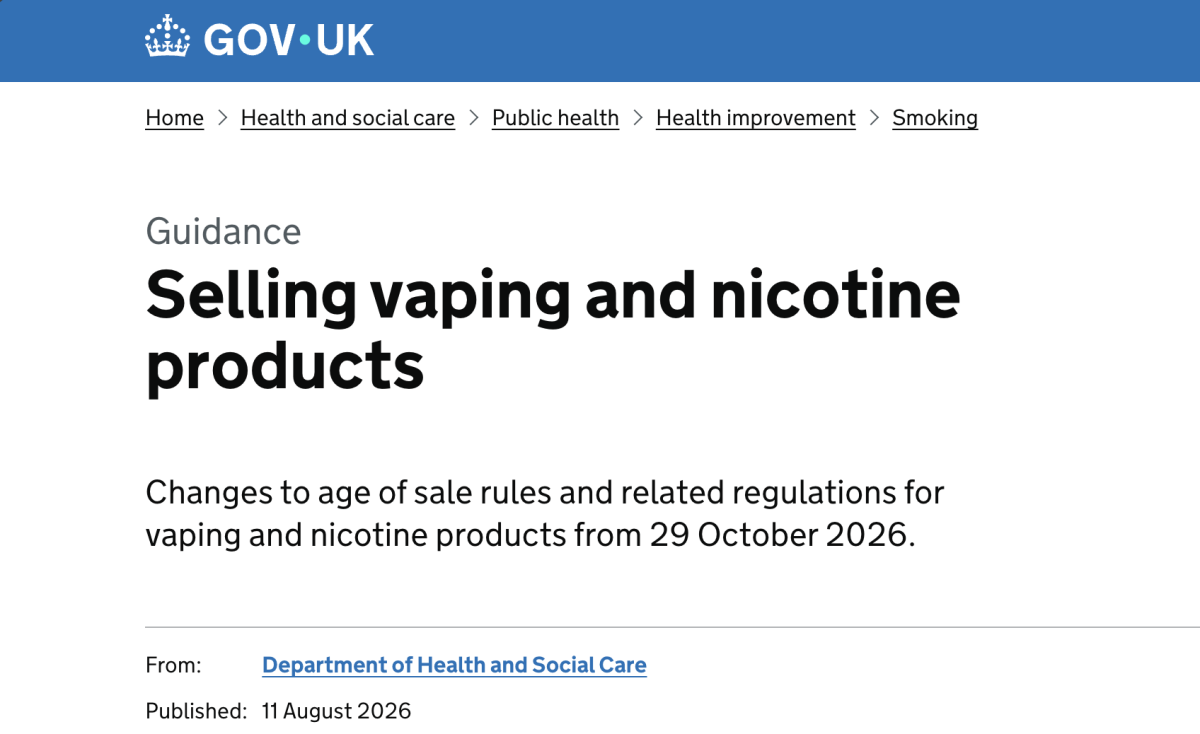
UK Sets Oct. 29 Start for New Vape Retail Rules Covering Age Checks, Giveaways and Discounts
The UK Department of Health and Social Care published new guidance on Aug. 11 outlining the next phase of retail rules under the Tobacco and Vapes Act 2026, which will take effect on Oct. 29, 2026. The measures extend the minimum age of sale of 18 to all vaping and consumer nicotine products and restrict proxy purchasing, promotional giveaways and substantial discounts. Relevant offences in England, Wales and Scotland may carry a £200 fixed penalty notice, while persistent offenders can face temporary sales bans.
Aug.12
NAS 2026 | FDA CTP Director Says PMTA Pathway Is “Predicated on Tobacco Harm Reduction”
At the 2026 New Approaches Summit in New York, FDA Center for Tobacco Products Director Bret Koplow said the PMTA pathway is “predicated on tobacco harm reduction.” He outlined four CTP priorities: youth prevention, helping adults quit or switch to lower-risk products, improving relative-risk communication, and reducing unauthorized products. Koplow also addressed flavored e-cigarettes, public risk perceptions, industry credibility and efforts to make PMTA reviews more efficient and predictable.
Sep.26
China’s Jinhua Tobacco Launches CNY 2.7 Million Procurement for E-Cigarette Violation Lead Monitoring Services
Jinhua Tobacco, a municipal tobacco company in China’s Zhejiang province, has launched a public tender for e-cigarette-related violation lead monitoring and consulting services. The project is valued at CNY 2.7 million and covers data resource integration and analytical consulting services for 36 months from contract signing. The procurement reflects the use of external data and analysis services to support local tobacco companies’ market oversight activities related to e-cigarettes.
Aug.07
Philip Morris Romania Executive on Smoke-Free Strategy: How IQOS Spaces Are Moving Beyond Retail to Consumer Connection
In an interview with Romanian marketing publication IQads, Marek Gębski, Director of Smoke-Free Products at Philip Morris Romania, said IQOS experience spaces are evolving from traditional retail locations into platforms for consumer engagement and brand connection. Through locations such as IQOS Boutique Victoriei, PMI aims to use design, culture and consumer experiences to strengthen communication with adult consumers about smoke-free products. The interview highlights how tobacco companies are expanding smoke-free strategies beyond products toward experiential marketing and consumer relationships.
Aug.11
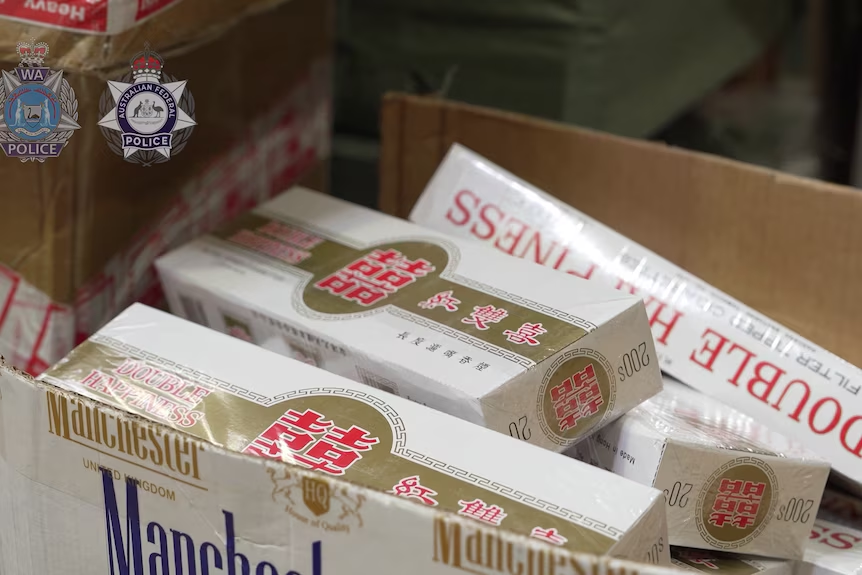
Australia’s One Nation Proposes 75% Tobacco Tax Cut, Says Lower Prices Could Hit Illicit Market
Australia’s One Nation party has proposed cutting tobacco excise by 75%, arguing that lower legal cigarette prices could narrow the gap with illicit tobacco and reduce demand for black-market products. The proposal comes as Australia continues expanding enforcement against illicit tobacco supply chains through border controls, retail inspections and organised-crime investigations. Supporters argue high taxes have contributed to illicit-market growth, while opponents warn that lower tobacco prices could undermine public-health goals. The proposal is a party policy position and has not been adopted by the Australian government.
Aug.18
South Korea Constitutional Court Upholds Volume-Based E-Liquid Tax, With Challenged Rates at KRW 370 and KRW 628 per Milliliter
South Korea's Constitutional Court has upheld fixed taxes on nicotine-containing e-cigarette liquids based on solution volume, ruling that challenged provisions imposing KRW 370 per milliliter in individual consumption tax and KRW 628 per milliliter in tobacco consumption tax do not violate the Constitution. The cases stemmed from historical disputes involving importers that reported nicotine as being extracted from tobacco stems rather than leaves. South Korea has since broadened its tobacco definition to include synthetic nicotine, while current tax laws provide reduced rates for certain products not derived from tobacco.
Sep.18