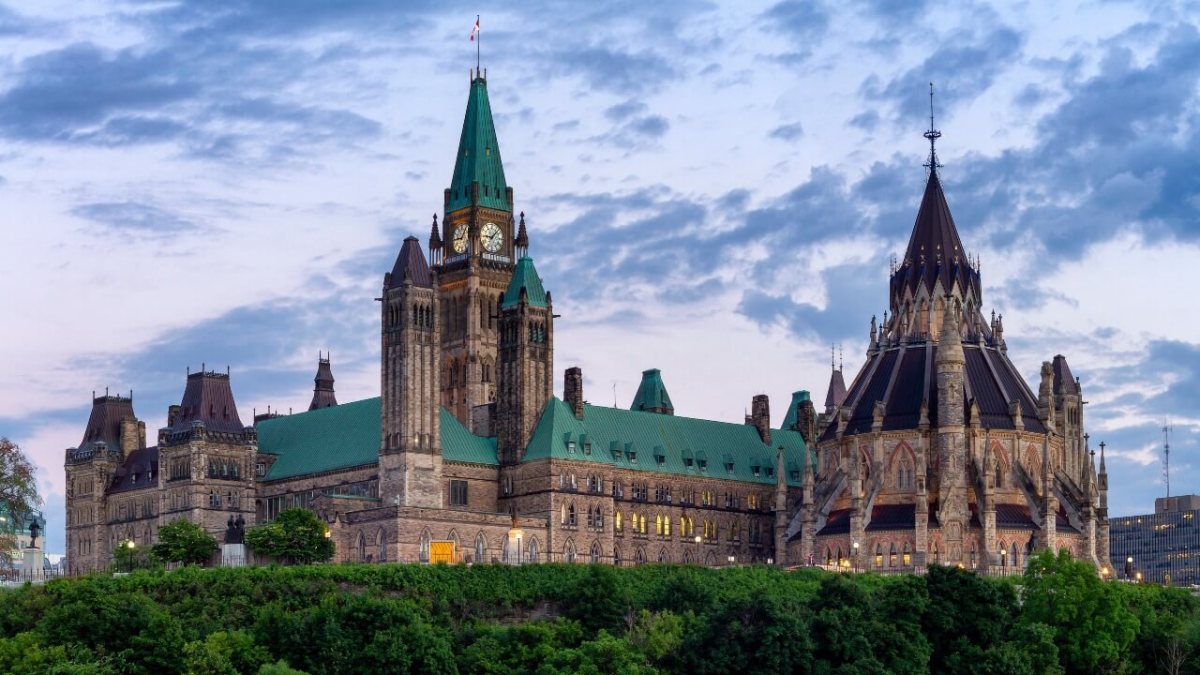
According to a report by MJBizDaily on April 16, the Canadian Liberal government has released the budget for 2024, with the country's cannabis industry most hoping to be relieved from the heavy burden of consumption taxes. For years, Canadian cannabis companies that have been struggling have been requesting tax cuts, but have not been successful so far.
As the 2024 budget is set to be released, two recent developments have brought hope for tax reform. In its February budget report, the House Ways and Means Committee suggested capping the consumption tax rate at 10%. Shortly after, a long-awaited legislation review for the legalization of recreational marijuana in Canada recommended the federal finance department "consider reviewing the consumption tax model".
However, despite these suggestions, industry insiders interviewed by MJBizDaily are not optimistic about the announcement of consumption tax reforms on Tuesday. Paul McCarthy, the newly appointed chairman of the Cannabis Council of Canada (C3), stated, "Currently, we have no signs indicating that there will be relevant content in the budget." Frederico Gomes, a cannabis stock analyst at ATB Capital Markets in Calgary, Alberta, expressed uncertainty about the possibility of consumption tax reduction in the budget. He added, "No one knows. But what I can say is that there seems to be a consensus forming on the need for reform.
The unpaid cannabis excise tax in Canada has been steadily increasing, reaching $273.4 million Canadian dollars (approximately $200 million USD) by the end of 2023. Due to the growing number of cannabis business licenses being revoked, the Canadian government has deemed some of these unpaid taxes as uncollectible. Ottawa has also begun deducting these unpaid taxes from payments made by provincial wholesalers to cannabis producers.
In discussing tax issues, the Canadian legalization review group pointed out that the consumption tax "was originally designed when the average price of dried cannabis was significantly higher than it is today." Before legalization, policymakers assumed that the retail price of cannabis would be around $10 per gram. They established a two-tier tax structure for flower cannabis (including pre-rolled cigarettes), with taxes set at a higher amount of either $1 per gram or 10% of the wholesale price per gram.
According to a briefing obtained by MJBizDaily and provided to the Canadian Finance Department, the current low-price environment means that the 10% tax rate is rarely used. This means that cannabis flower is actually taxed at a minimum cost of $1 per gram.
In a research report released in March, Pablo Zuanic, managing partner of New York-based firm Zuanic & Associates, wrote that "most Canadian licensed producers pay consumption taxes equivalent to 30% to 40% of their domestic recreational sales.
The taxation system for cannabis products (such as concentrates, edibles, and vape cartridges) differs from that of flower cannabis, with a tax of 1 cent per milligram of THC. Kirk Tousaw, a cannabis industry lawyer and CEO of Tousaw Farms in Duncan, British Columbia, stated, "The inequality between what is paid on extracts versus flower makes it very challenging for extract SKU competitiveness, especially for small-scale operators like us."
Tuso stated that a 1-gram pre-rolled cigarette with 28% THC content would incur a consumption tax of 1 CAD at the Grand Garden Farm, as it is taxed as a flower. However, he said that a 1-gram injection pre-roll with 26% THC from the same company would need to pay a consumption tax of 2.60 CAD, as it is classified as an extract.
Tuso said, "If you are then entering products with very high levels of THC, such as our orange cigarette with 60-68%, 69% THC that we already have on the market, you are now paying 6.90 Canadian dollars per gram. It becomes very difficult to compete when you are also up against vape cartridges with high THC content manufactured using cheaper and easier liquefied carbon gas extraction technology, resulting in these products being much cheaper in price.
Two-thirds of Canada's federal consumption tax revenue is shared with the provincial governments in Canada, with the exception of Manitoba. Critics argue that this arrangement could complicate consumption tax reform, as provincial governments would need to agree to "substantial changes to the consumption tax system.
During a recent quarterly earnings conference call, Tilray Brands Chief Financial Officer Carl Merton hinted at the potential complexities that could arise from provincial government involvement in consumption tax policies.
"The key to the government's plans and the relief needed in our industry lies in the provincial governments not implementing their own consumption taxes to offset the decrease in tax revenue they are currently experiencing, increasing their profits in the provincial wholesale cannabis commission, or mandating that tax savings must be passed on directly to consumers in the form of price reductions," Morten said as he prepared to speak.
We welcome news tips, article submissions, interview requests, or comments on this piece.
Please contact us at info@2firsts.com, or reach out to Alan Zhao, CEO of 2Firsts, on LinkedIn
Notice
1. This article is intended solely for professional research purposes related to industry, technology, and policy. Any references to brands or products are made purely for objective description and do not constitute any form of endorsement, recommendation, or promotion by 2Firsts.
2. The use of nicotine-containing products — including, but not limited to, cigarettes, e-cigarettes, nicotine pouchand heated tobacco products — carries significant health risks. Users are responsible for complying with all applicable laws and regulations in their respective jurisdictions.
3. This article is not intended to serve as the basis for any investment decisions or financial advice. 2Firsts assumes no direct or indirect liability for any inaccuracies or errors in the content.
4. Access to this article is strictly prohibited for individuals below the legal age in their jurisdiction.
Copyright
This article is either an original work created by 2Firsts or a reproduction from third-party sources with proper attribution. All copyrights and usage rights belong to 2Firsts or the original content provider. Unauthorized reproduction, distribution, or any other form of unauthorized use by any individual or organization is strictly prohibited. Violators will be held legally accountable.
For copyright-related inquiries, please contact: info@2firsts.com
AI Assistance Disclaimer
This article may have been enhanced using AI tools to improve translation and editorial efficiency. However, due to technical limitations, inaccuracies may occur. Readers are encouraged to refer to the cited sources for the most accurate information.
We welcome any corrections or feedback. Please contact us at: info@2firsts.com