CAPHRA Condemns Anti-Vaping Campaign

Events
Jun.20.2022

“By stirring up anti-vaping hysteria, New Zealand’s Asthma and Respiratory Foundation will only send more minors back to smoking and put the country’s decade long Smokefree 2025 ambition in jeopardy,” says Nancy Loucas, executive coordinator of the Coalition of Asia Pacific Tobacco Harm Reduction Advocates (CAPHRA).


Loucas’ comments follow the Asthma and Respiratory Foundation (ARFNZ) launching a video series titled, “Spotlight on Vaping.” The campaign claims New Zealand is experiencing an “epidemic” of youth vaping. Together with the Secondary Principals’ Association of NZ (SPANZ), it also claims over a quarter of students have vaped in the past week.


“What these sensationalized numbers don’t take into account is, if 26 percent of school students had in fact vaped in the past week, many would only be trying it, and secondly, almost all of them would’ve been smoking deadly cigarettes a generation ago,” says Loucas.


CAPHRA says while smoking-related illnesses kill around 5,000 New Zealanders every year, vaping has not reportedly caused one death in the country. In fact, vaping been widely attributed for positively contributing to New Zealand’s plummeting smoking rate. The overall adult daily smoking rate has fallen from 18 percent in 2006/07 to 9.4 percent in 2020-2021.


“What ARFNZ fails to mention is [that] the 2021 ASH Year 10 Snapshot survey that they selectively refer to confirms that vaping is not hooking nonsmokers. In that survey, just 3 percent of those who vape daily have never smoked. What’s more, while many may try it, very few ever become regular vapers, particularly non-smoking students,” she says.


Loucas says while ARFNZ attract headlines by alleging a “youth vaping epidemic,” University of Auckland researchers in 2020 came to a different conclusion: “Our findings do not support the notion of a so-called vaping epidemic in New Zealand or a large youth population dependent on vaping,” the researchers wrote


“While no one wants youth vaping, we are not seeing an ‘epidemic’ as ARFNZ would have the public believe.


Source:VapingPost

South Korea Vape Strategies Diverge as BAT Reconsiders Exit and PMI Takes VEEV to About 14,000 Stores
BAT Rothmans says it previously considered exiting South Korea's vaping market because of competitive pressure from unregulated products, but is now reassessing conditions following changes to the country's nicotine regulatory framework. Vuse and other BAT vaping products remain available through existing distribution channels. The statement followed a South Korean media report that interpreted BAT's broader withdrawal from selected Vapour markets as a full exit from South Korea. Meanwhile, Philip Morris International launched VEEV inPRIME in the country in June and began expanding distribution to around 14,000 convenience stores and other retail channels in July. The contrasting moves highlight differing investment strategies as South Korea's regulated vaping market evolves.
Aug.14
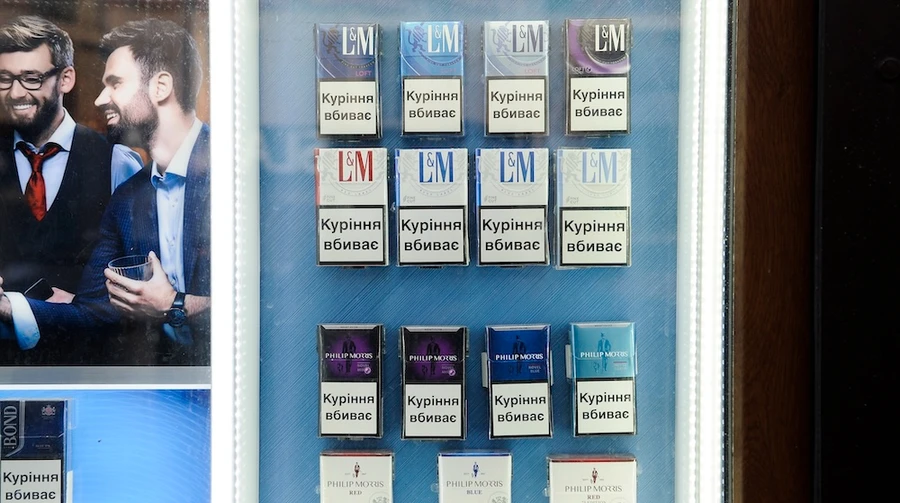
Russian Strikes Destroy JTI and Imperial Brands Ukraine Warehouses, With Losses Reaching Tens of Millions of Hryvnias
According to Ukrainska Pravda, Russian strikes on the Kyiv region during the night of Aug. 4-5, 2026, damaged warehouses storing products of Japan Tobacco International (JTI) and Imperial Brands Ukraine. JTI said a finished goods warehouse in Kyiv Oblast was destroyed, with no employees injured, and that it did not expect disruptions to retail supplies. Imperial Brands Ukraine said products stored at warehouses of distributors and retail partners were affected and estimated losses from the strikes at “tens of millions of Ukrainian hryvnias” (roughly hundreds of thousands of U.S. dollars).
JTI
Aug.07
Philip Morris Romania Executive on Smoke-Free Strategy: How IQOS Spaces Are Moving Beyond Retail to Consumer Connection
In an interview with Romanian marketing publication IQads, Marek Gębski, Director of Smoke-Free Products at Philip Morris Romania, said IQOS experience spaces are evolving from traditional retail locations into platforms for consumer engagement and brand connection. Through locations such as IQOS Boutique Victoriei, PMI aims to use design, culture and consumer experiences to strengthen communication with adult consumers about smoke-free products. The interview highlights how tobacco companies are expanding smoke-free strategies beyond products toward experiential marketing and consumer relationships.
Aug.11
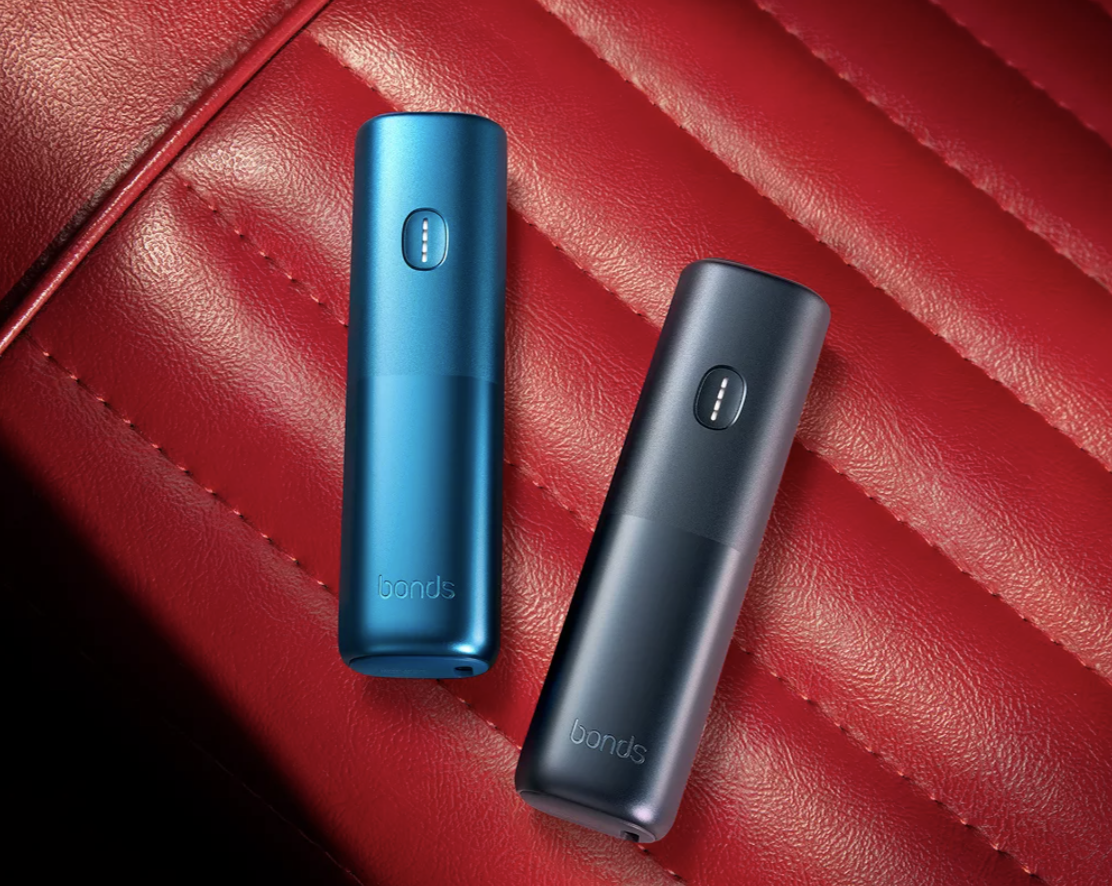
Product | PMI Pilots bonds by IQOS and blends in Japan, Testing a New Heated Tobacco Platform
Philip Morris International (PMI) has launched a regional pilot of bonds by IQOS and dedicated blends tobacco sticks in Japan, introducing a new heated tobacco platform separate from the IQOS ILUMA ecosystem. The system uses Round Heat Technology with an external heating architecture, differentiating it from IQOS ILUMA’s induction-based platform. The pilot began on July 6, 2026, across three Japanese prefectures: Fukuoka, Saga and Nagasaki.
Jul.30
FDA Foreign Tobacco Registration Proposal Could Strengthen ENDS Import Oversight, Azim Chowdhury Says
FDA’s proposed rule requiring foreign tobacco manufacturers to register establishments and list products is more than routine paperwork, Keller and Heckman LLP partner Azim Chowdhury told 2Firsts. He said it could strengthen FDA’s import enforcement, inspections and market surveillance. Chinese e-cigarette OEM/ODM manufacturers, specification developers, brand owners and component suppliers may need to review their roles, product data and U.S. market authorization status.
Special Report
Jun.29
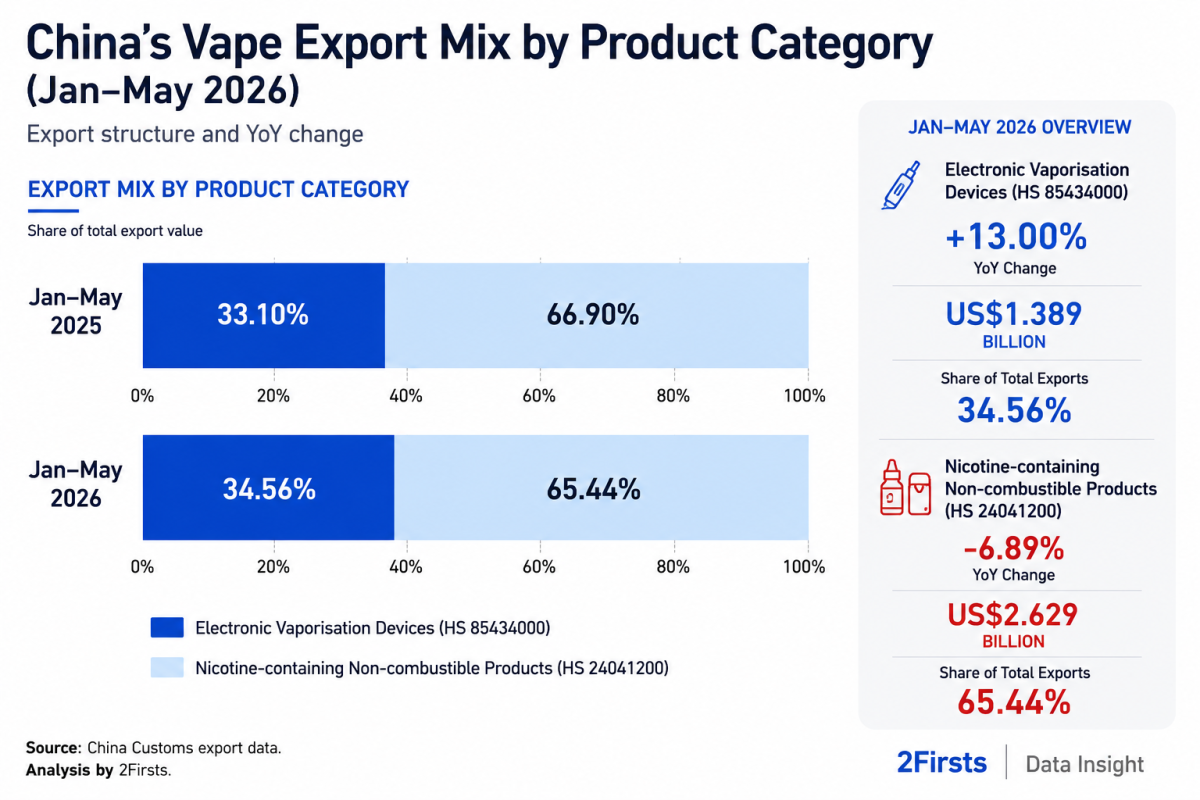
Data|China’s January-May 2026 Device Exports Rise 13% While Nicotine Product Exports Decline 6.9%
According to China Customs export data analyzed by 2Firsts, China’s vape export mix continued to evolve during January-May 2026. Exports of electronic vaporisation devices (HS 85434000) increased 13.00% year on year, supported by growth in both shipment volume and average export prices. Meanwhile, exports of nicotine-containing non-combustible products (HS 24041200) declined 6.89%, with lower shipment volumes partly offset by higher average export prices.
Special Report
Jun.30