[2Firsts,By Vladislav Vorotnikov]Nearly a year after Kazakhstan imposed its ban on vapes, the country’s e-cigarette market is thriving — in the shadows. Despite this, other republics in Central Asia have followed Kazakhstan’s lead, cracking down on legal businesses and pushing the market underground.
On June 20, 2024, Kazakhstan began enforcing a law criminalizing the import, production, sale and distribution of e-cigarettes. Those found selling vapes risk considerable fines or arrest. E-cigarette importers or producers face even harsher penalties, with violators subject to up to two years in prison.
The ban was implemented despite strong resistance from the business community and tobacco harm reduction advocates, who argued that rather than protecting consumers, the restrictions would worsen the situation by driving the market into unregulated territory.
A marketing study conducted in late 2024 by Rafael Gasanov, a member of the Almaty Public Council, suggests those fears have been realized. Kazakhstan’s vape ban not only failed to curb the market, but it also fueled the growth of the illicit trade.
“Monitoring showed that the ban on the circulation of vapes not only did not affect the market but also contributed to the development of the shadow business,” Gasanov said in a statement on social media. “At the same time, it absolutely did not solve the problems of vape use among Kazakhstanis, including teenagers.”
Underground Empire
Reports of illegal vape sales began surfacing almost immediately after the ban took effect. During their research, Gasanov and colleagues discovered 271 unique sellers operating post-ban. Competition among these illegal vendors was fiercest in the largest cities, with 133 underground online shops found in Almaty and 114 in Astana.
Critics say the ban has led to other unintended consequences. According to the Bureau of National Statistics, the number of smokers in Kazakhstan rose by 1.3 percent in 2024, reaching 20.7 percent of the population.
Not everyone considers the measure a failure. Jamilia Sadykova, leader of a prominent Kazakh anti-smoking group, said the vape ban has had the desired effect. When young volunteers test tobacco shops’ willingness to sell vapes, she said, they are typically refused.
“There’s a ban; we don’t want to go to jail,” shopkeepers often respond, according to Sadykova.
Gasanov disagrees. “Ms. Sadykova continues to assure everyone on her social media pages that vapes have practically disappeared from the market,” he said. However, a casual Google search for “vapes in Almaty” returns 15 offers instantly, Gasanov pointed out.
Visible Results
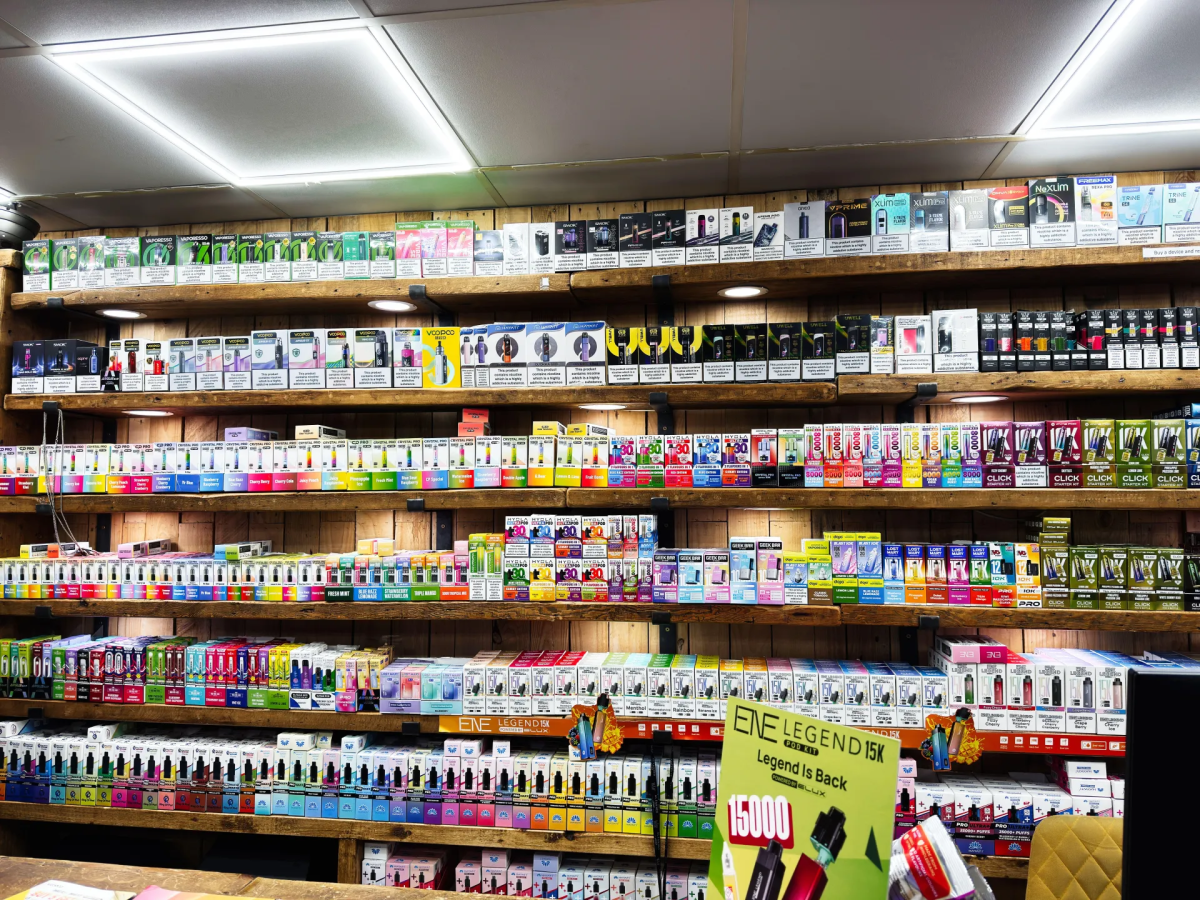
One undisputed effect of the vape ban is the halt in domestic e-cigarette production. Virtually all vapes discovered during investigations were imported from China. The price of vapes has also skyrocketed. Before the ban, the average retail price was KZT2,000 (about $3.92). Today, e-cigarettes sell for up to KZT15,000 on the black market — a price Sadykova said puts them out of reach for underage buyers.
The nature of transactions has changed significantly. According to Gasanov, online sellers now operate like drug dealers, avoiding direct contact with customers. Orders are often delivered by couriers and left in packages at doorsteps or agreed-upon pickup spots.
To further crack down on illegal sellers, Kazakh lawmakers plan to ban the storage of vapes. The move is aimed at closing a loophole that has allowed the underground trade to flourish, said Nurgul Tau, a member of Kazakhstan’s Parliament.
“Currently, punishment is envisaged for import, production, distribution and advertising, but the concept of ‘storage’ is not in the text [of the law], so the law is lame,” Tau told Kursiv. Illegal sellers found with hundreds of vapes can currently avoid liability by claiming the products are for personal use, she added.
Following the Lead
Technically, Kazakhstan was not the first Central Asian country to ban vapes. In 2023, Turkmenistan prohibited the import and sale of e-cigarettes. However, Turkmenistan has long been an outlier in the region. Cigarettes are often in short supply and extremely expensive there, prompting the rise of individual, sometimes homemade, cigarette sales.
Kyrgyzstan, Kazakhstan’s closest cultural and economic ally, banned vapes on Oct. 23, 2024. Uzbekistan, the region’s largest economy, followed on Jan. 20, 2025. In Uzbekistan, critics also warned of unintended effects.
“Bans on e-cigarettes, as world experience shows, do not lead to a decrease in their consumption, but only contribute to the emergence of an illegal market, which is clearly demonstrated by examples of countries such as Brazil and Turkey,” BAT Uzbekistan wrote on its website. According to BAT, illegal consumption in those countries has increased every year since their bans were enacted.
Businesses have also warned of financial repercussions. Under an amendment to the Tax Code that took effect Jan. 1, 2025, Uzbekistan raised the excise tax on e-cigarettes by 200 percent to UZS 2,000 (about $0.16) per 1 milliliter of nicotine-containing liquid, aiming to generate more revenue. But in a country where enforcement is relatively weak — and illegal tobacco products already make up nearly 12 percent of the market — the new bans could further erode the tax base, industry executives cautioned.
“Despite the company’s strict position on preventing access to tobacco and nicotine-containing products for persons under the age of 21, world experience shows that the ban on legal products often leads to the growth of illegal markets and the uncontrolled spread of low-quality goods among minors,” said Temur Gadaybaev, CEO of BAT Uzbekistan.
So far, those warnings have gone unheeded. None of the Central Asian nations that have banned vapes appear poised to reconsider. Currently, Tajikistan is the only republic in the region where e-cigarettes are still legal. But even there, authorities have tightened restrictions. In July 2024, the country increased fines for smoking and vaping in public spaces, including streets, parks and stadiums.