Challenges in Taxing E-Cigarettes and HNB Products in South Africa

Regulations by 2FIRSTS.ai
Jan.08.2024
Challenges in Taxing E-Cigarettes and HNB Products in South Africa
The taxation model of electronic nicotine delivery systems (ENDS) and HnB products poses challenges for the South African government.

According to South African media outlet allafrica, on January 7, it was reported that the electronic nicotine delivery systems (ENDS) or e-cigarettes, as well as heat-not-burn (HnB) products, have presented a challenge to the tax regime of the South African government. Economists and medical health experts have differing opinions on the design of tobacco and nicotine taxation.


South Africa has become a case study that reflects the global disparities as the country reevaluates its taxation policies on tobacco and nicotine.


Marius van Oort, an associate professor at Teplya University, has pointed out that although e-cigarettes and HnB devices do not contain tobacco, they still contain addictive nicotine. Therefore, whether it is appropriate to apply the same tax rate to these products, which are different from traditional combustible tobacco, remains uncertain.


In a recent paper, Van Oort argues for the implementation of risk-based tax rates, which would set tax rates based on the degree of harm various products pose to health. This would require reliance on scientific evidence. He points out that governments need to balance several aspects when setting tax policy, including ensuring sufficient tax revenue, reducing negative health impacts, promoting economic and social development, and gaining political acceptance in a democratic society.


South Africa stands out as a noteworthy case, due to its significant income and wealth inequality issues, underperforming public healthcare system, and high prevalence of non-communicable diseases, particularly among low-income populations. Farnsworth ultimately suggests that given South Africa's current economic situation and health needs, implementing taxation based on the risks associated with tobacco and nicotine products may be the most appropriate strategy.


We welcome news tips, article submissions, interview requests, or comments on this piece.

Please contact us at info@2firsts.com, or reach out to Alan Zhao, CEO of 2Firsts, on LinkedIn


Notice

1.  This article is intended solely for professional research purposes related to industry, technology, and policy. Any references to brands or products are made purely for objective description and do not constitute any form of endorsement, recommendation, or promotion by 2Firsts.

2.  The use of nicotine-containing products — including, but not limited to, cigarettes, e-cigarettes, nicotine pouchand heated tobacco products — carries significant health risks. Users are responsible for complying with all applicable laws and regulations in their respective jurisdictions.

3.  This article is not intended to serve as the basis for any investment decisions or financial advice. 2Firsts assumes no direct or indirect liability for any inaccuracies or errors in the content.

4.  Access to this article is strictly prohibited for individuals below the legal age in their jurisdiction.


Copyright


This article is either an original work created by 2Firsts or a reproduction from third-party sources with proper attribution. All copyrights and usage rights belong to 2Firsts or the original content provider. Unauthorized reproduction, distribution, or any other form of unauthorized use by any individual or organization is strictly prohibited. Violators will be held legally accountable.

For copyright-related inquiries, please contact: info@2firsts.com


AI Assistance Disclaimer


This article may have been enhanced using AI tools to improve translation and editorial efficiency. However, due to technical limitations, inaccuracies may occur. Readers are encouraged to refer to the cited sources for the most accurate information.

We welcome any corrections or feedback. Please contact us at: info@2firsts.com

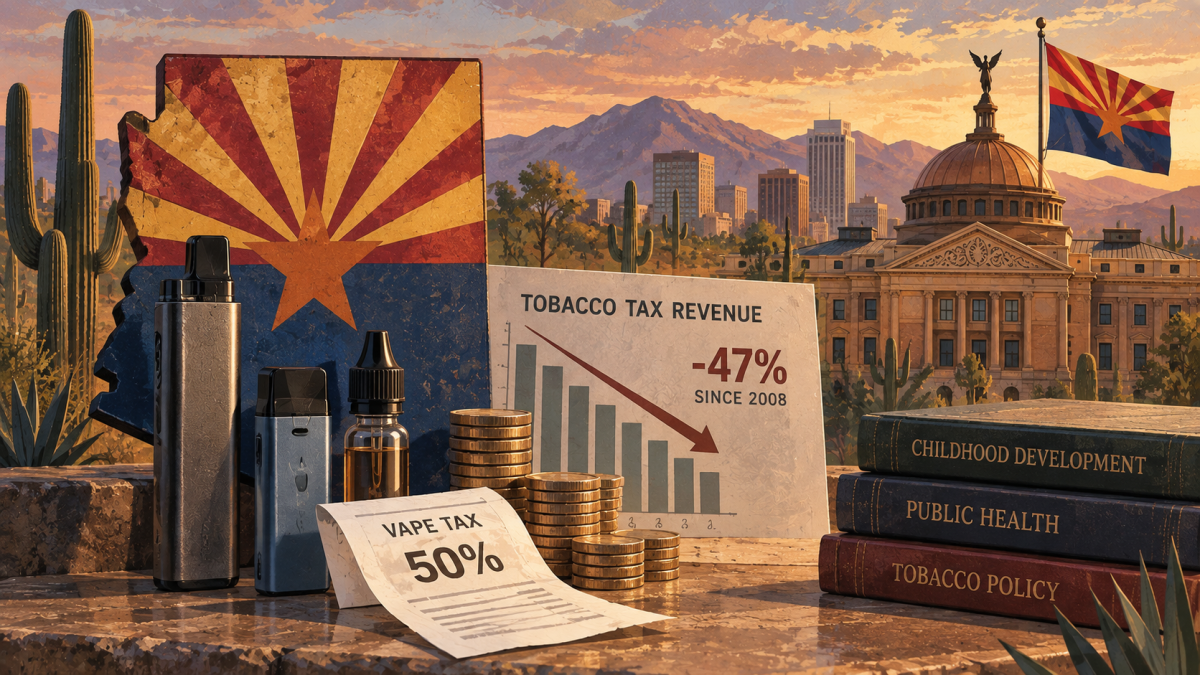
Arizona Turns to a 50% Retail Vape Tax as Tobacco Tax Revenue Falls 47% From 2008
Arizona's First Things First is pushing for an excise tax equal to 50% of the retail price of vaping products, estimating that the measure could generate about $100 million annually. The agency says its tobacco-tax revenue has fallen 47% from 2008 levels. Arizona has attempted to broaden its nicotine tax base in each of the past two years: a 2025 bill proposed a 50% wholesale-price tax, while a 2026 measure shifted to a 50% retail-price tax covering alternative nicotine products and vapor products. Separately, the state enacted HB 4001 this year to establish a new licensing and sales framework for alternative nicotine products.
Sep.21
 PMI Opens Generative AI Center in Portugal to Support Global Operations
PMI Opens Generative AI Center in Portugal to Support Global Operations
According to information released by Portugal’s Trade & Investment Agency (AICEP) in July 2026, Philip Morris International (PMI) has established a global Generative Artificial Intelligence Factory (GenAI Factory) at its Portuguese subsidiary Tabaqueira. The center will support PMI’s global operations by developing and deploying AI solutions focused on industrial process optimization, data analytics, operational automation and AI application development. The initiative strengthens Portugal’s role in PMI’s global technology and innovation network.
Aug.27
Canada Considers Easing Pharmacy-Only Nicotine Pouch Sales Rules, Potentially Reopening Convenience Store Channel
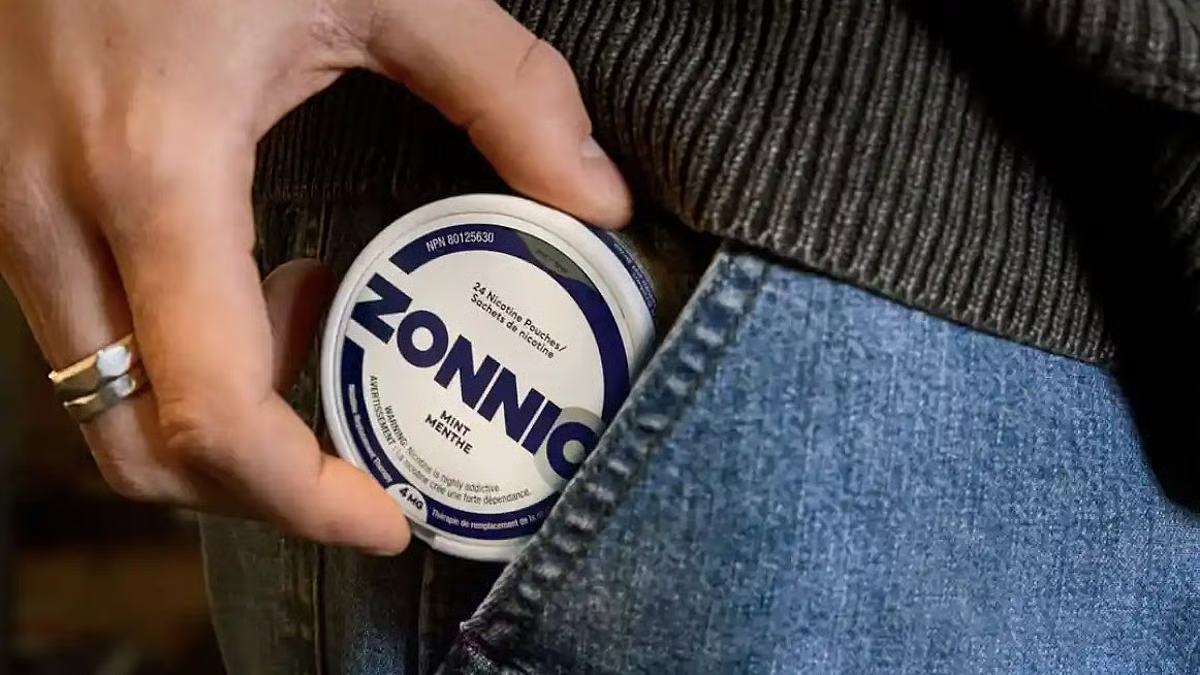
Canada's federal government is considering changes to current restrictions on where nicotine pouches can be sold, potentially allowing authorized products to return to convenience stores and other general retail channels, although no decision has been made. Since 2024, emerging nicotine replacement therapy products such as nicotine pouches have been largely restricted to behind-the-counter pharmacy sales. Health Canada, meanwhile, continues to recall unauthorized and higher-strength nicotine pouches, indicating that the current discussion concerns retail access for authorized products rather than a broad relaxation of nicotine pouch regulation.
Sep.14
Germany's Four-Year Tobacco Tax Plan Heads to Parliament as BAT, JTI and PMI Push for Changes
Germany's parliament is scheduled to hold a first reading of amendments to the Tobacco Tax Act on September 24. The government plans annual tax increases from 2027 through 2030 covering cigarettes, heated tobacco, vaping liquids and other categories. It expects the reform to generate €756 million in additional revenue in 2027, rising to €3.589 billion in additional annual revenue by 2030. Ahead of the parliamentary debate, the German Association of the Tobacco Industry and Novel Products, or BVTE, launched the "Tabaksteuer mit Augenmaß" campaign backed by BAT, JTI, Philip Morris, Reemtsma and wholesale and retail groups.
Sep.23
Ireland’s Vape Tax Raises €22 Million in Nine Months as Government Considers 2027 Budget Changes
According to Irish media outlets Highland Radio and BreakingNews.ie, the Irish government is considering whether to adjust vape tax policy in the 2027 Budget. The tax has generated about €22 million ($24 million) in revenue during its first nine months. While no increase has been confirmed, the revenue performance could influence future fiscal discussions. Any tax rise could increase product costs and potentially affect retail prices.
Aug.12
UK Directors Banned After 352,688 Vapes Imported From China Were Misdeclared as Medical Nebulizers in £15 Million Tax Case
The UK Insolvency Service said YSK Enterprises imported large quantities of vapes from China in 2023, with a shipment addressed to the company declared as medical nebulizers before Border Force found 352,688 vaping products. HMRC calculated nearly £15 million ($20.3 million) in unpaid VAT and customs duty, alongside about £437,000 in corporation tax. Two directors were disqualified for nine years. The case predates the UK's Vaping Products Duty, which will introduce vape-specific excise and duty-stamp requirements from October 2026.
Regulations
Sep.11