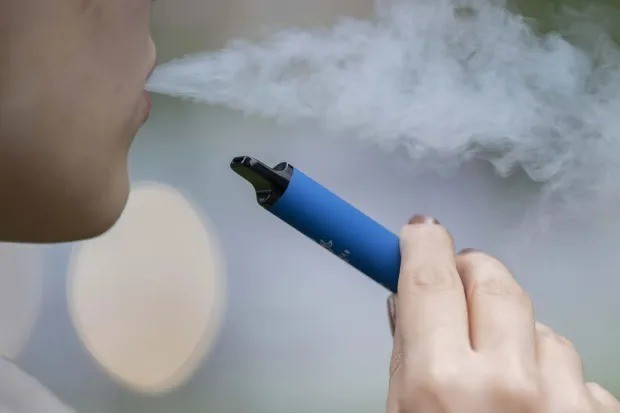
According to the Philippine Star, the Department of Trade and Industry (DTI) of the Philippines is planning to release supplemental guidelines next month for the mandatory certification of e-cigarette products. During a press conference, Assistant Trade Secretary Amanda Nograles mentioned that there have been discussions and a public consultation regarding the technical requirements for the mandatory certification of e-cigarette products.
"We will compile feedback and release a supplementary guide next month," said Noglas.
According to Nogales, the release of the supplementary guidelines memo notifying companies (MC) is in response to the Republic Act 11900, which mandates the registration and certification of e-cigarette products set to take effect this June. This means that before June of this year, all e-cigarette products manufactured or imported should have obtained the Philippine Standard (PS) mark or Import Commodity Clearance (ICC) sticker.
Products with PS marks or ICC stickers confirmed by the DTI have met the quality and safety standards required in the Philippines. Similarly, products distributed in the local market prior to distribution should also bear PS marks or ICC stickers if they fall under the scope of mandatory product certification schemes.
Noglas said that the upcoming MC is a supplementary guide, as the DTI has already released guidelines on mandatory product certification for vaporized nicotine and non-nicotine products in Executive Order 22-06 in 2022. Since this order was issued before the implementation of the e-cigarette law, she stated that there is a need to adjust the certification process.
She said that existing e-cigarette products on the market can be sold from June this year until January 2025. "By January 2025, we will begin a market cleanup period. Products without PS labels or ICC will no longer be allowed," she said.
Nograles also stated that the DTI has sent a letter to the customs bureau, stating that starting in February, goods of e-cigarette products should no longer be unconditionally released without specific clearance certificates from the DTI. This specific clearance certificate allows importers to transport imported products to their warehouses, where the DTI will conduct inspections to ensure that these products comply with the rules on product description and packaging.
The DTI currently has a testing laboratory in Cavite where they are conducting tests on secondary batteries, chargers, e-cigarette devices, and heated tobacco products. Since the DTI does not have facilities to test consumable products, they said that they are allowing third-party laboratories to conduct the certification. They said that they are planning to seek budget for purchasing equipment that would allow DTI to test even consumable products.
Regarding the proposal to ban disposable e-cigarettes, Nogras stated that the DTI is currently studying whether it should be included in the supplementary guidelines.
"If we can find a way to test and ensure its safety and quality, then there's no problem. But fundamentally, it is disposable and sampling will be difficult," she said.
We welcome news tips, article submissions, interview requests, or comments on this piece.
Please contact us at info@2firsts.com, or reach out to Alan Zhao, CEO of 2Firsts, on LinkedIn
Notice
1. This article is intended solely for professional research purposes related to industry, technology, and policy. Any references to brands or products are made purely for objective description and do not constitute any form of endorsement, recommendation, or promotion by 2Firsts.
2. The use of nicotine-containing products — including, but not limited to, cigarettes, e-cigarettes, nicotine pouchand heated tobacco products — carries significant health risks. Users are responsible for complying with all applicable laws and regulations in their respective jurisdictions.
3. This article is not intended to serve as the basis for any investment decisions or financial advice. 2Firsts assumes no direct or indirect liability for any inaccuracies or errors in the content.
4. Access to this article is strictly prohibited for individuals below the legal age in their jurisdiction.
Copyright
This article is either an original work created by 2Firsts or a reproduction from third-party sources with proper attribution. All copyrights and usage rights belong to 2Firsts or the original content provider. Unauthorized reproduction, distribution, or any other form of unauthorized use by any individual or organization is strictly prohibited. Violators will be held legally accountable.
For copyright-related inquiries, please contact: info@2firsts.com
AI Assistance Disclaimer
This article may have been enhanced using AI tools to improve translation and editorial efficiency. However, due to technical limitations, inaccuracies may occur. Readers are encouraged to refer to the cited sources for the most accurate information.
We welcome any corrections or feedback. Please contact us at: info@2firsts.com