Key Takeaways
- FDA authorized four Glas ENDS products for legal marketing in the U.S. to adults aged 21 and older.
- The authorized products are Classic Menthol, Fresh Menthol, Gold and Sapphire pods.
- Each pod contains 50mg/ml, or 5%, tobacco-derived nicotine.
- FDA said this is its first authorization of non-tobacco and non-menthol ENDS products.
- The products use age and identity verification, smartphone pairing and random biometric check-ins to restrict youth access.
2Firsts, May 6, 2026
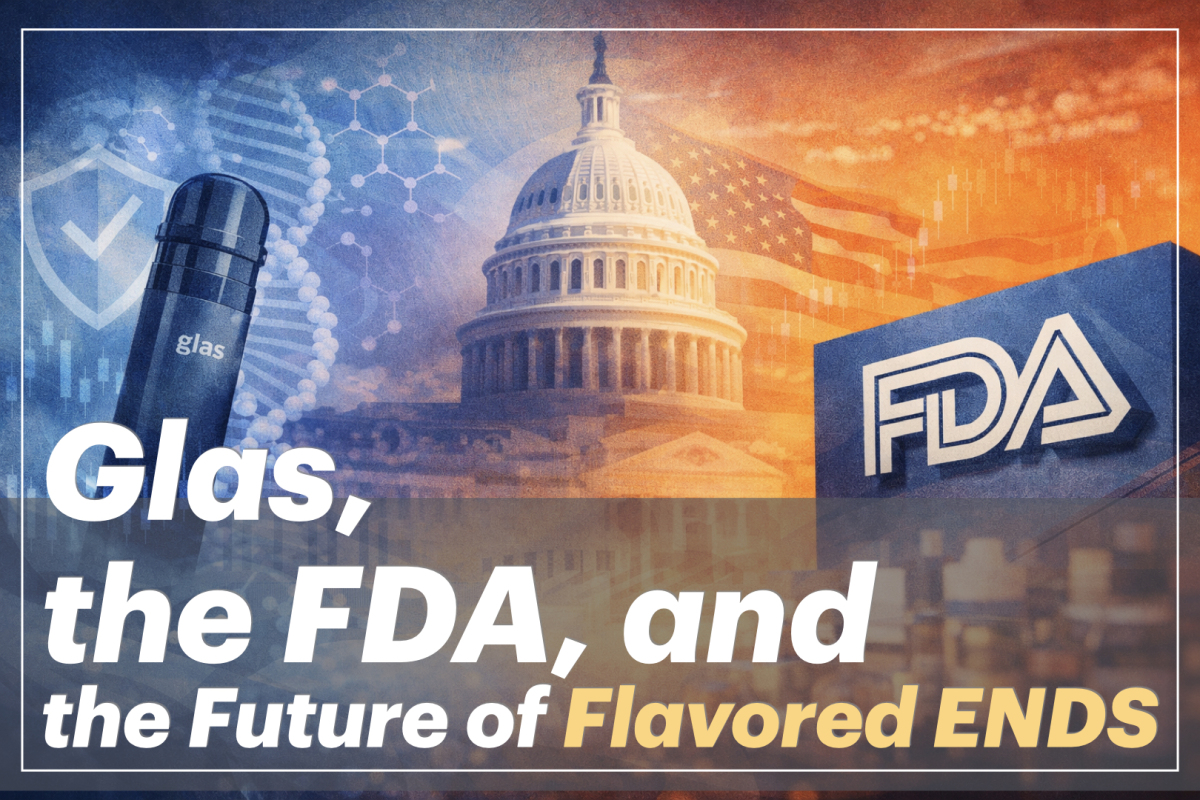
According to the U.S. Food and Drug Administration, the agency authorized the marketing of four Glas electronic nicotine delivery system products through the premarket tobacco product application pathway. The authorized products are Classic Menthol, Fresh Menthol, Gold and Sapphire pods, each containing 50mg/ml, or 5%, tobacco-derived nicotine.
FDA authorized its first non-tobacco and non-menthol ENDS products
The FDA said the action marks its first authorization of non-tobacco and non-menthol ENDS products. The agency said the authorization permits only these four specific Glas products to be legally marketed in the U.S. to adults aged 21 and older and does not apply to any other Glas products.
Agency cited device access restrictions and marketing controls
The FDA said its scientific review found that Glas’s device access restriction technology, combined with FDA-required marketing restrictions, is expected to effectively reduce the ability of youth to use the product.
Device requires government ID and smartphone pairing
According to the FDA, the technology requires users to verify their age and identity using a government-issued ID and pair the device with a smartphone via Bluetooth. After verification, the device will not operate if separated from the phone.
The FDA said the app also conducts random biometric check-ins to periodically confirm that the registered user is the person using the device.
Adults completed verification while youth could not use the product
The agency said the applicant showed that most adults aged 21 and older successfully completed age verification and found the device instructions and age-verification software easy to understand and activate, while youth and young adults could not.
FDA said authorization shows one route for flavored products to meet public health standard
The FDA said the orders confirm the availability of an additional way for demonstrating that a non-tobacco flavored product can meet the public health standard by using effective age-gating.
The agency said a non-tobacco flavored product may be authorized when an application demonstrates that its benefit in helping adults quit cigarette smoking outweighs potential risks.
Marketing must target adults 21 and older
To further reduce potential youth use by limiting youth exposure to advertising, marketing and promotion, the FDA said the marketing orders require the company to ensure its advertising is carefully targeted to adults aged 21 and older.
The FDA said Glas must track, measure and report to the agency the effectiveness of its youth-prevention measures.
The company must also provide analyses of the demographics of audiences reached by its advertising, marketing and promotional activities.
FDA may suspend or withdraw authorization
The FDA said it will closely monitor how the products are marketed and may act if the company fails to comply with statutory or regulatory requirements.
The agency may suspend or withdraw authorization if continued marketing is no longer appropriate for the protection of public health, including if youth use notably increases or if evidence shows that product benefits no longer outweigh risks.
FDA says 45 ENDS products are now authorized in the U.S.
With the new marketing orders, the FDA said it has now authorized 45 ENDS products for marketing in the U.S. The agency said these 45 products are the only ENDS products currently allowed to be lawfully sold in the United States.
The FDA said it continues to take actions against unauthorized ENDS products that remain illegally on the market, including initiatives to help retailers comply with relevant laws and regulations and joint enforcement operations with federal partners at borders and ports.
Image Source:FDA
GLAS PMTA Special report:
We welcome news tips, article submissions, interview requests, or comments on this piece.
Please contact us at info@2firsts.com, or reach out to Alan Zhao, CEO of 2Firsts, on LinkedIn
Notice
1. This article is intended solely for professional research purposes related to industry, technology, and policy. Any references to brands or products are made purely for objective description and do not constitute any form of endorsement, recommendation, or promotion by 2Firsts.
2. The use of nicotine-containing products — including, but not limited to, cigarettes, e-cigarettes, nicotine pouchand heated tobacco products — carries significant health risks. Users are responsible for complying with all applicable laws and regulations in their respective jurisdictions.
3. This article is not intended to serve as the basis for any investment decisions or financial advice. 2Firsts assumes no direct or indirect liability for any inaccuracies or errors in the content.
4. Access to this article is strictly prohibited for individuals below the legal age in their jurisdiction.
Copyright
This article is either an original work created by 2Firsts or a reproduction from third-party sources with proper attribution. All copyrights and usage rights belong to 2Firsts or the original content provider. Unauthorized reproduction, distribution, or any other form of unauthorized use by any individual or organization is strictly prohibited. Violators will be held legally accountable.
For copyright-related inquiries, please contact: info@2firsts.com
AI Assistance Disclaimer
This article may have been enhanced using AI tools to improve translation and editorial efficiency. However, due to technical limitations, inaccuracies may occur. Readers are encouraged to refer to the cited sources for the most accurate information.
We welcome any corrections or feedback. Please contact us at: info@2firsts.com