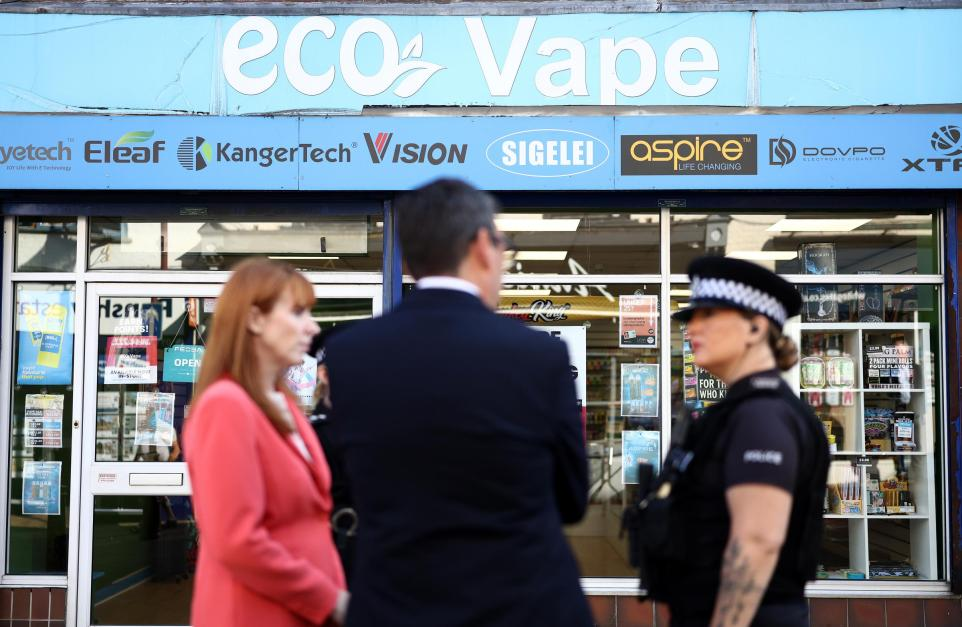
At the end of 2023, the United Kingdom, the second-largest market for e-cigarettes, made a significant move. During his first "accountability" session with King Charles on November 7th, Prime Minister Sunak announced the government's plan to introduce a groundbreaking new law that would prohibit the legal sale of cigarettes to children aged 14 and below in England from this year onwards. This official announcement signals the potential realization of the "Generation End Game" in the UK.
Starting from October 12th, the UK government has begun seeking public opinions on creating a "smokefree generation" and addressing the issue of youth vaping in a consultation that will run for eight weeks until December 6th. Although the consultation does not include e-cigarettes under the "smokefree" category, stricter regulations regarding design, packaging, and flavors are being proposed. This move has still caused ripples within the industry, considering the e-cigarette market's prominence.
The basic approach of the "smoke-free generation" is clear. Currently, in most countries, age restrictions on tobacco and nicotine products are tied to the legal purchasing age. This means that every year, new individuals become potential legal consumers.
The concept of the "Smoke-Free Generation" is to establish a time frame in which consumers entering adulthood are not allowed to purchase tobacco products. If this ban is enforced, the direct consequence would be that potential legal buyers in this age group would no longer contribute to the annual stable growth of the tobacco industry. As a result, the market would unilaterally continue to shrink, and theoretically, it could eventually face complete eradication.
Besides the ideological impact and the absence of immediate effects before the set time limit, allowing the market time to prepare for adjustments, ultimately leading to a "clean" and "perfect" outcome in terms of public health significance - this regulatory approach has its cleverness and has been considered and emulated by many countries since its proposal. However, in practice, more unexpected problems have surfaced.
How will policies shape the market and how will the market voice its opinions on policies? In retrospect of the past year, 2FIRSTS has summarized the actions of various countries towards the "smoke-free generation" in chronological order.
Proposal Content Analysis on "Smoke-free Generation" by Different Countries in 2023 In 2023, countries worldwide have put forth various proposals regarding the vision of a "smoke-free generation". This concept aims to create a generation free from smoking habits and its detrimental effects on public health. Here's an overview of the proposals put forth by different nations on this issue. Country A, recognizing the urgent need to address the adverse health impact of smoking, has proposed a comprehensive action plan. This plan involves implementing stricter regulations on tobacco advertising, increasing taxes on tobacco products, and strengthening public awareness campaigns about the harms of smoking. Additionally, they plan to provide better support for smokers who want to quit by increasing the availability and accessibility of smoking cessation programs and treatments. Country B's proposal centers on a multi-faceted approach to creating a smoke-free generation. They emphasize the importance of implementing smoke-free policies in public places, including educational institutions, healthcare facilities, and recreational spaces. To achieve this goal, they aim to collaborate with various stakeholders, such as non-profit organizations and the private sector, to enforce and monitor these policies effectively. Additionally, they plan to invest in research and development of innovative tobacco control measures and promote alternative nicotine delivery systems as potential harm reduction strategies. In Country C, the proposed measures concentrate on protecting the most vulnerable populations from the harms of smoking. They seek to tighten regulations on the sale and accessibility of tobacco products to minors, ensuring strict enforcement to prevent underage smoking. Furthermore, Country C aims to place a strong emphasis on healthcare professionals actively engaging in smoking cessation counseling and offering support to smokers looking to quit. Additionally, they plan to invest in comprehensive tobacco control programs and allocate resources to provide accessible and affordable smoking cessation services for all individuals. Country D, in their proposal, aims to foster a societal transformation by promoting an environment that discourages smoking. They propose integrating tobacco control measures into various policy areas, such as urban planning, transportation, and tourism. By creating smoke-free public spaces, limiting tobacco product displays, and implementing smoke-free zoning regulations, Country D aims to create a social norm that discourages smoking. Furthermore, they plan to collaborate with international organizations and neighboring countries to share best practices and strengthen their tobacco control efforts collectively. Overall, these proposals from different countries highlight the global commitment towards creating a smoke-free generation. By addressing various aspects of tobacco control, these nations intend to minimize the impact of smoking on public health and create a healthier future for generations to come.
On April 15, 2023, Yuri Gladunov, a city councilor in Saint Petersburg, Russia, proposed a "Smoke-Free Generation" bill. The proposed measures include a ban on selling nicotine-containing products to individuals born after January 1, 2011, as well as prohibiting them from purchasing and consuming such products. The bill also recommends that federal authorities develop and implement a phased plan to completely reduce the production of tobacco products and nicotine-containing products, while also reducing the availability of devices used for their consumption, such as water pipes. The Saint Petersburg City Council has accepted the bill for review.
On October 12, 2023, following Prime Minister Sunak's speech, the UK government launched an eight-week public consultation on "creating a smoke-free generation and controlling teenagers' e-cigarette use". Concerning the issues covered by the public consultation, 2FIRSTS conducted a questionnaire survey among Chinese readers.
On November 6, 2023, the owner of Brookline Sunoco gas station in Brookline, Massachusetts filed a lawsuit in an attempt to overturn the "Generational Ban" that was passed in 2020 but has yet to be implemented.
On November 24, 2023, in New Zealand, the New Zealand New Government, a coalition of three parties, announced their intention to repeal the "Smokefree Generation" amendment previously introduced by the Labour-led government before March 2024. The original measures included a ban on the sale of tobacco to individuals born after January 1, 2009, restrictions on nicotine content in tobacco products, and a reduction of over 90% in tobacco retailers.
On December 14, 2023, the Malaysian Parliament's Upper House passed the Public Health Control of Smoking Products Act 2023, with the exclusion of the "smoke-free generation" clause. The original measures included the prohibition of selling tobacco products and cigarettes, as well as the ban on smoking for individuals born after January 1, 2007.
Continuous Challenges and Controversies
The concept of "Smoke-Free Generation" originated in Singapore in 2010 and was first proposed at the World Conference on Tobacco Control held in New Delhi in 2012, targeting a global audience. Over the past decade, it has been extensively examined and debated by European academia. Out of concern for the health of young people, this policy approach suggests gradually raising the minimum legal age for purchasing tobacco products, with the ultimate goal of achieving a permanent smoking ban. The aim is to continuously and sustainably reduce smoking rates, further preventing young people from developing nicotine addiction and creating favorable conditions for a tobacco-free future.
Its original intentions and concepts are clear: the approach is intuitive and seems to be progressing in a gradual and feasible manner, ultimately achieving an "absolute" and "efficient" result. Since its proposal, this approach has attracted attention from multiple countries. New Zealand became the first country to pass similar legislation in 2022 and was initially scheduled to become effective in January 2024.
As we enter the year 2023, it is clear that overall progress in this area has slowed down globally. The conflicting interests of various stakeholders have resulted in a stalemate and power struggles. Additionally, the advancement in this process has also unveiled previously unconsidered issues that have come to light over time.
Massachusetts has become a negative example in terms of bans in recent years: a report in 2021 revealed that after implementing a ban on flavored tobacco and e-cigarette products statewide, taxable tobacco product sales did decrease in the state, but seemed to have simply shifted to other states, particularly New Hampshire and Rhode Island. On a larger scale, the proportion of nicotine use did not diminish, but rather the market share was handed over. Critics argue that if a more stringent "generational ban" is implemented, it is more likely that tobacco sales will transfer to other regions instead of suppressing tobacco consumption.
Dr. Zulkefly Ahmad, the Malaysian Health Minister, has voiced concerns over the inequality and discriminatory legal status of the "smoke-free generation" regulation. This means that individuals born before January 1st, 2007, and those born on or after that date will receive unequal treatment.
The Aotearoa Vapers Community Advocacy in New Zealand has raised concerns that the proposed tobacco ban, which has been passed down through generations, could potentially fuel the already existing black market and inadvertently make smoking more appealing to young people.
The Game of Taxation and the Freedom to Choose
Taxation, market, and the freedom of choice for adult citizens - the "Generation Smoke-free" ban, which aims to achieve better public health and well-being, has involved various aspects of society in its implementation process.
Before this year, there have been repeated discussions about the ban on this idea. Several Hong Kong government advisers proposed a similar "generation smoke-free" concept in 2022, but it was shelved before a draft could be formed. As for Singapore, which first proposed this idea, there has been little progress in its substantial implementation, with the country's Ministry of Health only stating in early this year, in response to questions from two parliamentary legislators, that it is reviewing the proposal. These countries and regions are still undergoing a slow and arduous process from proposal to implementation of the legislation.
The undeniable reality is that according to the latest data from the Organisation for Economic Co-operation and Development (OECD) in December 2023, over 8% of New Zealanders aged 15 and above regularly use e-cigarettes, ranking second highest globally, surpassed only by Estonia. Among them, teenagers have a higher usage rate, with New Zealand's youth e-cigarette usage far surpassing that of the United Kingdom and Australia. This figure indeed explains the urgency of New Zealand under the leadership of the Labour Party. However, besides the controversial "Smokefree Generation" initiative, are there any more skillful methods available to ensure the health and safety of teenagers and even a wider population?
The year 2024 is fast approaching, and with it the question of whether the "smoke-free generation" will successfully take root in the UK. Which other countries will follow suit? What new measures will be included in this initiative? And what new regulatory approaches will be proposed to limit tobacco consumption among the next generation? 2FIRSTS will continue to monitor the latest developments in nicotine usage regulations worldwide.
We welcome news tips, article submissions, interview requests, or comments on this piece.
Please contact us at info@2firsts.com, or reach out to Alan Zhao, CEO of 2Firsts, on LinkedIn
Notice
1. This article is intended solely for professional research purposes related to industry, technology, and policy. Any references to brands or products are made purely for objective description and do not constitute any form of endorsement, recommendation, or promotion by 2Firsts.
2. The use of nicotine-containing products — including, but not limited to, cigarettes, e-cigarettes, nicotine pouchand heated tobacco products — carries significant health risks. Users are responsible for complying with all applicable laws and regulations in their respective jurisdictions.
3. This article is not intended to serve as the basis for any investment decisions or financial advice. 2Firsts assumes no direct or indirect liability for any inaccuracies or errors in the content.
4. Access to this article is strictly prohibited for individuals below the legal age in their jurisdiction.
Copyright
This article is either an original work created by 2Firsts or a reproduction from third-party sources with proper attribution. All copyrights and usage rights belong to 2Firsts or the original content provider. Unauthorized reproduction, distribution, or any other form of unauthorized use by any individual or organization is strictly prohibited. Violators will be held legally accountable.
For copyright-related inquiries, please contact: info@2firsts.com
AI Assistance Disclaimer
This article may have been enhanced using AI tools to improve translation and editorial efficiency. However, due to technical limitations, inaccuracies may occur. Readers are encouraged to refer to the cited sources for the most accurate information.
We welcome any corrections or feedback. Please contact us at: info@2firsts.com