German Environment Minister Backs Ban on Disposable E-Cigarettes, Citing Safety Risks

Dec.30.2025
German Environment Minister Backs Ban on Disposable E-Cigarettes, Citing Safety Risks
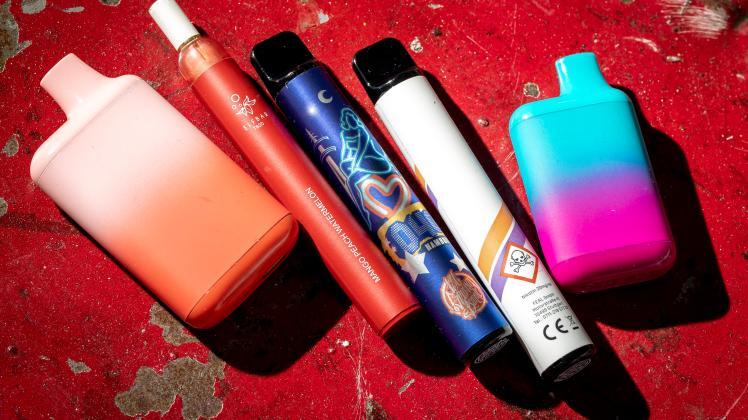
Germany’s Environment Minister Carsten Schneider has expressed clear support for banning disposable e-cigarettes, citing safety hazards, environmental damage, and waste management risks. While the ban has not yet been finalized, Germany’s parliament has instructed the government to examine the proposal. Several European countries, including Belgium, France, and the UK, have already implemented similar bans.

Key Points


  • Germany’s environment minister supports banning disposable e-cigarettes.
  • Safety risks include explosions at waste processing facilities.
  • The Bundestag has asked the government to assess a ban.
  • From July 2025, e-cigarettes can be returned to retail outlets in Germany.
  • Belgium, France, and the UK have already banned disposable vapes.


2Firsts, December 30, 2025 – According to dpa,German Federal Environment Minister Carsten Schneider has voiced strong support for banning disposable e-cigarettes, describing it as his “very clear preference.”


Schneider cited concerns related to health, environmental protection, and disposal safety. He warned that disposable e-cigarettes can explode when entering waste processing facilities, posing risks to workers and causing environmental damage.


In November, the Bundestag requested that the federal government assess the feasibility of banning disposable e-cigarettes, following a motion introduced by the CDU/CSU and SPD parliamentary groups. The Bundesrat has previously supported a ban, though the federal government raised legal concerns.


Several European countries, including Belgium, France, and the United Kingdom, have already enacted bans on disposable e-cigarettes.


From July 2025, consumers in Germany will be able to return e-cigarettes at all retail locations where they are sold. However, no deposit system is planned. Environmental organizations argue that the lack of incentives limits the effectiveness of returns and continue to advocate for a ban.


According to estimates from industry association BfTG, German consumers are expected to spend approximately €2.4 billion on e-cigarettes in 2025, with about one-tenth attributed to disposable products and the remainder to rechargeable and refillable devices.


Consumer and environmental groups have also highlighted the loss of valuable raw materials, such as lithium-cobalt oxide from built-in lithium-ion batteries, used in disposable e-cigarettes.


Image source: dpa 


We welcome news tips, article submissions, interview requests, or comments on this piece.

Please contact us at info@2firsts.com, or reach out to Alan Zhao, CEO of 2Firsts, on LinkedIn


Notice

1.  This article is intended solely for professional research purposes related to industry, technology, and policy. Any references to brands or products are made purely for objective description and do not constitute any form of endorsement, recommendation, or promotion by 2Firsts.

2.  The use of nicotine-containing products — including, but not limited to, cigarettes, e-cigarettes, nicotine pouchand heated tobacco products — carries significant health risks. Users are responsible for complying with all applicable laws and regulations in their respective jurisdictions.

3.  This article is not intended to serve as the basis for any investment decisions or financial advice. 2Firsts assumes no direct or indirect liability for any inaccuracies or errors in the content.

4.  Access to this article is strictly prohibited for individuals below the legal age in their jurisdiction.


Copyright


This article is either an original work created by 2Firsts or a reproduction from third-party sources with proper attribution. All copyrights and usage rights belong to 2Firsts or the original content provider. Unauthorized reproduction, distribution, or any other form of unauthorized use by any individual or organization is strictly prohibited. Violators will be held legally accountable.

For copyright-related inquiries, please contact: info@2firsts.com


AI Assistance Disclaimer


This article may have been enhanced using AI tools to improve translation and editorial efficiency. However, due to technical limitations, inaccuracies may occur. Readers are encouraged to refer to the cited sources for the most accurate information.

We welcome any corrections or feedback. Please contact us at: info@2firsts.com

Malaysia Police Seize RM12.7 Million in Illegal Vapes and Cigarettes as Probe Points to Sea Shipments From China
Police in Malaysia’s Selangor state seized illegal vape products and contraband cigarettes worth about RM12.7 million (approximately $3 million) in two enforcement operations. According to New Straits Times and The Star, the vape-related operation uncovered 131,036 boxes of vape products, 4,900 bottles of e-liquid and 25,510 vape devices, valued at about RM9.4 million. Police said preliminary investigations indicated that some illegal vape products entered Malaysia through sea shipments from China before moving through storage and distribution networks.
Aug.10
Australia’s Daily Smoking Rate Falls to Record Low of 5.8% as Nicotine Use Patterns Shift
According to the Australian Institute of Health and Welfare’s National Drug Strategy Household Survey, daily smoking among Australians aged 18 and over fell to a record low of 5.8% in 2025. Health Minister Mark Butler said Australia now has around 500,000 fewer daily smokers than three years ago and credited the government’s vaping reforms as part of broader progress. Among people aged 14 and over, daily smoking declined from 8.3% in 2022-23 to 5.6% in 2025. Daily vaping rates stabilised at 3.6%, while the government also moved to further restrict access to nicotine pouches through unapproved therapeutic import pathways.
Jul.21
Tasmania Reports Annual Enforcement Results: 5.5 Million Illegal Cigarettes and Nearly 30,000 Vapes Seized, With IGET Products Visible in Official Images
Tasmania reported its 2025/26 illicit tobacco enforcement results on July 14, with authorities seizing about 5.5 million illegal cigarettes, more than 2,500 kilograms of loose tobacco and nearly 30,000 vapes.
Jul.15
Special Report | China Opens Draft Mandatory Heated Cigarette Standard for Comment, Multiple Heating Technologies Remain in Scope
China’s State Tobacco Monopoly Administration (STMA) has released a draft mandatory national standard for heated cigarettes, setting out detailed requirements for tobacco sticks, heating devices and aerosols. The proposal treats the stick and device as parts of the same product system, focuses on minimum safety and quality requirements, and leaves several heating architectures within scope.
Special Report
Jul.29
Shopify Requires Merchants to Remove All Vape Products by July 8, Reshaping Online Sales Channels
Shopify has instructed merchants using its web-hosting services to remove vape products from their online stores by July 8, 2026. The policy expands beyond illegal products and applies to all electronic nicotine delivery systems (ENDS), marking a broader shift in online platform oversight of nicotine sales.
Innovation
Jul.14 by 2Firsts Perspectives
Spain Plans to Extend Smoking Ban to Terraces and Beaches, Bringing Vapes Under New Restrictions
Spain is advancing a new tobacco-control reform that would expand smoking restrictions to additional public spaces, including restaurant terraces and beaches, while bringing vaping and other nicotine products into the same regulatory framework. The proposed measures aim to reduce secondhand smoke exposure, protect young people and expand smoke-free environments. The proposal remains under legislative development, and final implementation details have not yet been confirmed.
Jul.23