Key Points:
1.The Korea Health Promotion Institute has released its latest tobacco control journal, calling for increased regulation of new tobacco products such as e-cigarettes.
2.The report points out that e-cigarette sales are on the rise, with tobacco companies adopting strategies to attract teenagers to use e-cigarettes.
3.Emphasize strengthening control over adolescents' exposure to tobacco ads, as well as introducing stricter laws to protect minors.
4.The new publication shares international experiences and research results, providing scientific evidence for tobacco control policies.
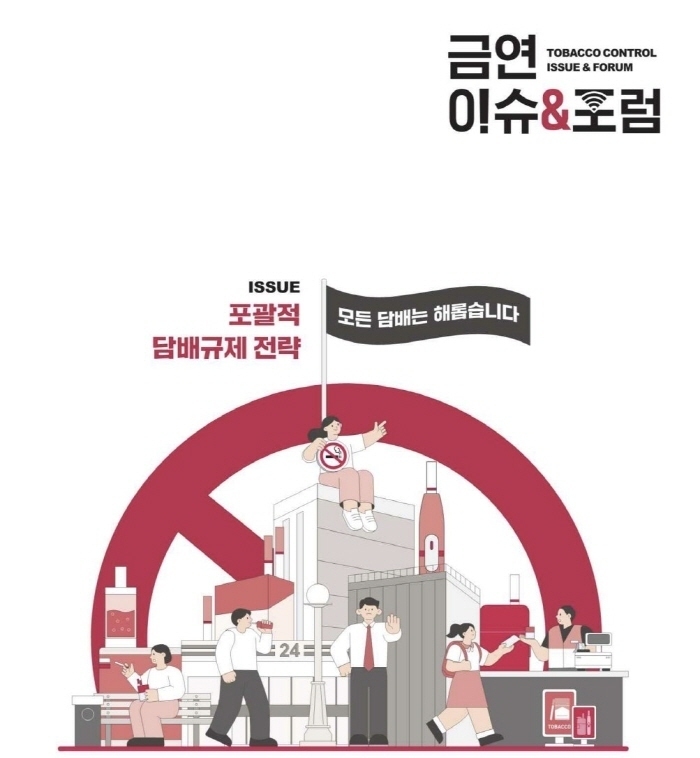
According to South Korean media Medipana on May 20th, the Korea Health Promotion Development Institute focused on discussing the tobacco control policy tasks for a smoke-free future generation in the latest issue of "No Smoking Topics and Forum".
The journal specifically analyzed the harmfulness of new tobacco products such as e-cigarettes and nicotine pouches, as well as marketing strategies and examples targeting future generations in the tobacco industry, emphasizing the need for new tobacco control strategies. It also introduced the latest views of international experts on the harmfulness of e-cigarettes.
Data shows that globally, sales of e-cigarettes, particularly heated tobacco products, have grown rapidly from $15.6 million in 2014 to $38.8 billion last year, an increase of approximately 2500 times. The sales volume of e-cigarettes has also tripled during the same period, indicating the rapid expansion of the e-cigarette market.
A report has pointed out that tobacco companies are attracting young people through e-cigarettes and flavored tobacco products, speeding up nicotine addiction, especially by promoting tobacco products on social media and websites to increase the accessibility for young people. According to monitoring results from the Korea Health Promotion Development Institute, 72.9% of tobacco-related advertisements on the internet are suspected of not implementing age or identity verification procedures, making it easy for young people to access. Additionally, on average, convenience stores have about 28 tobacco advertisements per store.
The Korea Health Promotion Development Institute addressed the issue by featuring Brazil's regulation case on flavored tobacco products in a publication, including opinions from international experts on the risks of e-cigarette use. Brazil not only bans specific flavors, but also completely prohibits additives that enhance the taste of tobacco products, requiring tobacco companies to disclose all ingredients.
A meta-analysis comparing the risks of diseases between e-cigarette and traditional cigarette users showed that there was no significant difference in the risk of cardiovascular disease, stroke, and metabolic disorders between the two groups. 40% to 70% of e-cigarette users also use other tobacco products simultaneously, and these dual users have a higher risk of respiratory and oral diseases compared to those who only use traditional cigarettes.
The Korea Health Promotion Institute added that synthetic nicotine has the same chemical structure as natural nicotine, so there is no need to compare the health impacts of the two. It emphasizes that synthetic nicotine and natural nicotine have equivalent biological effects.
In addition, the Korea Health Promotion Institute has also released two issues of "ITC Research Briefs" and four issues of "Tobacco Control Fact Sheets" to provide the public with the latest research and policy updates on tobacco and its control internationally. These publications have been distributed nationwide to city and provincial governments, regional smoke-free support centers, and smoke-free hotlines, and are available for download on the National Smoke-Free Support Center's website.
Kim Heonju, Director of the Korea Health Promotion Institute, emphasized the need to eliminate current regulatory blind spots in the law and strengthen tobacco control policies to protect children and adolescents from increasingly cunning and aggressive tobacco marketing influences.
We welcome news tips, article submissions, interview requests, or comments on this piece.
Please contact us at info@2firsts.com, or reach out to Alan Zhao, CEO of 2Firsts, on LinkedIn
Notice
1. This article is intended solely for professional research purposes related to industry, technology, and policy. Any references to brands or products are made purely for objective description and do not constitute any form of endorsement, recommendation, or promotion by 2Firsts.
2. The use of nicotine-containing products — including, but not limited to, cigarettes, e-cigarettes, nicotine pouchand heated tobacco products — carries significant health risks. Users are responsible for complying with all applicable laws and regulations in their respective jurisdictions.
3. This article is not intended to serve as the basis for any investment decisions or financial advice. 2Firsts assumes no direct or indirect liability for any inaccuracies or errors in the content.
4. Access to this article is strictly prohibited for individuals below the legal age in their jurisdiction.
Copyright
This article is either an original work created by 2Firsts or a reproduction from third-party sources with proper attribution. All copyrights and usage rights belong to 2Firsts or the original content provider. Unauthorized reproduction, distribution, or any other form of unauthorized use by any individual or organization is strictly prohibited. Violators will be held legally accountable.
For copyright-related inquiries, please contact: info@2firsts.com
AI Assistance Disclaimer
This article may have been enhanced using AI tools to improve translation and editorial efficiency. However, due to technical limitations, inaccuracies may occur. Readers are encouraged to refer to the cited sources for the most accurate information.
We welcome any corrections or feedback. Please contact us at: info@2firsts.com