High Smoking Rates in Croatia: Urgent Call for Legislation Change

Mar.06.2025
High Smoking Rates in Croatia: Urgent Call for Legislation Change
Croatia urged to ban smoking in enclosed public spaces as smoking rate reaches 38% among adults, 44% among students.

Key points:


According to data from the Croatian Institute of Public Health (HZJZ), 38% of adults smoke, while 44% of students use e-cigarettes.


The Director of HZJZ, Kapek, has called for a complete ban on smoking in public enclosed spaces, and for legislation to be revised in order to reduce smoking rates.


Petkovic pointed out that new tobacco products such as heated tobacco and e-cigarettes are attracting new smokers. Despite their potentially reduced harm compared to traditional cigarettes, they are still harmful to health.


According to a report by Vecernji on March 5th, data from the Croatian Institute of Public Health (HZJZ) shows that 38% of adults in Croatia smoke, while 44% of students use e-cigarettes, making Croatia one of the countries with the highest smoking rates in the EU.


The Director of the Croatian Institute of Public Health (HZJZ), Krunoslav Capak, has called for a complete ban on smoking in all public enclosed spaces.


We need legislative amendments to bring Croatia in line with other EU countries. Smoking rates in Scandinavian countries and the United States have dropped to below 10%.


Željko Petković, Deputy Director of the Croatian Institute of Public Health (HZJZ), pointed out that new tobacco products such as heated tobacco, e-cigarettes, nicotine pouches, have attracted a new generation of smokers.


E-cigarettes and heated tobacco products have created a new generation of smokers. While their risks may be lesser, they are still harmful.


We welcome news tips, article submissions, interview requests, or comments on this piece.

Please contact us at info@2firsts.com, or reach out to Alan Zhao, CEO of 2Firsts, on LinkedIn


Notice

1.  This article is intended solely for professional research purposes related to industry, technology, and policy. Any references to brands or products are made purely for objective description and do not constitute any form of endorsement, recommendation, or promotion by 2Firsts.

2.  The use of nicotine-containing products — including, but not limited to, cigarettes, e-cigarettes, nicotine pouchand heated tobacco products — carries significant health risks. Users are responsible for complying with all applicable laws and regulations in their respective jurisdictions.

3.  This article is not intended to serve as the basis for any investment decisions or financial advice. 2Firsts assumes no direct or indirect liability for any inaccuracies or errors in the content.

4.  Access to this article is strictly prohibited for individuals below the legal age in their jurisdiction.


Copyright


This article is either an original work created by 2Firsts or a reproduction from third-party sources with proper attribution. All copyrights and usage rights belong to 2Firsts or the original content provider. Unauthorized reproduction, distribution, or any other form of unauthorized use by any individual or organization is strictly prohibited. Violators will be held legally accountable.

For copyright-related inquiries, please contact: info@2firsts.com


AI Assistance Disclaimer


This article may have been enhanced using AI tools to improve translation and editorial efficiency. However, due to technical limitations, inaccuracies may occur. Readers are encouraged to refer to the cited sources for the most accurate information.

We welcome any corrections or feedback. Please contact us at: info@2firsts.com

Kantar Study Finds More Than 93% of Vape Products in Ukraine Fail Regulatory Requirements
According to Interfax-Ukraine, a study conducted by market research firm Kantar Ukraine at the request of major tobacco companies found that more than 93% of vape products in Ukraine did not fully comply with regulatory requirements. The research examined product categories, brand distribution and consumer purchasing channels, showing that pod systems and disposable vapes represent major segments of the market, while offline retail remains the dominant purchasing channel. The findings highlight ongoing compliance challenges in Ukraine’s vape market.
Aug.26
FDA Revises Import Alert 98-07 Rules, Bringing May Enforcement Priorities Into Unauthorized ENDS Detentions
The U.S. Food and Drug Administration has revised the rules under Import Alert 98-07 to incorporate its May 2026 enforcement-priority policy for certain electronic nicotine delivery systems marketed without premarket authorization. The alert continues to allow detention without physical examination, or DWPE, for ENDS lacking required marketing authorization, while directing field divisions to apply the May risk-based framework. When necessary, detention or refusal decisions must also undergo review by the FDA's Center for Tobacco Products. Products including PACHA and Vuse Pro have already emerged as industry examples of the May policy, although enforcement discretion does not constitute FDA marketing authorization.
News
Sep.28 by 2Firsts Perspectives
NAS 2026 | Former FDA Tobacco Chief Mitch Zeller Calls for Shift From “End Game” to “End State”
At the 2026 New Approaches Summit in New York, former FDA Center for Tobacco Products Director Mitch Zeller called for the tobacco harm reduction debate to shift from the traditional “end game” toward defining a desired “end state.” He also highlighted unresolved concerns around dual use, argued that biomarkers of exposure may be more meaningful than cigarettes-per-day in assessing risk reduction, and said nicotine misperceptions remain a major barrier to public health progress.
Sep.25
Product | R.J. Reynolds Launches Four Flavored Vuse Pro Pods for Vuse Alto Devices in U.S.
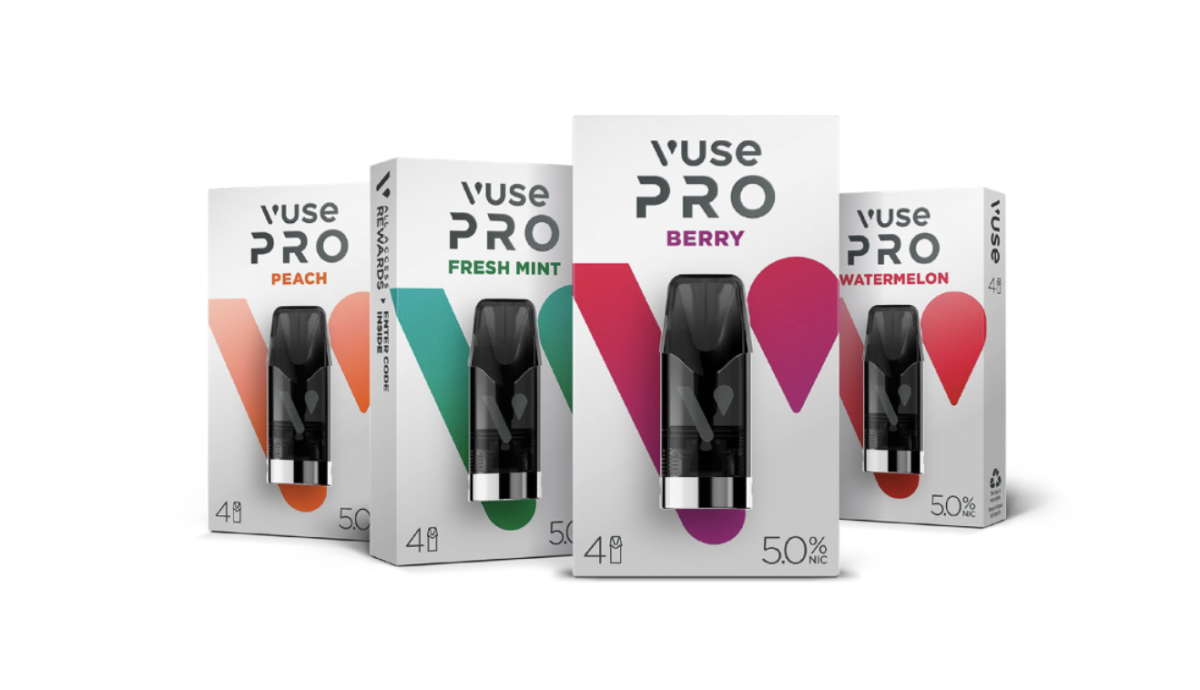
R.J. Reynolds Vapor Company has introduced Vuse Pro prefilled pods in Peach, Berry, Watermelon and Fresh Mint in selected U.S. states. Vuse’s U.S. website says the pods are intended for use with existing Vuse Alto devices. Each contains 2.0 mL of e-liquid at 5.0% nicotine by weight, uses nicotine salts and is offered in two- and four-pod packs. Reynolds said the rollout includes mandatory ID scanning for every purchase, purchase limits, stronger retailer-accountability requirements and strict age-restricted marketing standards. The four pods have not received marketing authorization from the U.S. Food and Drug Administration.
Sep.10
Yinghe-Controlled Vape Maker SKE Ordered to Post £569,039 Security as It Pursues Crystal Bar Design Infringement Case in UK
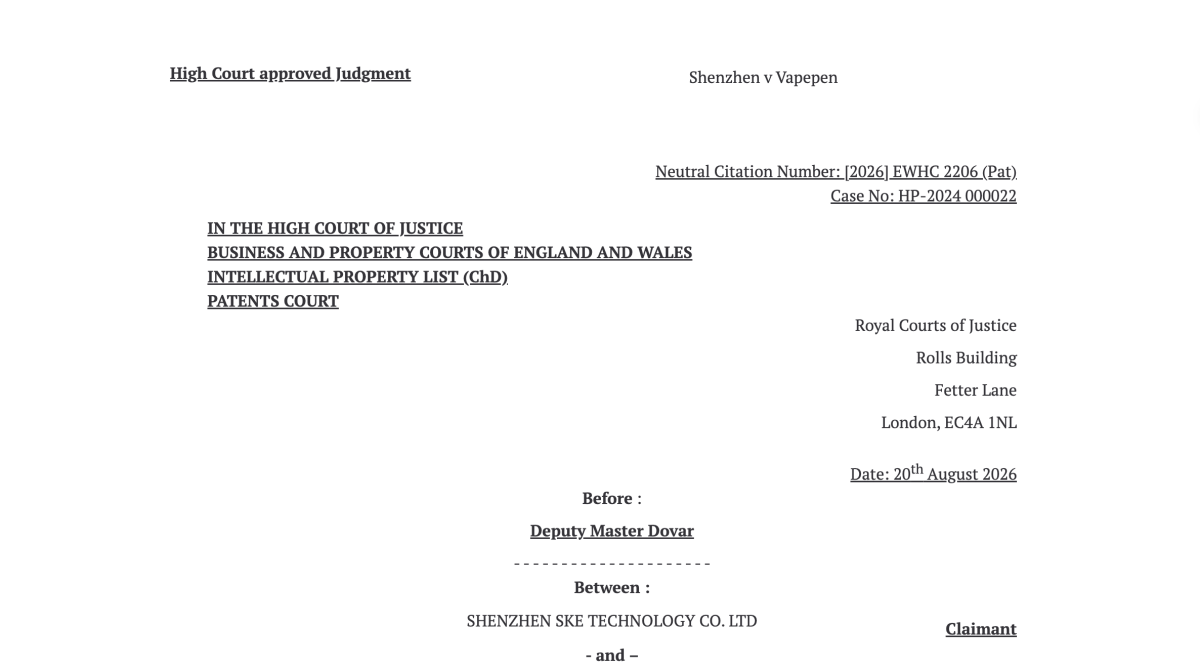
The UK High Court has ordered Chinese vape manufacturer Shenzhen SKE Technology to provide £569,039 ($776,000) in security for costs in its design infringement proceedings against Vapepen London and other defendants over its Crystal Bar vape product. The court did not accept the defendants’ main argument that recovering costs from a China-based company would face significant enforcement obstacles, but found that SKE had not sufficiently disclosed its own financial position. The order is procedural and does not determine the underlying infringement claims.
News
Aug.21
Ohio Supreme Court Weighs Whether State Consumer Law Can Restrict Flavored Vape Sales
The Ohio Supreme Court is hearing a case involving flavored vape sales and whether state authorities can use consumer protection laws to take action against retailers selling unauthorized vape products. Ohio officials argue that selling unauthorized flavored vapes may constitute consumer deception, while retailers argue that tobacco product regulation falls under federal Food and Drug Administration (FDA) authority and that states cannot impose additional restrictions through consumer laws. The case could affect the scope of state-level vape regulation across the United States.
Aug.06