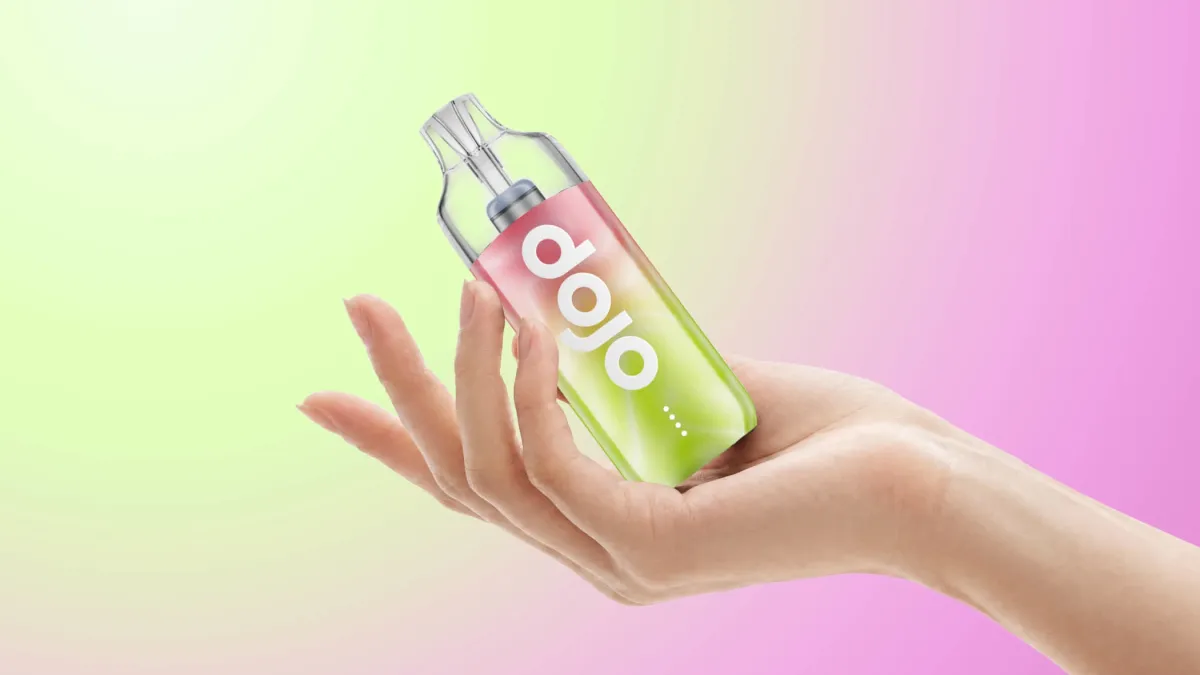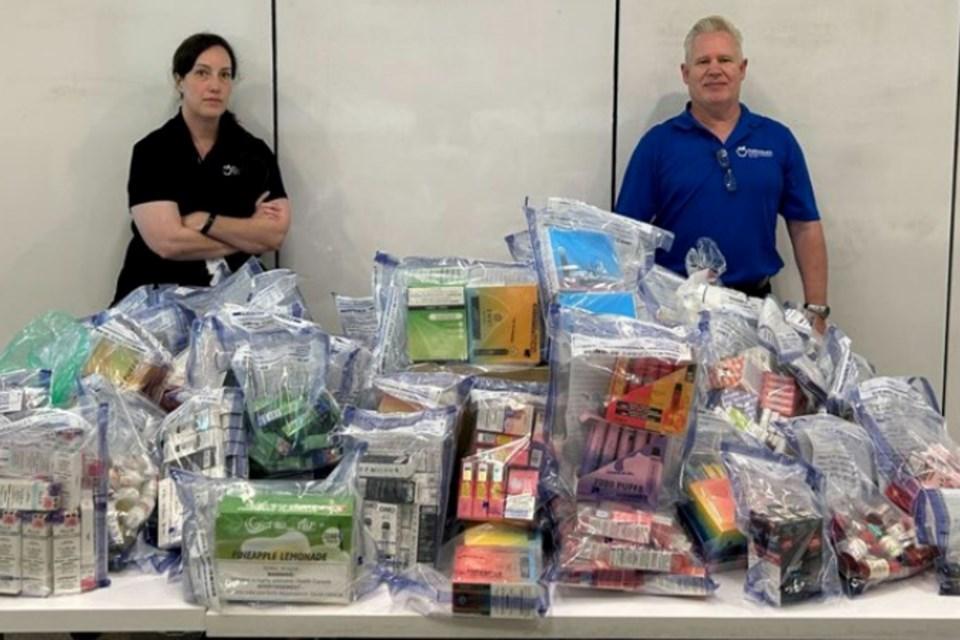
According to a report by Canadian media outlet Guelph Today, the public health department in the province of Ontario has confiscated nearly $45,000 worth of illegal e-cigarette products from local retailers over the past eight months.
In one case, law enforcement authorities discovered a significant amount of illegal e-cigarette products during a food inspection. These products were concealed behind a fake wall. In another instance, a convenience store was involved in concealing illegal products within a makeshift container made from a binder clip.
Phil Wong, the manager of the environmental health department responsible for enforcing public health laws on tobacco and e-cigarette products, referred to the situation as "one of the most creative things I've ever seen" in his report to the WDG Health Committee on Wednesday. He emphasized that it showcases the efforts made by operators to continue selling these illegal products.
According to the Smoke-Free Ontario Act, the fine range for selling e-cigarette products that contain nicotine levels exceeding the legal limit in Canada, are purchased overseas without approval from Health Canada, or selling flavored products outside of professional e-cigarette stores, is from 125 to 400 CAD. The maximum allowable nicotine concentration in e-cigarette products is 20 milligrams per milliliter, anything above this standard is considered illegal. Wong stated that they discovered products with nicotine concentrations exceeding 50 milligrams per milliliter.
They also discovered that some local stores have been purchasing products from other countries, including e-liquids with unknown nicotine content, while one fined retailer was actually blending and producing their own e-liquid. Wong stated that the number of fines issued this year has exceeded the total of the past five to six years combined. This is partly attributed to the limitations on enforcement during the pandemic, although he emphasized the clear trend of non-compliance in the region.
Since the implementation of the Smoke-Free Ontario Act in 2017, over 90 violation notices and fines have been issued under this regulation. However, due to the pandemic, no fines were issued in 2018, 2019, 2021, and 2022, with only one fine issued in 2020. This indicates that the majority of violations have occurred this year. Many of these violations involve the sale of flavored e-cigarette products at gas stations and convenience stores. However, the majority of violations this year have been related to selling to minors under the age of 19.
Public health conducts an annual sting operation on 201 e-cigarette retailers in the region. Employing students aged between 15 and 18, public health officials purchase tobacco or e-cigarette products from these retailers, following which law enforcement personnel issue violation notices to retailers found selling products to minors.
In 110 e-cigarette audits conducted over the past eight months, it was found that 30% of the interactions resulted in sales, indicating that 33 stores sold their products to underage individuals below the age of 19.
Wong stated, "This is the highest ratio we have ever seen." Selling tobacco products to teenagers multiple times during the testing period could potentially result in an automatic ban on tobacco products.
During the conference, Dr. Nicola Mercer, Director of Public Health, expressed grave concerns, stating, "This is actually very serious. Once your child becomes addicted, we don't actually have any medical means to help them quit." While there is a plan in place to address cigarette addiction, there is no equivalent for e-cigarettes, as they may contain higher levels of nicotine. Wong explained, "With cigarettes, you know when to stop, but with e-cigarettes, you don't know when to stop, so the level of nicotine exposure is definitely higher.
The common ingredients of these products include propylene glycol, ethylene glycol, glycerol, flavorings, nicotine, and other chemicals. Although these products have obtained the approval of the federal government, the long-term effects are not yet clear.
Mercer has expressed the need for government policies to improve law enforcement and regulation in the industry. Simultaneously, the Department of Public Health has introduced an online complaint tool for community members to report retailers who sell illegal products or sell to minors. There are two distinct platforms: one for the wider community and another specifically for use within school campuses. Since its launch in the autumn, over 65 complaints, requests, and referrals to tobacco enforcement officials have already been received. The Department of Public Health is also developing educational modules for teenagers and implementing targeted enforcement efforts near schools.
We welcome news tips, article submissions, interview requests, or comments on this piece.
Please contact us at info@2firsts.com, or reach out to Alan Zhao, CEO of 2Firsts, on LinkedIn
Notice
1. This article is intended solely for professional research purposes related to industry, technology, and policy. Any references to brands or products are made purely for objective description and do not constitute any form of endorsement, recommendation, or promotion by 2Firsts.
2. The use of nicotine-containing products — including, but not limited to, cigarettes, e-cigarettes, nicotine pouchand heated tobacco products — carries significant health risks. Users are responsible for complying with all applicable laws and regulations in their respective jurisdictions.
3. This article is not intended to serve as the basis for any investment decisions or financial advice. 2Firsts assumes no direct or indirect liability for any inaccuracies or errors in the content.
4. Access to this article is strictly prohibited for individuals below the legal age in their jurisdiction.
Copyright
This article is either an original work created by 2Firsts or a reproduction from third-party sources with proper attribution. All copyrights and usage rights belong to 2Firsts or the original content provider. Unauthorized reproduction, distribution, or any other form of unauthorized use by any individual or organization is strictly prohibited. Violators will be held legally accountable.
For copyright-related inquiries, please contact: info@2firsts.com
AI Assistance Disclaimer
This article may have been enhanced using AI tools to improve translation and editorial efficiency. However, due to technical limitations, inaccuracies may occur. Readers are encouraged to refer to the cited sources for the most accurate information.
We welcome any corrections or feedback. Please contact us at: info@2firsts.com