
Illegal Tobacco and Nicotine Production Factory Raided in St. Petersburg

Jul.11.2024
Illegal Tobacco and Nicotine Production Factory Raided in St. Petersburg
Police in St. Petersburg, Russia, raided a large illegal tobacco and nicotine products factory, seizing millions in equipment and goods.

According to a report from TASS on July 10, the police in St. Petersburg, Russia, have cleared out a large illegal tobacco and nicotine product production factory. Irina Volk, an official representative of the Russian Ministry of Internal Affairs, revealed that the factory also produced e-cigarettes and e-liquid.

Illegal Tobacco and Nicotine Production Factory Raided in St. Petersburg
Image source: Press service of the St. Petersburg and Leningrad Region Directorate of the Russian Ministry of Interior Affairs.


According to Irina Volk, the factory is located in an industrial building in the Vologodsky district, spanning two floors. The building is equipped with machinery for manufacturing snuff and chewing tobacco, as well as products such as e-cigarettes and e-liquids. Preliminary estimates suggest that the value of the seized technical equipment in the factory could be worth tens of millions of rubles.
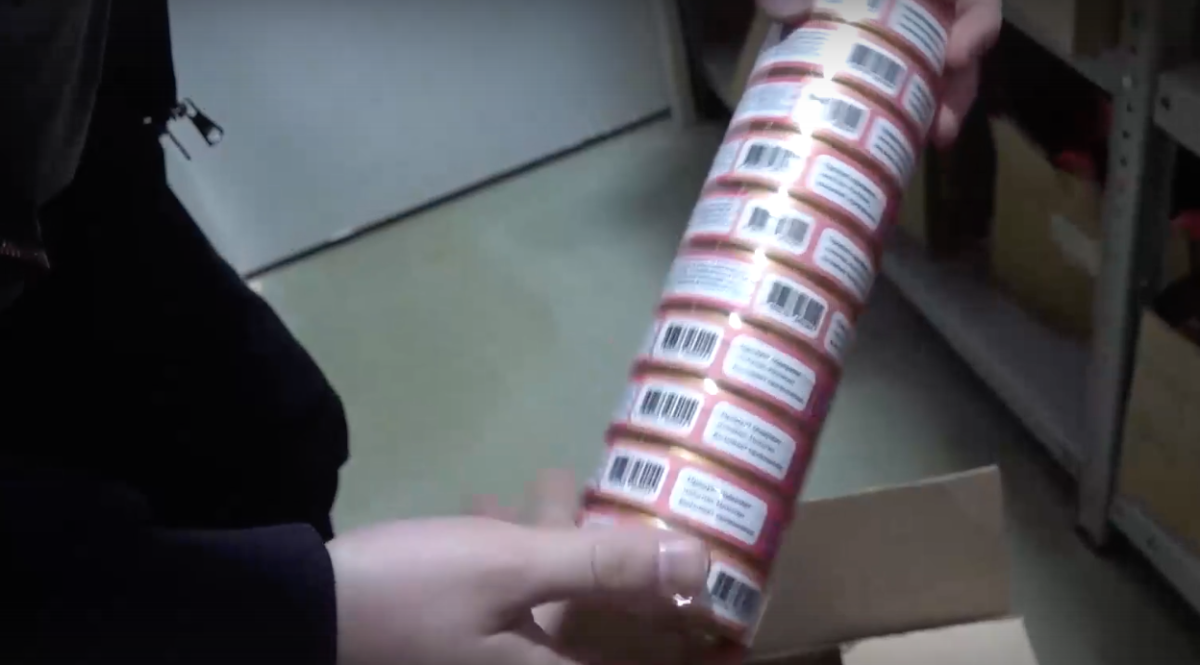
Illegal Tobacco and Nicotine Production Factory Raided in St. Petersburg
Image source: Press Service of the Main Directorate of the Ministry of Internal Affairs for St. Petersburg and the Leningrad Region (Пресс-служба ГУ МВД по Петербургу и Ленобласти)


According to preliminary data, the technical equipment seized from the company is worth tens of millions of rubles. During the police search at the factory, e-cigarette chemical materials, finished tobacco products, and unmarked e-cigarettes were found.

Illegal Tobacco and Nicotine Production Factory Raided in St. Petersburg
Image source: Press Service of the Ministry of Internal Affairs of St. Petersburg and Leningrad Region


Currently, the police have opened a case under Article 171.1, paragraph 6 of the Russian Federation Criminal Code (production, purchase, storage, transportation, or sale of goods and products without proper labeling and/or the required information according to Russian Federation laws). The seized products and equipment have been sent for assessment.


Illegal Tobacco and Nicotine Production Factory Raided in St. Petersburg
Image source: Press service of the Saint Petersburg and Leningrad Region Main Directorate of the Ministry of Internal Affairs of Russia


Illegal Tobacco and Nicotine Production Factory Raided in St. Petersburg
Image source: Press service of the Main Directorate of the Ministry of Internal Affairs of St. Petersburg and Leningrad Region

We welcome news tips, article submissions, interview requests, or comments on this piece.

Please contact us at info@2firsts.com, or reach out to Alan Zhao, CEO of 2Firsts, on LinkedIn


Notice

1.  This article is intended solely for professional research purposes related to industry, technology, and policy. Any references to brands or products are made purely for objective description and do not constitute any form of endorsement, recommendation, or promotion by 2Firsts.

2.  The use of nicotine-containing products — including, but not limited to, cigarettes, e-cigarettes, nicotine pouchand heated tobacco products — carries significant health risks. Users are responsible for complying with all applicable laws and regulations in their respective jurisdictions.

3.  This article is not intended to serve as the basis for any investment decisions or financial advice. 2Firsts assumes no direct or indirect liability for any inaccuracies or errors in the content.

4.  Access to this article is strictly prohibited for individuals below the legal age in their jurisdiction.


Copyright


This article is either an original work created by 2Firsts or a reproduction from third-party sources with proper attribution. All copyrights and usage rights belong to 2Firsts or the original content provider. Unauthorized reproduction, distribution, or any other form of unauthorized use by any individual or organization is strictly prohibited. Violators will be held legally accountable.

For copyright-related inquiries, please contact: info@2firsts.com


AI Assistance Disclaimer


This article may have been enhanced using AI tools to improve translation and editorial efficiency. However, due to technical limitations, inaccuracies may occur. Readers are encouraged to refer to the cited sources for the most accurate information.

We welcome any corrections or feedback. Please contact us at: info@2firsts.com

South Korea’s Revised Tobacco Business Act to Take Effect, With Penalties for Unauthorized Sales
With the revised Tobacco Business Act set to take effect on April 24, synthetic nicotine e-cigarettes will be included within the legal definition of tobacco in South Korea. According to information released by Ongjin County, businesses wishing to sell these products must obtain tobacco retailer designation from the relevant authority.
Mar.25 by 2FIRSTS.ai
Azerbaijan parliament passes third-reading amendments introducing e-cigarette penalties, effective April 1, 2026
Azerbaijan’s Milli Majlis has adopted, in its third reading, amendments to the Code of Administrative Offences introducing fines and confiscation for the use of e-cigarettes and their components, as well as import, export, production, wholesale and retail sales, and storage for sale.
Mar.04 by 2FIRSTS.ai
FDA Issues Draft PMTA Guidance for Flavored E-Cigarettes, Maintaining Higher Evidence Bar for Fruit and Sweet Flavors
The U.S. Food and Drug Administration (FDA) on March 9 released a draft guidance outlining its current thinking on premarket tobacco product applications (PMTAs) for flavored electronic nicotine delivery systems (ENDS). The document reiterates that fruit, candy, dessert, and other sweet-flavored e-cigarettes present a “significant public health risk” to youth and therefore face a higher evidentiary burden if manufacturers seek marketing authorization.
Mar.10 by 2FIRSTS.ai
European survey: current e-cigarette use among 15–19-year-olds rises from 14% (2019) to 22% (2024)
A European study cited in the report says the share of young people aged 15 to 19 who are current e-cigarette users increased from 14% in 2019 to 22% in 2024, with Italy reflecting the broader European pattern. Over the same period, conventional cigarette smoking among young people is described as declining, with the proportion of students who have smoked at least once in their lifetime falling sharply from 1995 to 2024, and the largest drop occurring between 2019 and 2024.
Feb.12 by 2FIRSTS.ai
Hillsborough County Public Schools to install vaping detection sensors across all high schools
Hillsborough County Public Schools (HCPS) announced it will install vaping detection sensors across all high schools in Hillsborough County as part of what officials called a “proactive step” toward healthier and safer learning environments. District staff said the sensors are intended to help reduce vaping on campus, support student well-being and encourage positive behavior change.
Feb.26 by 2FIRSTS.ai
China Caps E-Cigarette Capacity and Requires Export Compliance Proof to Curb “Involution”
China’s top tobacco regulator has issued a directive aimed at preventing excess capacity and curbing “involution-style” competition in the e-cigarette sector. The notice tightens investment controls, formalizes verified capacity management and requires exporters to submit compliance proof for destination markets, signaling a push toward higher industry concentration and stricter cross-border oversight.
Special Report
Feb.13