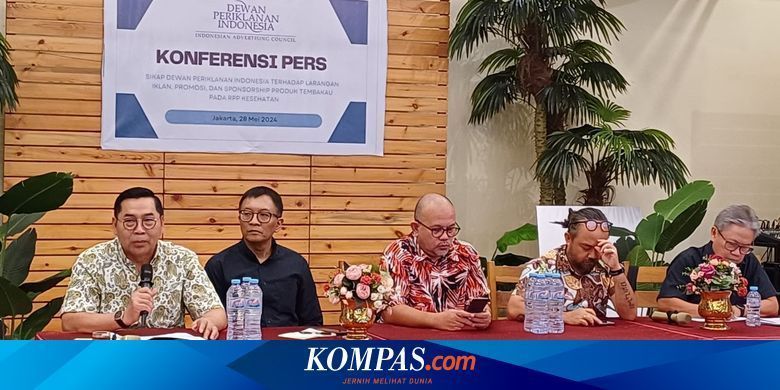
According to Indonesian media KOMPAS on May 28, the Indonesian Advertising Council (DPI) has expressed opposition to the government's proposed health bill (RPP) that bans advertising, promotion, and sponsorship of tobacco products including cigarettes. This bill is based on Health Law No. 17 of 2023.
M Rafiq, the chairman of the Indonesian Public Health Association (DPI), has expressed his desire to participate in discussions regarding the draft law with the National Palace and Ministry of Health, but the government has not responded to his request. Rafiq stated at a press conference in southern Jakarta that he hopes Indonesian President Joko Widodo can review the part of the health law that prohibits the advertising, promotion, and sponsorship of tobacco products.
He also stated that he does not want the government to implement this regulation without the involvement of representatives from the advertising and creative industry in DPI. He warned that if this controversial plan is put into effect, it could hinder the development of the creative industry, especially under the strong commitments of President Prabowo and Vice President Gibran.
Rafiq emphasized that cigarette advertising has been regulated in various provisions, including the Broadcasting Act No. 32 of 2002 and the broadcasting behavior guidelines and program standards set by the Indonesian Broadcasting Commission (KPI). Additionally, Government Regulation No. 109 of 2012 ensures that manufacturers' communication is targeted only at adult consumers (18 years and older).
He called for attention to the development of the creative industry, emphasizing that they strictly adhere to all regulations and laws, including the Indonesian Advertising Ethics (EPI). Rafiq warned that before the COVID-19 pandemic, the creative industry had one million employees, but after the pandemic there were only 750,000 remaining. If regulations prohibiting tobacco advertising, promotion, and sponsorship are implemented, the number of tech workers may further decrease.
He also expressed that if the health bill is passed, the television industry would lose approximately 9 trillion Indonesian rupiahs in revenue each year due to the inability to collaborate with cigarette companies. He added that the broadcasting industry would also lose a significant portion of the advertising market, and partners of the Indonesian Digital Association and Indonesian advertising companies would also be affected.
The government is currently discussing the drafting of a health bill (RPP Health) or subordinate regulations in accordance with the detailed provisions of Health Law No. 17 of 2023 (UU). It is understood that the bill will include some provisions to control tobacco production, sale, and sponsorship. However, this may pose a threat to the tobacco industry (IHT). At the end of last year, the Indonesian Ministry of Economic Affairs stated that the drafting of the Health Law (RPP Kesehatan) is still under discussion, especially regarding the management of addictive substances, where a specific agreement has not yet been reached.
We welcome news tips, article submissions, interview requests, or comments on this piece.
Please contact us at info@2firsts.com, or reach out to Alan Zhao, CEO of 2Firsts, on LinkedIn
Notice
1. This article is intended solely for professional research purposes related to industry, technology, and policy. Any references to brands or products are made purely for objective description and do not constitute any form of endorsement, recommendation, or promotion by 2Firsts.
2. The use of nicotine-containing products — including, but not limited to, cigarettes, e-cigarettes, nicotine pouchand heated tobacco products — carries significant health risks. Users are responsible for complying with all applicable laws and regulations in their respective jurisdictions.
3. This article is not intended to serve as the basis for any investment decisions or financial advice. 2Firsts assumes no direct or indirect liability for any inaccuracies or errors in the content.
4. Access to this article is strictly prohibited for individuals below the legal age in their jurisdiction.
Copyright
This article is either an original work created by 2Firsts or a reproduction from third-party sources with proper attribution. All copyrights and usage rights belong to 2Firsts or the original content provider. Unauthorized reproduction, distribution, or any other form of unauthorized use by any individual or organization is strictly prohibited. Violators will be held legally accountable.
For copyright-related inquiries, please contact: info@2firsts.com
AI Assistance Disclaimer
This article may have been enhanced using AI tools to improve translation and editorial efficiency. However, due to technical limitations, inaccuracies may occur. Readers are encouraged to refer to the cited sources for the most accurate information.
We welcome any corrections or feedback. Please contact us at: info@2firsts.com