Investigation on Fraudulent Sales of E-Liquid & Tax Evasion in South Korea

Regulations by 2FIRSTS.ai
Dec.22.2023
Investigation on Fraudulent Sales of E-Liquid & Tax Evasion in South Korea
South Korean police investigate companies suspected of fraudulently altering e-liquid components to evade taxes. Owner and advisor among suspects.

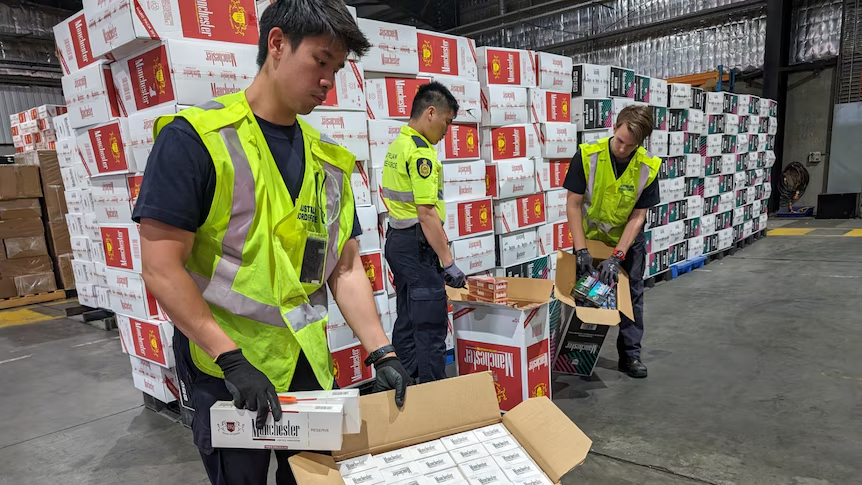
According to a report by the South Korean SBS website, the Korean police have initiated an investigation into several companies suspected of fraudulently manufacturing and selling e-liquid. These companies allegedly altered the main components of e-liquid and engaged in tax evasion. The police have filed a case for violation of tobacco business laws against company A, a e-liquid retailer, as well as its collaborating supplier and consultant Mr. B, among five suspects.


The main ingredient of e-liquid, nicotine, can be divided into natural nicotine and synthetic nicotine. Currently, A company is accused of fraudulent behavior, allegedly selling natural nicotine disguised as synthetic nicotine.


According to current regulations, the sale of natural nicotine is subject to tobacco consumption tax, with a corresponding tax rate of 1,799 Korean won per milliliter. However, synthetic nicotine is not classified as tobacco and is therefore exempt from taxation. The police suspect that the aforementioned company is using this rule to evade taxes and is currently conducting a thorough investigation.


We welcome news tips, article submissions, interview requests, or comments on this piece.

Please contact us at info@2firsts.com, or reach out to Alan Zhao, CEO of 2Firsts, on LinkedIn


Notice

1.  This article is intended solely for professional research purposes related to industry, technology, and policy. Any references to brands or products are made purely for objective description and do not constitute any form of endorsement, recommendation, or promotion by 2Firsts.

2.  The use of nicotine-containing products — including, but not limited to, cigarettes, e-cigarettes, nicotine pouchand heated tobacco products — carries significant health risks. Users are responsible for complying with all applicable laws and regulations in their respective jurisdictions.

3.  This article is not intended to serve as the basis for any investment decisions or financial advice. 2Firsts assumes no direct or indirect liability for any inaccuracies or errors in the content.

4.  Access to this article is strictly prohibited for individuals below the legal age in their jurisdiction.


Copyright


This article is either an original work created by 2Firsts or a reproduction from third-party sources with proper attribution. All copyrights and usage rights belong to 2Firsts or the original content provider. Unauthorized reproduction, distribution, or any other form of unauthorized use by any individual or organization is strictly prohibited. Violators will be held legally accountable.

For copyright-related inquiries, please contact: info@2firsts.com


AI Assistance Disclaimer


This article may have been enhanced using AI tools to improve translation and editorial efficiency. However, due to technical limitations, inaccuracies may occur. Readers are encouraged to refer to the cited sources for the most accurate information.

We welcome any corrections or feedback. Please contact us at: info@2firsts.com

Special Report|Reynolds’ 337 Patent Case Ends, but a Harsher 337 Compliance Battle Now Targets the Entire Vape Supply Chain
The U.S. International Trade Commission (ITC) has terminated Investigation 337-TA-1410 after invalidating key vape patent claims asserted by R.J. Reynolds Vapor Company, removing the immediate risk of import bans for dozens of companies. However, a new case—337-TA-1486—has already opened a more consequential legal front, shifting the focus from patent disputes to regulatory compliance across the vape supply chain, including PACT Act reporting, tax compliance, and FDA marketing authorization.
BAT
Mar.11
Kazakhstan: Over 131,000 vapes seized in Almaty and Pavlodar case; about $1.422 million cited
Kazakhstan’s financial monitoring authorities said a group is suspected of illicitly distributing vaping devices in Almaty and Pavlodar Region, using Telegram as a sales channel with courier delivery. During searches, investigators seized more than 131,000 vapes valued at 711 million tenge (about $1.422 million, using 1 tenge = $0.0020).
Mar.04 by 2FIRSTS.ai
JTI UK Updates Nordic Spirit Packaging to Strengthen “Strength and Flavour” Guidance
Japan Tobacco International UK (JTI UK) has unveiled a refreshed brand identity for Nordic Spirit nicotine pouches. The new packaging is now live on JTI360 and will roll out to shelves over the coming months. The updated design strengthens on-pack guidance on strength and flavour, adding slower/faster release cues and a six-dot strength system (6–17mg). Each can contains 20 pouches and includes a lid compartment for storing used pouches before disposal.
Mar.04 by 2FIRSTS.ai
Pakistan Senate health panel weighs possible vape ban
Sources say Pakistan’s Senate Standing Committee on Health is deliberating whether to impose a ban on vaping products, after holding a meeting on the health implications of vaping and the rising use of e-cigarettes nationwide.
Mar.04 by 2FIRSTS.ai
FDA Says Flavored ENDS Must Show “Added Benefit” as Small Manufacturers Seek Clearer Switching Benchmarks
During the FDA PMTA roundtable session on “Studies of Adult Benefit,” officials said flavored ENDS must demonstrate “added benefit” over tobacco-flavored products under the APPH standard, including sustained complete switching evidence. Small manufacturers questioned switching benchmarks, study duration, and bridging expectations.
Feb.11
Azerbaijan parliament passes third-reading amendments introducing e-cigarette penalties, effective April 1, 2026
Azerbaijan’s Milli Majlis has adopted, in its third reading, amendments to the Code of Administrative Offences introducing fines and confiscation for the use of e-cigarettes and their components, as well as import, export, production, wholesale and retail sales, and storage for sale.
Mar.04 by 2FIRSTS.ai