Israel Raises Tobacco Tax to Reduce Budget Deficit from March 4

Regulations by 2FIRSTS.ai
Mar.04.2024
Israel Raises Tobacco Tax to Reduce Budget Deficit from March 4
Israeli Finance Minister Bezalel Smotrich signed a law to increase tobacco sales tax, leading to price hikes starting March 4.

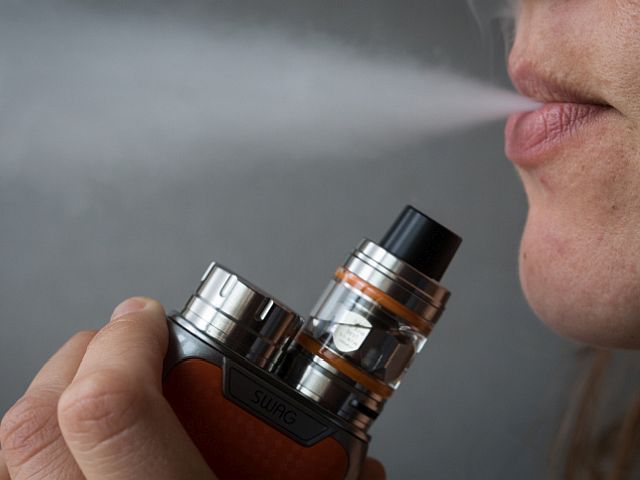
According to Newsru, on the evening of March 3rd, Israeli Finance Minister Besalil Smosty signed a decree to increase the sales tax on tobacco products. The signing of this decree means that starting from March 4th, the prices of Israeli tobacco, cigarettes, and e-cigarette liquids will all increase.


The specific plan for this price adjustment includes: a 2 shekel (0.56 USD) increase in the price of each pack of cigarettes, a 0.13 shekel (0.036 USD) increase in the price per gram of tobacco, and a 1 shekel (0.28 USD) increase in the price per milliliter of e-cigarette liquid.


This measure is expected to bring in approximately 400 million shekels ($112,146,912.4) to the Israeli treasury, helping to reduce the budget deficit. While the cigarette tax adjustment will directly burden smokers, some experts believe that it will benefit the government in strengthening its regulation of tobacco products and possibly encouraging the public to reduce smoking, leading to healthier lifestyle choices.


We welcome news tips, article submissions, interview requests, or comments on this piece.

Please contact us at info@2firsts.com, or reach out to Alan Zhao, CEO of 2Firsts, on LinkedIn


Notice

1.  This article is intended solely for professional research purposes related to industry, technology, and policy. Any references to brands or products are made purely for objective description and do not constitute any form of endorsement, recommendation, or promotion by 2Firsts.

2.  The use of nicotine-containing products — including, but not limited to, cigarettes, e-cigarettes, nicotine pouchand heated tobacco products — carries significant health risks. Users are responsible for complying with all applicable laws and regulations in their respective jurisdictions.

3.  This article is not intended to serve as the basis for any investment decisions or financial advice. 2Firsts assumes no direct or indirect liability for any inaccuracies or errors in the content.

4.  Access to this article is strictly prohibited for individuals below the legal age in their jurisdiction.


Copyright


This article is either an original work created by 2Firsts or a reproduction from third-party sources with proper attribution. All copyrights and usage rights belong to 2Firsts or the original content provider. Unauthorized reproduction, distribution, or any other form of unauthorized use by any individual or organization is strictly prohibited. Violators will be held legally accountable.

For copyright-related inquiries, please contact: info@2firsts.com


AI Assistance Disclaimer


This article may have been enhanced using AI tools to improve translation and editorial efficiency. However, due to technical limitations, inaccuracies may occur. Readers are encouraged to refer to the cited sources for the most accurate information.

We welcome any corrections or feedback. Please contact us at: info@2firsts.com

Ireland’s Vape Tax Raises €22 Million in Nine Months as Government Considers 2027 Budget Changes
According to Irish media outlets Highland Radio and BreakingNews.ie, the Irish government is considering whether to adjust vape tax policy in the 2027 Budget. The tax has generated about €22 million ($24 million) in revenue during its first nine months. While no increase has been confirmed, the revenue performance could influence future fiscal discussions. Any tax rise could increase product costs and potentially affect retail prices.
Aug.12
U.S. Ninth Circuit Upholds FDA Denial of MH Global’s Flavored Vape PMTA Applications
The U.S. Court of Appeals for the Ninth Circuit upheld the FDA’s denial of MH Global LLC’s applications to market flavored electronic nicotine delivery systems (ENDS). The court ruled that FDA’s comparative-efficacy framework, which requires applicants to show that flavored products provide greater cessation or switching benefits than tobacco-flavored alternatives, is consistent with the Tobacco Control Act’s “appropriate for the protection of the public health” standard. The court also found that FDA was not required to establish the framework through notice-and-comment rulemaking.
Aug.26
2Firsts Hosts China Market Forum at InterTabac as Global Industry Attention to China’s Tobacco Sector Deepens
On September 16, 2Firsts hosted a China-focused industry forum during InterTabac in Dortmund, bringing together more than 30 participants from North America, Europe, India, South Korea and other markets. The session covered traditional tobacco, next-generation products, exports, technology, regulation and supply chains, while examining how China’s tobacco sector operates, where its transformation may be heading, and why its growing role matters increasingly to companies across the global tobacco and nicotine industry.
Sep.21
Product | R.J. Reynolds Launches Four Flavored Vuse Pro Pods for Vuse Alto Devices in U.S.
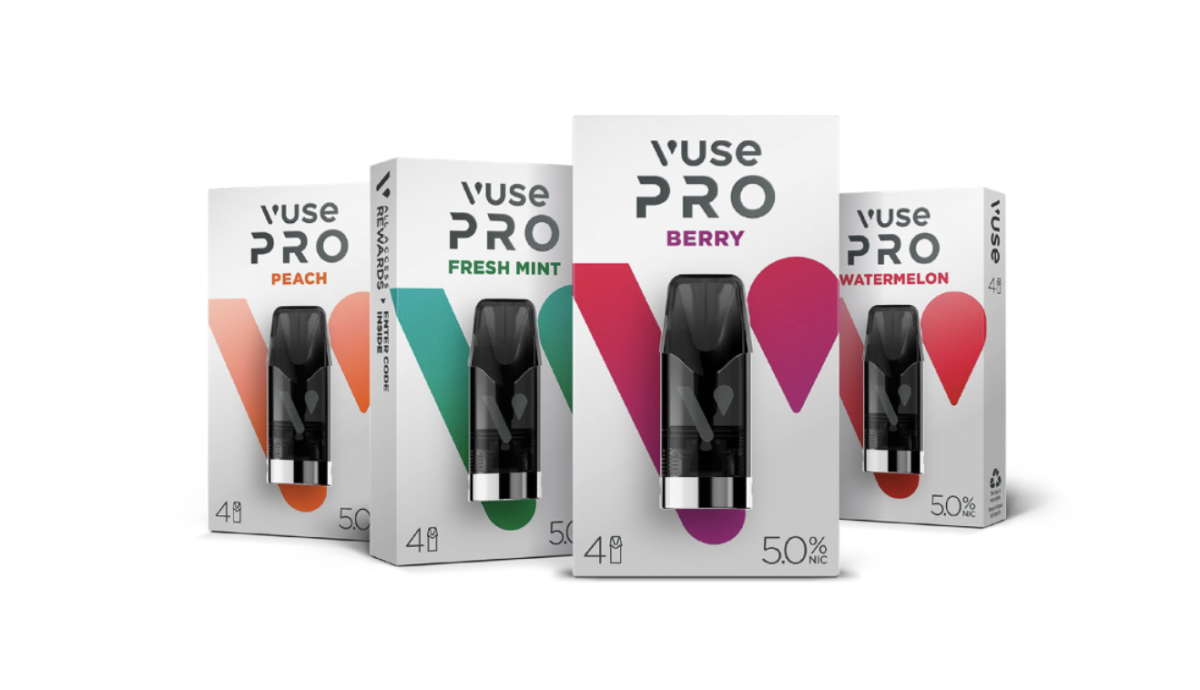
R.J. Reynolds Vapor Company has introduced Vuse Pro prefilled pods in Peach, Berry, Watermelon and Fresh Mint in selected U.S. states. Vuse’s U.S. website says the pods are intended for use with existing Vuse Alto devices. Each contains 2.0 mL of e-liquid at 5.0% nicotine by weight, uses nicotine salts and is offered in two- and four-pod packs. Reynolds said the rollout includes mandatory ID scanning for every purchase, purchase limits, stronger retailer-accountability requirements and strict age-restricted marketing standards. The four pods have not received marketing authorization from the U.S. Food and Drug Administration.
Sep.10
Trump Names Darrell Scott as CDC Tobacco Health Adviser, Citing Tobacco Risks and Harm-Reduction Solutions
U.S. President Donald Trump has named Pastor Darrell Scott to serve as an adviser on tobacco health issues on the Centers for Disease Control and Prevention’s Advisory Committee to the Director. Trump said Scott would focus on the burden of tobacco-related disease and help examine ways to protect Americans from dangerous tobacco products while supporting solutions that reduce harm. Scott’s public career has largely centered on faith leadership, community advocacy and politics.
Sep.02
Australia Tobacco Tax Debate Spreads Within Labor as NSW Premier Minns Reaffirms Support for a Cut
Australia’s tobacco excise debate is increasingly exposing differences within the governing Labor Party. New South Wales Labor Premier Chris Minns reaffirmed on September 8 that he supports reducing tobacco excise, arguing that current tax settings are pushing consumers toward cheaper black-market cigarettes. Federal Health Minister Mark Butler continues to oppose an excise cut, while Treasurer Jim Chalmers and Assistant Treasurer Daniel Mulino have recently stopped short of ruling out future changes. The divergence follows the opposition Coalition’s proposal to cut tobacco excise by 80%.
Sep.08