Photo Credit: Victor Moussa.
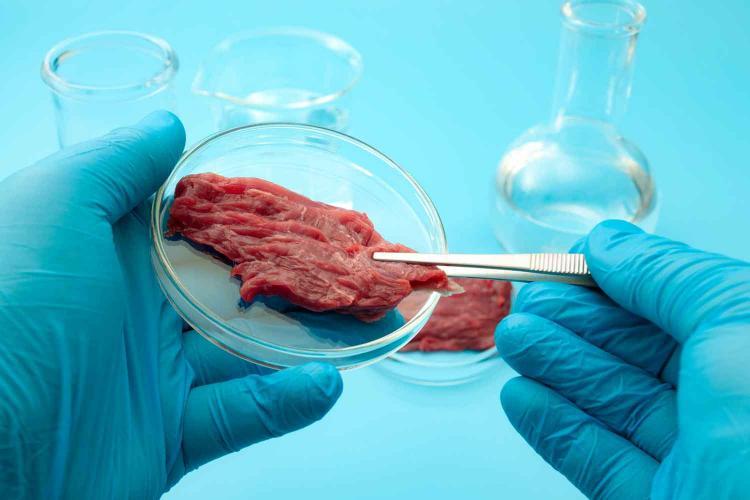
According to a report from The Jerusalem Post, an Israeli food technology startup company called BioBetter is using tobacco plants to help produce their vegetarian burgers.
The company is using tobacco plants as natural bioreactors to produce growth factors necessary for the development of cultivated meat cells.
According to the company, this development could significantly reduce the cost of farming meat and help rapidly advance its commercialization. Farming meat may eventually replace cattle, which are a major contributor to greenhouse gas emissions and facilitate the dangers of global warming.
Amit Yaari, CEO of BioBetter, has stated that in the coming decades, the world's growing population and decreasing natural resources will put incredible pressure on meat supply and our already fragile environment. He believes that lab-grown meat offers a promising solution to these problems, ensuring a more resilient supply chain and providing better economic and environmental returns.
In addition to addressing environmental challenges, this effort will also create new sources of income for local tobacco farmers who have suffered losses due to declining cigarette consumption.
BioBetter plans to expand its production scale in 2023 and commercialize its tobacco plant-derived food-grade growth factor combination by 2024, driven by a new round of venture capital investment.
Statement:
This article is compiled from third-party information and is intended for educational purposes and industry exchange only.
This article does not represent the viewpoint of 2FIRSTS, and 2FIRSTS is also unable to confirm the authenticity and accuracy of the article's content. The translation of this article is intended only for communication and research within the industry.
Due to limitations in translation ability, the translated article may not fully reflect the original message. Therefore, please refer to the original text for accuracy.
2FIRSTS is fully aligned with the Chinese government's positions and statements on both domestic and international issues, including those involving Hong Kong, Macau, and Taiwan.
The copyright of compiled information belongs to the original media and author. If there is any infringement, please contact us for deletion.
Disclaimer
This article is provided solely for professional research, industry discussion, and informational purposes. Any references to brands, companies, products, technologies, or policies are made for factual reporting and analytical purposes only, and do not constitute endorsement, recommendation, promotion, or advertising by 2Firsts.
Nicotine-containing products, including but not limited to cigarettes, e-cigarettes, heated tobacco products, and nicotine pouches, carry significant health risks. Readers are responsible for complying with all applicable laws and regulations in their respective jurisdictions, including age restrictions and access limitations.
The information contained in this article should not be regarded as investment, legal, medical, regulatory, or commercial advice. While 2Firsts strives to ensure the accuracy and reliability of its content, it does not assume liability for any direct or indirect loss arising from errors, omissions, inaccuracies, or reliance on the information contained herein.
This article is not intended for individuals below the legal age for accessing tobacco or nicotine-related information in their jurisdiction.
Copyright Notice
This article is either original content produced by 2Firsts or content reproduced, translated, summarized, or adapted from third-party sources with attribution where applicable. The intellectual property rights of the original content remain with 2Firsts or the respective original rights holders.
No individual or organization may copy, reproduce, distribute, republish, modify, translate, or otherwise use this content without prior authorization. Any unauthorized use may result in legal action.
For copyright-related inquiries, corrections, or removal requests, please contact: info@2firsts.com.
AI-Assisted Translation and Editing Notice
Portions of this article may have been translated, edited, or reviewed with the assistance of artificial intelligence tools to improve efficiency and readability. Due to the limitations of AI-assisted translation and editing, discrepancies, omissions, or inaccuracies may exist when compared with the original source.
Where applicable, readers are advised to refer to the original source for the most complete and accurate information. If you identify any errors or believe that any content infringes upon your rights, please contact us at info@2firsts.com, and we will review and address the matter promptly.