Key Points
- Core issue: Whether FDCA §337(a) (“enforcement … shall be by and in the name of the United States”) preempts North Carolina’s vape sales law.
- Law at issue: North Carolina Session Law 2024-31 (S.L. 2024-31).
- Framework: North Carolina Department of Revenue certification for manufacturers to sell in-state.
- Key criterion: Products must have sought/received or be exempt from FDA authorization.
- Penalties: Up to $5,000 per violation.
- Industry claim: The state is effectively enforcing federal requirements through a sales ban.
2Firsts, Feb. 3, 2026
Law360 reports that counsel for vape manufacturers and sellers pressed the U.S. Court of Appeals for the Fourth Circuit on Jan. 29 to hold that the federal Food, Drug, and Cosmetic Act (FDCA) preempts North Carolina Session Law 2024-31, a statute regulating and prohibiting sales of certain nicotine vapor products.
Industry attorney James C. Fraser (Thompson Hine LLP) argued that FDCA Section 337(a)—which provides that proceedings “for the enforcement, or to restrain violations” of the FDCA must be brought by and in the name of the United States—cannot be displaced by provisions in the 2009 Tobacco Control Act (TCA). He contended the district court erred in refusing to enjoin enforcement of S.L. 2024-31, and warned that allowing states to convert noncompliance with federal standards into an in-state sales prohibition would effectively nullify Section 337(a).
Judge G. Steven Agee focused on the TCA’s text, pointing to language commonly described as a “savings clause” indicating that the TCA’s preemption provisions do not apply to requirements “relating to the sale or distribution” of tobacco products. He questioned why that language would not, by itself, defeat the industry’s preemption claim. Fraser responded that Congress did not intend the TCA’s preservation and savings provisions in Section 387p to limit Section 337(a)’s allocation of exclusive federal enforcement authority, and that a state may regulate sales without transforming federal compliance into a state-law sales restriction.
The plaintiffs include the Vapor Technology Association, Bright Leaf Vendors Inc., Wages and White Lion Investments LLC, and AMV Holdings LLC. They sued in April 2025 seeking to block the law, which sets up a framework for the North Carolina Department of Revenue to certify manufacturers to sell nicotine vapor products in the state. One criterion is that products have sought, received, or are exempt from FDA authorization. Manufacturers that violate the law face fines of up to $5,000 per violation.
North Carolina, represented by Stephanie A. Brennan of the North Carolina Department of Justice, argued Congress made clear in the TCA that expanding federal oversight was not meant to displace long-standing state authority over tobacco sales and marketing. She said Section 387p establishes a detailed preemption scheme that expressly preserves state power to regulate sales, and maintained that S.L. 2024-31 is a state-level sales restriction rather than an attempt to enforce the FDCA.
Judge A. Marvin Quattlebaum Jr. agreed the state’s argument looks strong if Section 387p is considered alone, but noted that FDCA Section 337(a) does not expressly reference the tobacco-specific provisions in its exemption language, and asked how the two can be harmonized. Brennan replied that Section 337(a) remains fully effective when read alongside Section 387p because North Carolina is enforcing its own statute governing in-state sales, with federal authorization status serving as one sales criterion.
The parties also disputed standing, with the state asserting the plaintiffs lack a legally protected interest in removing barriers to products that are illegal under federal law, while the industry cited economic harm from sales restrictions.
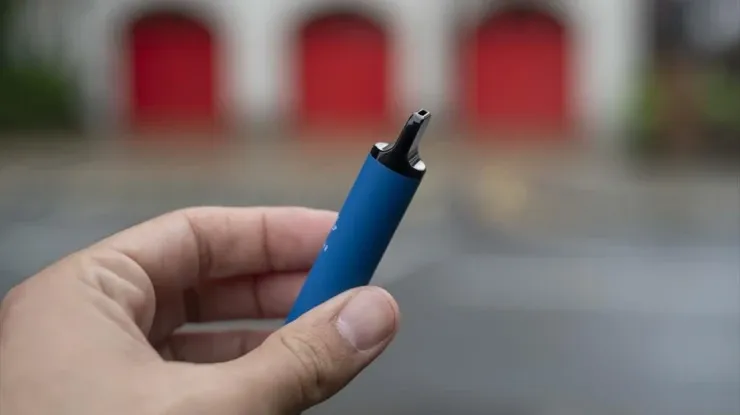
Image source: Law360
We welcome news tips, article submissions, interview requests, or comments on this piece.
Please contact us at info@2firsts.com, or reach out to Alan Zhao, CEO of 2Firsts, on LinkedIn
Notice
1. This article is intended solely for professional research purposes related to industry, technology, and policy. Any references to brands or products are made purely for objective description and do not constitute any form of endorsement, recommendation, or promotion by 2Firsts.
2. The use of nicotine-containing products — including, but not limited to, cigarettes, e-cigarettes, nicotine pouchand heated tobacco products — carries significant health risks. Users are responsible for complying with all applicable laws and regulations in their respective jurisdictions.
3. This article is not intended to serve as the basis for any investment decisions or financial advice. 2Firsts assumes no direct or indirect liability for any inaccuracies or errors in the content.
4. Access to this article is strictly prohibited for individuals below the legal age in their jurisdiction.
Copyright
This article is either an original work created by 2Firsts or a reproduction from third-party sources with proper attribution. All copyrights and usage rights belong to 2Firsts or the original content provider. Unauthorized reproduction, distribution, or any other form of unauthorized use by any individual or organization is strictly prohibited. Violators will be held legally accountable.
For copyright-related inquiries, please contact: info@2firsts.com
AI Assistance Disclaimer
This article may have been enhanced using AI tools to improve translation and editorial efficiency. However, due to technical limitations, inaccuracies may occur. Readers are encouraged to refer to the cited sources for the most accurate information.
We welcome any corrections or feedback. Please contact us at: info@2firsts.com