Kentucky State House Proposes Stricter Regulations on E-Cigarette Sales to Minors

Regulations by 2FIRSTS.ai
Jan.09.2024
Kentucky State House Proposes Stricter Regulations on E-Cigarette Sales to Minors
Kentucky lawmakers propose a bill requiring e-cigarette shops to obtain a government license to combat underage smoking.

According to a recent report by Yahoo News, the Kentucky House of Representatives has introduced a bill aimed at combating underage smoking. The proposed legislation requires e-cigarette stores to obtain a license from the state government and increases penalties for retailers found selling tobacco products to minors.


Congressman Mark Hart, the principal sponsor of the bill known as House Bill 142, stated in an interview on Monday that current laws fail to protect young people in Kentucky from the health risks of smoking. He emphasized the necessity of implementing a deterrent approach to prevention.


Retired US Marine Corps Sergeant Brian Melton has expressed concern over the alarming issue of teenagers using e-cigarettes at Pendleton County High School, where he used to teach. Melton revealed that some students have gone to the extent of blending substances such as marijuana (THC, Delta-8) into e-cigarette products. What's more worrisome is that these miniature e-cigarette devices are difficult for teachers to detect, leading to their rapid proliferation within the school premises.


In the United States, the minimum legal age to purchase tobacco and e-cigarette products is 21 years old. Retailers are required to check government-issued photo identification for individuals who appear to be under 21. However, this law is frequently overlooked.


According to a report last month by The Pioneering Leader newspaper, the Kentucky State Alcohol Control Department has lodged charges against various stores across the state at least 883 times for selling tobacco products to minors, between November 2021 and August 2023. The department conducted undercover operations using underage buyers, resulting in penalties imposed on at least 114 businesses more than once or twice during this 21-month period.


Hart's bill requires e-cigarette retailers to obtain a license from the Alcohol Control Department for each store. If found selling to minors for the third time, the license will be revoked. Additionally, the bill aims to increase civil fines for retailers selling e-cigarettes or tobacco products to minors, with a maximum fine of $2000 for the first offense and up to $3000 for subsequent violations. Lastly, the bill proposes penalties for minors attempting to purchase or who have already purchased e-cigarettes or tobacco products.


Alicia Whatley, the Policy and Advocacy Director for the child rights advocacy organization "Kentucky Youth Advocates," has expressed that Hart's bill is a positive first step in eliminating retailers' exploitation of loopholes to sell tobacco products to minors. However, she also acknowledged that there is room for improvement in the bill, such as her desire for tobacco retailers to also operate under licensing regulations similar to e-cigarette retailers.


Hart expressed in the interview that he expects some amendments to be proposed and made to the bill before it is presented for review by the House committee in the coming weeks. He plans to discuss the issue of tobacco retail licenses with state agricultural officials, but he is concerned about facing too many opponents within a single piece of legislation.


We welcome news tips, article submissions, interview requests, or comments on this piece.

Please contact us at info@2firsts.com, or reach out to Alan Zhao, CEO of 2Firsts, on LinkedIn


Notice

1.  This article is intended solely for professional research purposes related to industry, technology, and policy. Any references to brands or products are made purely for objective description and do not constitute any form of endorsement, recommendation, or promotion by 2Firsts.

2.  The use of nicotine-containing products — including, but not limited to, cigarettes, e-cigarettes, nicotine pouchand heated tobacco products — carries significant health risks. Users are responsible for complying with all applicable laws and regulations in their respective jurisdictions.

3.  This article is not intended to serve as the basis for any investment decisions or financial advice. 2Firsts assumes no direct or indirect liability for any inaccuracies or errors in the content.

4.  Access to this article is strictly prohibited for individuals below the legal age in their jurisdiction.


Copyright


This article is either an original work created by 2Firsts or a reproduction from third-party sources with proper attribution. All copyrights and usage rights belong to 2Firsts or the original content provider. Unauthorized reproduction, distribution, or any other form of unauthorized use by any individual or organization is strictly prohibited. Violators will be held legally accountable.

For copyright-related inquiries, please contact: info@2firsts.com


AI Assistance Disclaimer


This article may have been enhanced using AI tools to improve translation and editorial efficiency. However, due to technical limitations, inaccuracies may occur. Readers are encouraged to refer to the cited sources for the most accurate information.

We welcome any corrections or feedback. Please contact us at: info@2firsts.com

South Korea Extends Vape Rules to Unmanned Stores After Bringing Synthetic Nicotine Under Tobacco Law
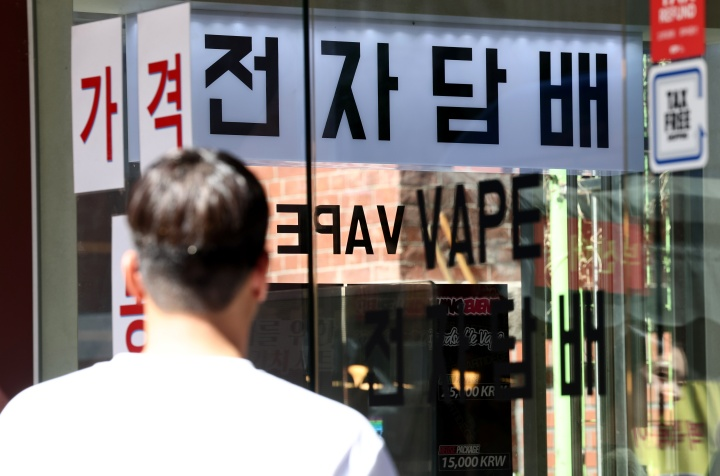
South Korea's Ministry of Gender Equality and Family said on September 14 that it plans to designate unmanned e-cigarette stores as businesses where minors are prohibited from entering or working. Operators would be required to verify customers' ages and display notices restricting access by minors. The proposal is open for public comment through October 6. The move follows an April expansion of South Korea's statutory tobacco definition that brought products made with natural or synthetic nicotine under the Tobacco Business Act. Nicotine-free liquids and products using nicotine analogues such as 6-methylnicotine, however, remain an emerging regulatory issue.
Sep.21
Former Roche Neuroscience and Rare Diseases Communications Director Ria Kioupritzi Joins PMI as Scientific Affairs Director
Eleftheria (Ria) Kioupritzi, a biopharmaceutical professional with more than 15 years of experience, has joined Philip Morris International as Director Scientific Affairs within Corporate Affairs. She previously served at Roche as Senior Scientific Communications Director for Neuroscience and Rare Diseases and worked extensively in spinal muscular atrophy. Her earlier career also covered competitive intelligence, clinical and regulatory monitoring, pipeline development and launch preparation. During her time working in Roche's SMA field, Evrysdi passed through several U.S. FDA milestones, including its initial approval, an expanded indication for younger infants and approval of a tablet formulation. Public records do not show that Kioupritzi herself led the FDA submissions.
Sep.22
Hunan China Tobacco Industry files heated tobacco device patent featuring adult-user identification through pressure sensing
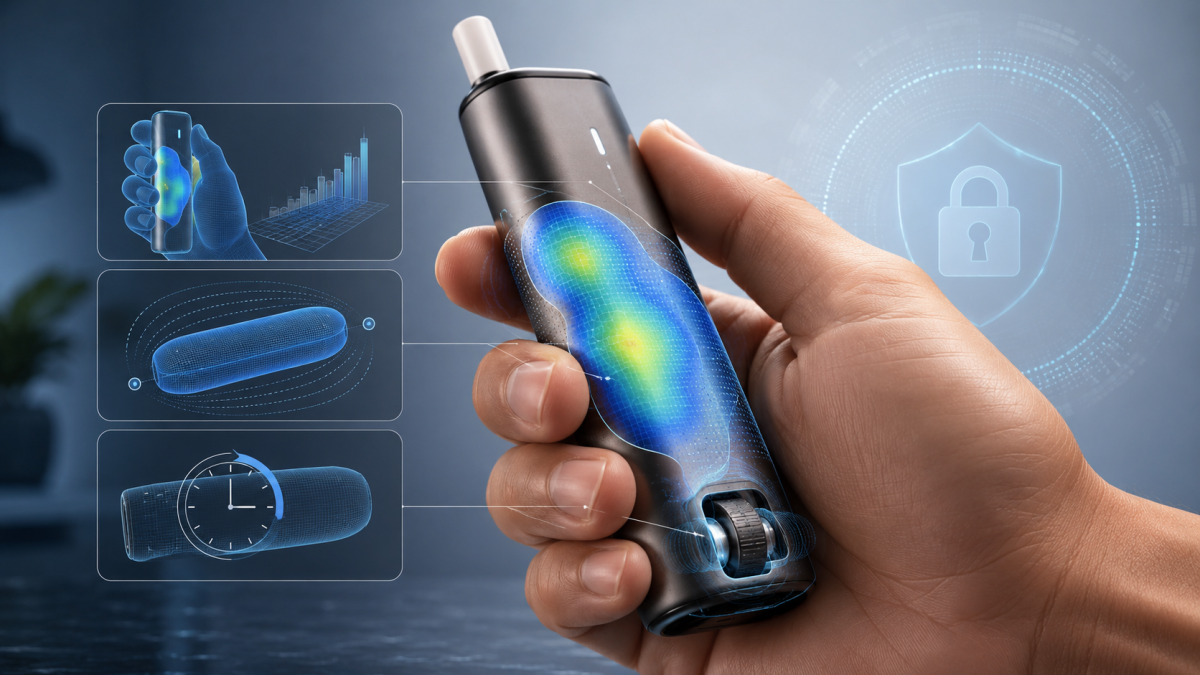
China-based Hunan China Tobacco Industry Co., Ltd. and Shenzhen Baisha Technology Co., Ltd. have filed a patent application covering an adult-user identification mechanism for heated tobacco devices. The patent proposes using flexible pressure sensors installed in the device grip area to collect pressure distribution patterns generated when users hold the device. The system evaluates factors including effective contact area, grip shape and contact duration, and combines roller movement detection to determine whether unlocking conditions are met. The filing reflects exploration of device-level user recognition and smarter interaction technologies for heated tobacco products (HTPs).
Aug.05
Product | JNR Launches Shisha Hookah 70K E-Hookah With 60ml E-Liquid and 0.6% Nicotine
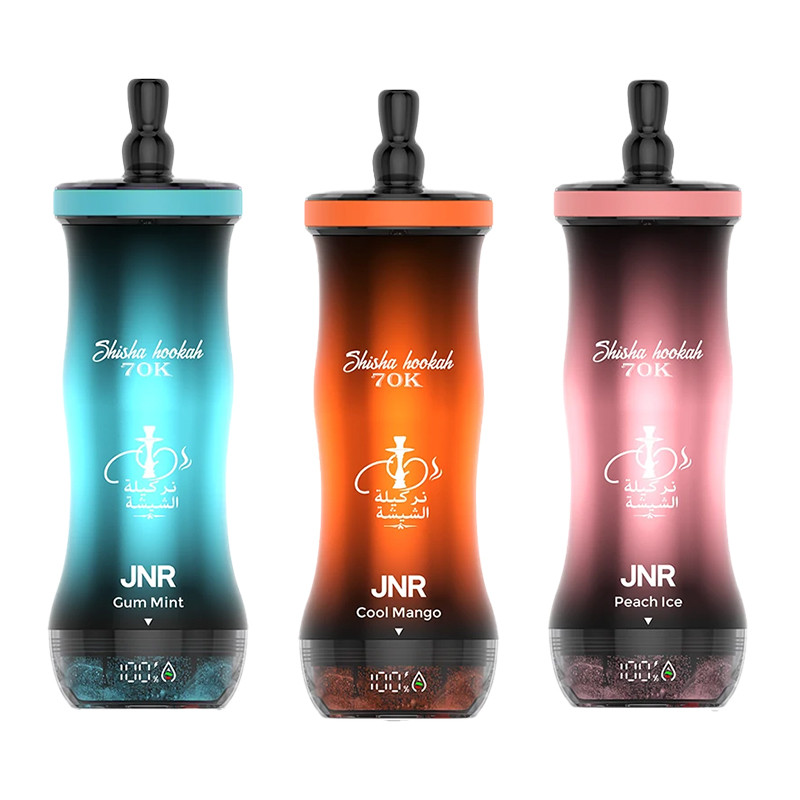
JNR has introduced the Shisha Hookah 70K, a high-capacity rechargeable disposable vape designed around a hookah-inspired experience. The device comes prefilled with 60ml of e-liquid at 6mg/ml (0.6%) nicotine strength, alongside a 1,000mAh rechargeable battery and a 0.38Ω single mesh coil. It also features adjustable airflow and battery and e-liquid level displays. JNR claims the device can deliver up to 70,000 puffs and offers more than 20 flavors. Retail listings for the product have appeared in markets including Tunisia.
Market
Aug.24 by 2Firsts Perspectives
JTI Makes Third Bet on South Korea as Ploom AURA Enters a Market Dominated by lil and IQOS
Japan Tobacco International is stepping up its heated tobacco push in South Korea with Ploom AURA. Since its official launch in April 2026, the device's limited First Edition and Glacier White version have sold out, while distribution has expanded across Seoul, Incheon, Gyeonggi Province and airport duty-free channels. The rollout marks JTI's third major attempt to build a stronger heated tobacco position in South Korea, following Ploom TECH in 2019 and Ploom X Advanced in 2024. At the group level, JT plans to invest about ¥800 billion, approximately $5 billion, in reduced-risk products from 2026 through 2028, with heated products and Ploom identified as its primary investment priority.
Aug.14
South Korea Fully Reviews Nicotine-Analog and Nicotine-Free Vape Liquid Imports, With Over 99% From China and Chinese Supply-Chain Documents Under Scrutiny
Korea Customs Service has tightened import controls on nicotine-analog and nicotine-free e-cigarette liquids, placing the products under 100% document review and subjecting all e-cigarette liquid import declarations to pre-clearance ingredient analysis. As of September 20, 2026, South Korea had imported about 15 metric tons of nicotine-analog liquids, 99.99% from China, and about 316 metric tons of nicotine-free liquids, including roughly 315 metric tons, or 99.7%, from China. The measures follow South Korea's April expansion of its tobacco definition to include synthetic nicotine products and include new checks on Chinese manufacturing, transaction and export documentation.
Sep.24