KT&G to Enhance Competition in Eurasia with Uzbekistan Expansion.

Jan.14.2025
KT&G to Enhance Competition in Eurasia with Uzbekistan Expansion.
KT&G to establish legal entity in Uzbekistan to enhance competitiveness in Eurasian market, following successful localization efforts.

According to a report by N. News on January 13th, Korean Tobacco (referred to as "KT&G" hereafter) announced plans to establish a corporate entity in Uzbekistan, aiming to enhance their competitive edge in the Eurasian region.


Previously, KT&G had established an office in Uzbekistan in 2023 and exported localized products of the ultra-slim cigarette brand "ESSE". In 2024, sales of seven "ESSE" products in Uzbekistan totaled 270 million units, with the best-selling product "Esse Change" accounting for 64% of the exports.


By transforming its office in Uzbekistan into a legal entity, KT&G plans to enhance its long-term competitiveness in the Eurasian region. The company also plans to increase its local workforce by more than fourfold and establish a more comprehensive sales network to strengthen its market position.


On the other hand, KT&G established regional CICs (Corporate Independent Companies) in the Eurasia and Asia-Pacific regions last year. Currently, KT&G operates in 132 countries worldwide with 6 sales corporations and 3 offices. KT&G stated that it will continue to strengthen its direct business system to enhance profitability.


A representative from KT&G stated that establishing a legal entity in Uzbekistan is part of their continued goal to become a "global top-tier" company, following the establishment of a legal entity in Kazakhstan in 2023. This move is also part of their investment and innovation strategy. KT&G plans to drive global business growth by strengthening their local business systems in the future.


We welcome news tips, article submissions, interview requests, or comments on this piece.

Please contact us at info@2firsts.com, or reach out to Alan Zhao, CEO of 2Firsts, on LinkedIn


Notice

1.  This article is intended solely for professional research purposes related to industry, technology, and policy. Any references to brands or products are made purely for objective description and do not constitute any form of endorsement, recommendation, or promotion by 2Firsts.

2.  The use of nicotine-containing products — including, but not limited to, cigarettes, e-cigarettes, nicotine pouchand heated tobacco products — carries significant health risks. Users are responsible for complying with all applicable laws and regulations in their respective jurisdictions.

3.  This article is not intended to serve as the basis for any investment decisions or financial advice. 2Firsts assumes no direct or indirect liability for any inaccuracies or errors in the content.

4.  Access to this article is strictly prohibited for individuals below the legal age in their jurisdiction.


Copyright


This article is either an original work created by 2Firsts or a reproduction from third-party sources with proper attribution. All copyrights and usage rights belong to 2Firsts or the original content provider. Unauthorized reproduction, distribution, or any other form of unauthorized use by any individual or organization is strictly prohibited. Violators will be held legally accountable.

For copyright-related inquiries, please contact: info@2firsts.com


AI Assistance Disclaimer


This article may have been enhanced using AI tools to improve translation and editorial efficiency. However, due to technical limitations, inaccuracies may occur. Readers are encouraged to refer to the cited sources for the most accurate information.

We welcome any corrections or feedback. Please contact us at: info@2firsts.com

Australia Extends Illicit Tobacco Crackdown From Tougher Penalties to Customs and Logistics Supply Chains
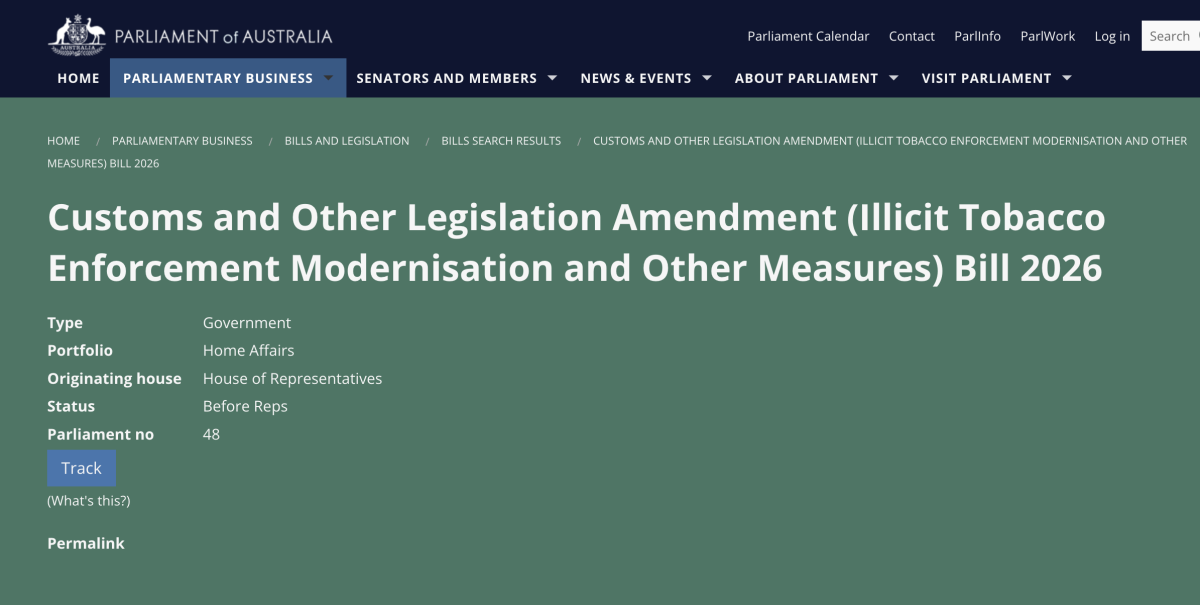
Australia's federal government introduced a new illicit tobacco enforcement bill on September 10 that would strengthen evidentiary presumptions, representative sampling, seizure and forfeiture procedures, proceeds-of-crime powers and obligations for customs and logistics operators. The proposal follows the Combatting Illicit Tobacco Act 2026, which took effect in August and increased penalties while expanding investigative and asset-recovery tools. Together, the reforms extend Australia's crackdown from tougher criminal sanctions into import, logistics and evidentiary enforcement.
Sep.14
Product | RELX Partners With UK E-Liquid Brand T-Juice for Prime Pro × Red Astaire Bundle in France
RELX and UK e-liquid brand T-Juice have launched the Prime Pro × Red Astaire bundle in France, combining the RELX Prime Pro open-system pod device with T-Juice’s signature Red Astaire nicotine salt e-liquid. The collaboration retains the existing Prime Pro hardware platform while using an established flavor brand to create a complete open-system offering. The product appeared in French retail and distribution channels in August 2026 and represents a co-branded retail bundle rather than a new device launch.
Aug.27
Product | KT&G Brings LOOP Nicotine Pouches to South Africa, Supporting ASF’s Expansion Across Africa
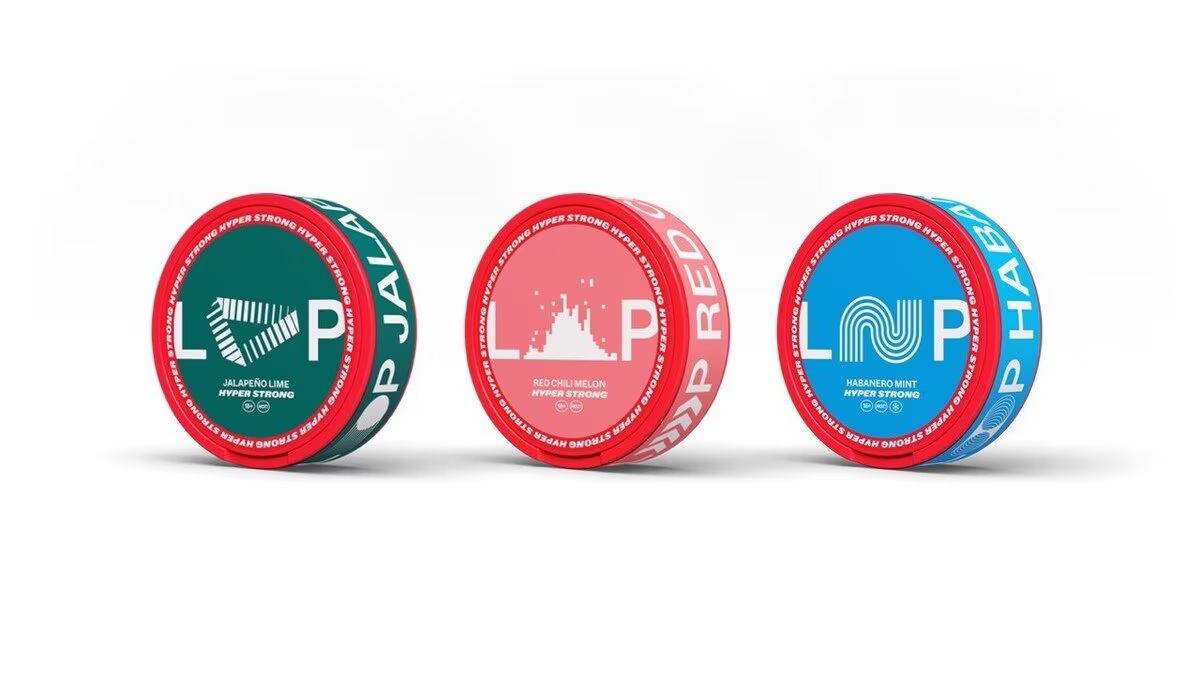
KT&G has introduced nicotine pouch brand LOOP in South Africa, expanding its modern oral nicotine portfolio. Developed by Swedish company Another Snus Factory (ASF), LOOP is a tobacco-free nicotine pouch brand. KT&G and U.S. tobacco company Altria previously participated in ASF’s strategic development, and the South Africa launch represents a further step in LOOP’s international expansion.
Aug.06
Hunan China Tobacco Industry files heated tobacco device patent featuring adult-user identification through pressure sensing
China-based Hunan China Tobacco Industry Co., Ltd. and Shenzhen Baisha Technology Co., Ltd. have filed a patent application covering an adult-user identification mechanism for heated tobacco devices. The patent proposes using flexible pressure sensors installed in the device grip area to collect pressure distribution patterns generated when users hold the device. The system evaluates factors including effective contact area, grip shape and contact duration, and combines roller movement detection to determine whether unlocking conditions are met. The filing reflects exploration of device-level user recognition and smarter interaction technologies for heated tobacco products (HTPs).
Aug.05
JUUL2 Sued Within a Week of FDA Authorization as AJ Marketing Alleges Infringement of Programmable Vape Patent
Less than a week after JUUL2 received U.S. FDA marketing authorization on August 28, 2026, JUUL Labs was sued for patent infringement in federal court in Delaware. AJ Marketing LLC filed the complaint on September 3, alleging that both JUUL 1 and JUUL2 infringe U.S. Patent No. 8,851,068 B2. The patent covers aspects of programmable electronic vaporization devices, including controls over dose delivery, usage frequency and operating parameters. The plaintiff is seeking reasonable royalties and ongoing royalties tied to the remaining life of the patent. JUUL has not yet publicly responded to the case.
Sep.10
California Lawmakers Pass Disposable Nicotine Vape Ban, With Sales Prohibition Set for 2028
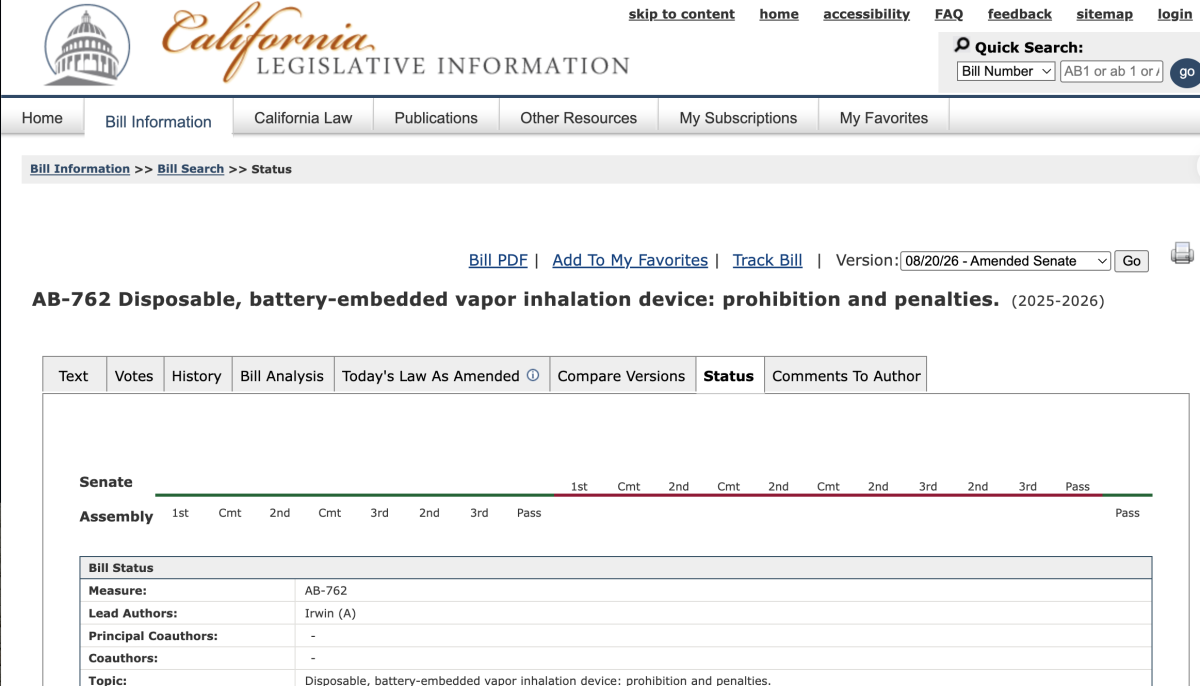
According to CBS Los Angeles on August 27, 2026, California lawmakers have passed Assembly Bill 762, which would phase out disposable, battery-embedded nicotine vapes in the state. If signed by Governor Gavin Newsom, manufacturing and importation of the covered products would be prohibited beginning January 1, 2027, followed by a sales ban on January 1, 2028. Driven primarily by concerns over electronic waste, lithium-battery fires and environmental pollution, the legislation would further shift California’s legal vape market toward rechargeable, refillable or replaceable-pod devices.
Aug.28