
According to TaiwanNews on July 31, the largest e-cigarette factory in the history of Taiwan was successfully raided in Taichung City. The Taichung Health Bureau in Taiwan stated that this incident marks the largest e-cigarette factory to be uncovered in Taiwan since the revision of the Tobacco Hazards Prevention Act in March of last year, which banned e-cigarettes. The factory had an estimated market value of 140.6 million New Taiwan Dollars (approximately 4.28 million USD).
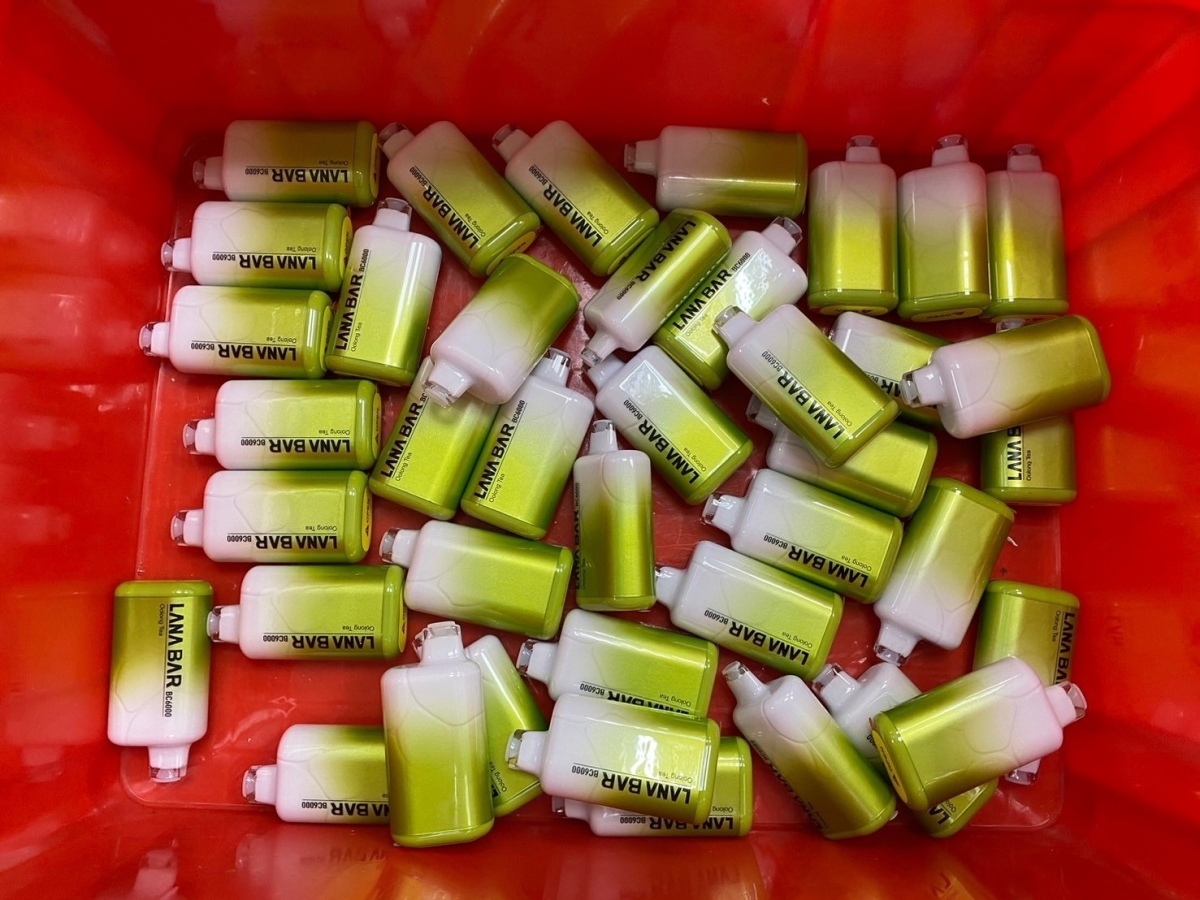
According to reports, the Taiwan Taichung Health Bureau and the Police Department received intelligence in December last year that a criminal group had secretly established a large-scale e-cigarette smuggling factory in Taichung. Subsequently, the Health Bureau and the Criminal Investigation Brigade of the Police Department jointly established a special task force to conduct an investigation. It wasn't until May last year that investigators pinpointed three locations, including the Beitun District and the North District of Taichung City, where the criminal group had repeatedly relocated the factory during the investigation.

During this operation, over 10.15 million New Taiwan dollars (approximately $308,800 USD) in illegal cash and 940,000 e-cigarette pods were confiscated, involving brands such as "RELX," "TROY," "SP2S," and "LANA." Additionally, investigators also discovered over 13,000 electronic liquid vaporizers, three large barrels of nicotine, 306 cans of pod flavors, and other related devices.
The married couple surnamed Zhang and the married couple surnamed Li, who are suspected of being the masterminds, along with six Thai migrant workers with expired visas, have been named as the key suspects. Investigators believe that these suspects illegally imported nicotine and e-cigarette raw materials from mainland China, which are mainly sold on foreign websites.
The suspects may face charges of violating the Pharmaceutical Affairs Act and the Tobacco Hazards Prevention Act. In addition, they are also suspected of violating Article 41 of the Tax Collection Act and the Anti-Money Laundering Act.
According to the relevant laws, the production, import, sale, and use of e-cigarettes can be fined up to 50 million Taiwanese dollars (approximately 1.53 million US dollars). Even regular e-cigarette users may face fines ranging from 2,000 Taiwanese dollars (approximately 61 US dollars) to 10,000 Taiwanese dollars (approximately 304 US dollars).
We welcome news tips, article submissions, interview requests, or comments on this piece.
Please contact us at info@2firsts.com, or reach out to Alan Zhao, CEO of 2Firsts, on LinkedIn
Notice
1. This article is intended solely for professional research purposes related to industry, technology, and policy. Any references to brands or products are made purely for objective description and do not constitute any form of endorsement, recommendation, or promotion by 2Firsts.
2. The use of nicotine-containing products — including, but not limited to, cigarettes, e-cigarettes, nicotine pouchand heated tobacco products — carries significant health risks. Users are responsible for complying with all applicable laws and regulations in their respective jurisdictions.
3. This article is not intended to serve as the basis for any investment decisions or financial advice. 2Firsts assumes no direct or indirect liability for any inaccuracies or errors in the content.
4. Access to this article is strictly prohibited for individuals below the legal age in their jurisdiction.
Copyright
This article is either an original work created by 2Firsts or a reproduction from third-party sources with proper attribution. All copyrights and usage rights belong to 2Firsts or the original content provider. Unauthorized reproduction, distribution, or any other form of unauthorized use by any individual or organization is strictly prohibited. Violators will be held legally accountable.
For copyright-related inquiries, please contact: info@2firsts.com
AI Assistance Disclaimer
This article may have been enhanced using AI tools to improve translation and editorial efficiency. However, due to technical limitations, inaccuracies may occur. Readers are encouraged to refer to the cited sources for the most accurate information.
We welcome any corrections or feedback. Please contact us at: info@2firsts.com