FDA’s Makary on CNN: The Triple Challenge in Vape Regulation — New Opioids, Illicit Trade, and Youth Protection

Oct.10.2025
In an interview with CNN’s Chasing Life, U.S. Food and Drug Administration (FDA) Commissioner Dr. Marty Makary warned that new health risks — from emerging opioids such as 7-OH to unregulated vaping products — are slipping through regulatory cracks. His remarks reveal the FDA’s growing challenge to balance harm reduction for adult smokers with youth protection and cross-border enforcement.

Key Takeaways
 

· FDA Commissioner links 7-OH, a potent opioid found in kratom, to the spread of unregulated products in U.S. vape stores.


· Makary warns that most vaping products sold today are illegal and target youth with flavored designs.


· The FDA and DEA are moving to classify 7-OH as a controlled substance amid rising concerns about new synthetic opioids.


· Unapproved vape products — many originating from Chinese manufacturing hubs — continue to flood U.S. retail channels.


· Makary’s comments underscore the FDA’s dual mission: promoting harm reduction while curbing youth addiction.


A Wide-Ranging Conversation on Public Health


FDA’s Makary on CNN: The Triple Challenge in Vape Regulation — New Opioids, Illicit Trade, and Youth Protection
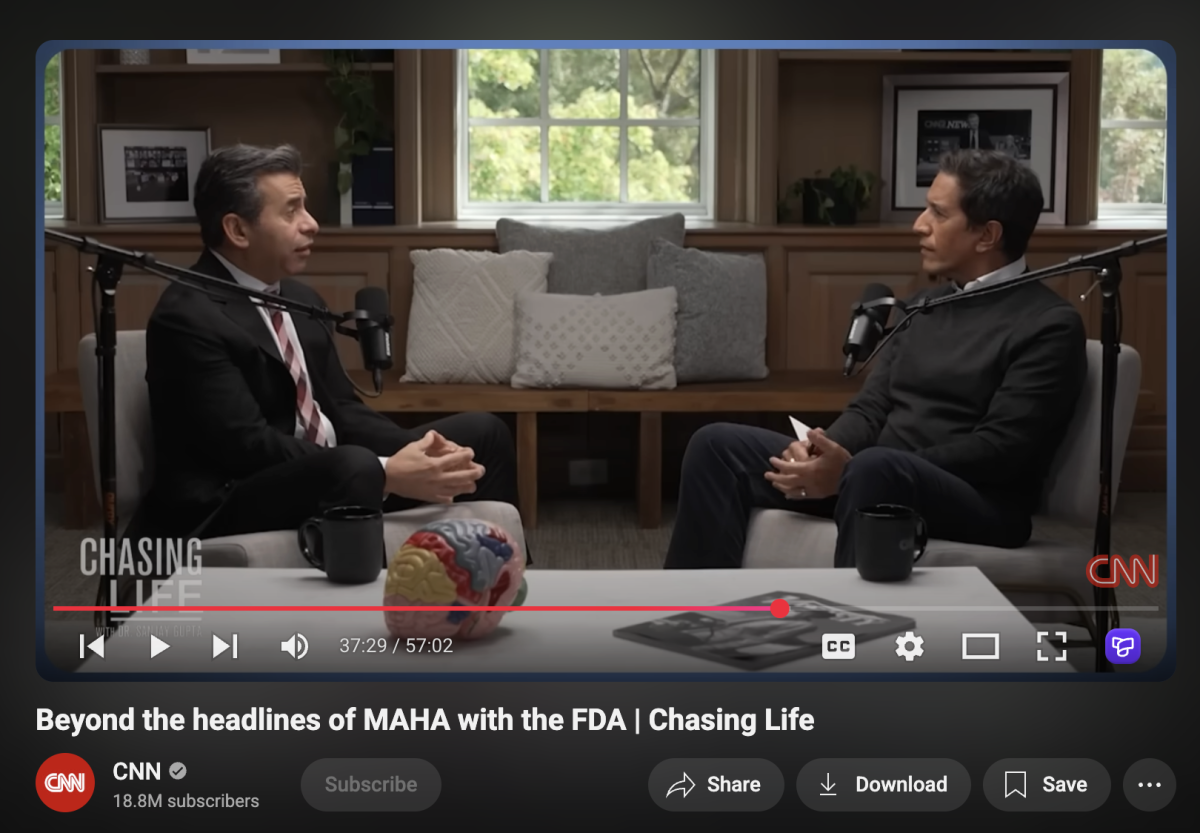
Oct 3, 2025 Marty Makary on CNN’s Chasing Life|image source:YouTube


In a recent episode of CNN’s Chasing Life hosted by Dr. Sanjay Gupta, U.S. Food and Drug Administration Commissioner Dr. Marty Makary discussed a wide range of health topics — from rebuilding public trust in the FDA to improving child nutrition and regulating emerging substances that fall outside traditional oversight.


Toward the end of the conversation, Makary turned to vaping and 7-OH, linking both to broader gaps in U.S. public health regulation.


7-OH: A Potent Opioid Hiding in Plain Sight


7-OH, or 7-hydroxymitragynine, is a powerful opioid compound naturally found in trace amounts in the kratom leaf. Makary explained that while kratom itself remains the subject of ongoing debate, concentrated forms of 7-OH — sold as powders, drinks, or gummies — have quietly spread across the U.S. market under names like hydroxy hydroxy metragynine.


“It’s extremely powerful,” he said, noting that it had “been off the radar” and was being sold in some vape stores.


Makary said the FDA and the Drug Enforcement Administration (DEA) have initiated a process to classify 7-OH as a controlled substance, emphasizing that there are currently no FDA-approved products containing the compound.


From Smoking Cessation Tool to Youth Addiction Risk


Makary acknowledged that vaping was originally marketed as a harm reduction tool for adult smokers. “When it first came out, it was pitched as an effective smoking-cessation tool,” he said.


“But now, many kids who have never smoked are starting to vape — often with illegal products, including those imported from China.”


He noted that in some U.S. vape stores, unapproved flavored products account for a large portion of sales, and many also contain THC, the psychoactive component of cannabis.


Makary added: “The vast majority of what’s being sold are illegal products designed to get kids addicted.”


Global Supply Chains, Domestic Enforcement Gaps


The FDA has long faced challenges in policing the fragmented vaping market. Unregulated imports — many originating from Chinese manufacturing hubs — continue to reach U.S. retailers through complex supply chains.


This dynamic, Makary suggested, reflects the intersection of global trade and limited domestic enforcement, where new consumer products often evolve faster than the rules designed to regulate them.


Balancing Innovation, Regulation, and Public Trust


Makary’s comments reveal how the FDA’s mission has expanded beyond traditional product approval toward a broader effort to sustain public trust amid technological and social change.


As FDA and DEA tighten cooperation — through new scheduling actions, expanded inspections, and technology-based tracking — the challenge remains how to regulate an industry that constantly reinvents itself.




DTI drafts administrative order proposing an open-pod and e-liquid ban and opens it for public consultation
Department of Trade and Industry’s (DTI) proposed move to restrict harmful vape products to protect young people, but said only a total ban on all vaping and novel tobacco products would effectively safeguard public health. The group warned that limiting rules to certain products such as open pods and e-liquids could create a “dangerous behavioral loophole,” leading users—especially youth—to switch to disposable or closed-system alternatives instead of quitting.
Feb.10 by 2FIRSTS.ai
2Firsts Interview | Bengt Wiberg: Why the Oral Health Risks of Nicotine Pouches Merit Further Study
As nicotine pouches gain global traction as a lower-risk alternative to smoking, questions are emerging about their potential oral health effects. In a 2Firsts interview, Stingfree AB founder Bengt Wiberg discusses why gum irritation and oral lesions warrant closer scrutiny within the broader framework of tobacco harm reduction.
Jan.06
PMTA Manufacturing Panel Sees Small Firms Warn “Unknown Is Death” as FDA Defends Review Boundaries
During FDA’s Feb 10 PMTA roundtable (manufacturing controls panel), small ENDS manufacturers warned that uncertainty in manufacturing expectations creates existential financial risk. FDA officials reiterated review flexibility is constrained by statutory and scientific boundaries. The panel debated testing standards, documentation requirements, open-system responsibility, supply chain changes, and software updates—highlighting unresolved PMTA challenges for small manufacturers.
Feb.11
China’s Nov. Vape Exports to U.S. Hold at $549 Million, Sustaining High After October’s $591 Million Peak
China’s Nov. vape exports to the U.S. held at $549 million, following October’s $591 million record. 2025 YTD exports reached $3.72 billion, officially eclipsing 2024’s full-year total. This $1.14 billion 60-day surge signals a critical inventory overhang, heightening financial and regulatory risks for manufacturers.
Dec.22
UK Barnsley: Town-centre vape shop and owner hit with £15,000+ bill after ignoring three improvement notices
A Barnsley town-centre vape retailer and its owner have been ordered to pay more than £15,000 after admitting multiple offences linked to the continued sale of illegal single-use vapes and non-compliant food items, despite three formal improvement notices.
Feb.06 by 2FIRSTS.ai
Surrey councillor calls for tougher vape sales controls, seeking the “most restrictive legally supportable” package
Surrey Councillor Gordon Hepner presented a notice of motion calling on council to “wage war on vaping” by strengthening controls on the sale of vaping products in the city, citing vaping as a “serious health concern,” especially among youth. Hepner said the motion directs staff to bring back the “most restrictive legally supportable” package from the City’s 2019 bylaw work to materially reduce where and how vape products can be sold, including licensing controls and enforcement.
Feb.10 by 2FIRSTS.ai