Liverpool City Council Cracks Down on Illegal E-Cigarette Sales

Regulations by 2FIRSTS.ai
Mar.06.2024
Liverpool City Council Cracks Down on Illegal E-Cigarette Sales
Liverpool city council has closed 8 illegal e-cigarette shops since October 2023, removing thousands of illicit devices from the streets.

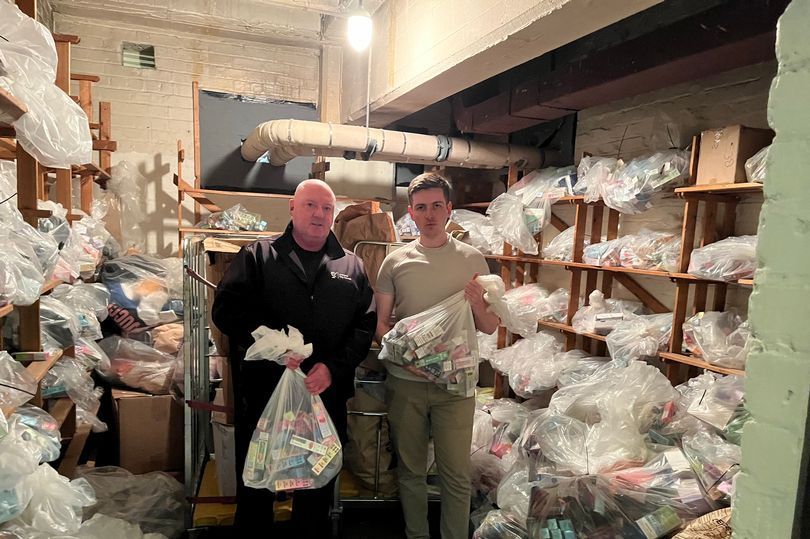
According to a report by the Liverpool Echo on March 5th, the city of Liverpool in the UK has recently carried out comprehensive closures of stores selling illegal e-cigarettes. Since October 2023, the city has closed down 8 retail stores selling illegal e-cigarettes, with over 1,200 illegal devices seized from just one store.


The new approach of using legislation to forcibly close businesses engaged in anti-social behavior during the COVID-19 pandemic has led to the disappearance of thousands of illegal e-cigarette sellers from the streets. Liverpool City Council is the first council in the northwest of England to adopt this strategy. Businesses found to be in violation will be fined and subjected to a three-month closure order.


Illegal e-cigarettes seized by authorities were found to have nicotine concentrations far above the legal limit of 20 milligrams per milliliter, as well as containing other prohibited substances such as colorants, caffeine, and taurine.


Liverpool City Council Cabinet Member for Health, Wellbeing, and Culture, Cllr Harry Doyle, stated:


Witnessing the disappearance of so many illegal products from our streets is very pleasing. In many cases, these e-cigarettes may end up in the hands of young people. Liverpool City Council is leading the way in adopting this new approach to tackling illegal sales, and we urge smokers using e-cigarettes as a smoking cessation tool to purchase them from reputable sellers.


We welcome news tips, article submissions, interview requests, or comments on this piece.

Please contact us at info@2firsts.com, or reach out to Alan Zhao, CEO of 2Firsts, on LinkedIn


Notice

1.  This article is intended solely for professional research purposes related to industry, technology, and policy. Any references to brands or products are made purely for objective description and do not constitute any form of endorsement, recommendation, or promotion by 2Firsts.

2.  The use of nicotine-containing products — including, but not limited to, cigarettes, e-cigarettes, nicotine pouchand heated tobacco products — carries significant health risks. Users are responsible for complying with all applicable laws and regulations in their respective jurisdictions.

3.  This article is not intended to serve as the basis for any investment decisions or financial advice. 2Firsts assumes no direct or indirect liability for any inaccuracies or errors in the content.

4.  Access to this article is strictly prohibited for individuals below the legal age in their jurisdiction.


Copyright


This article is either an original work created by 2Firsts or a reproduction from third-party sources with proper attribution. All copyrights and usage rights belong to 2Firsts or the original content provider. Unauthorized reproduction, distribution, or any other form of unauthorized use by any individual or organization is strictly prohibited. Violators will be held legally accountable.

For copyright-related inquiries, please contact: info@2firsts.com


AI Assistance Disclaimer


This article may have been enhanced using AI tools to improve translation and editorial efficiency. However, due to technical limitations, inaccuracies may occur. Readers are encouraged to refer to the cited sources for the most accurate information.

We welcome any corrections or feedback. Please contact us at: info@2firsts.com

2Firsts Data | China’s Vape Exports Rise 3.1% in H1 2026 as 6-Methyl Nicotine-Related Products Surge 65.2%
China’s vape exports showed resilience in the first half of 2026 after a short-term shock from China’s export rebate adjustment. But customs data points to more than a simple recovery: the structure of growth is changing. Vaping devices and atomization hardware emerged as the strongest growth driver, while nicotine-containing vaping products remained broadly stable. Meanwhile, nicotine substitute-related products represented by 6-methyl nicotine expanded rapidly, becoming a new category to watch for both industry and regulators. After the U.S. market went through a cycle of shortages, replenishment and inventory rebuilding in 2025, China’s vape supply chain is entering a new phase of reallocation.
Special Report
Jul.20
South Korea’s New Vape Rules Raise Bar for E-Liquid Makers and China-Linked Supply Chains, Expert Says
South Korea’s new vape regulations are reshaping the e-liquid market, raising compliance requirements for manufacturers, retailers and overseas suppliers. In an interview with 2Firsts, Korean nicotine products specialist Sam Kim discusses licensing barriers, inventory impacts, China-linked supply chains, and emerging regulatory challenges around nicotine analogues, nicotine-free products and DIY mixing. The Korean case may offer broader insights as governments worldwide adapt to rapidly evolving nicotine products.
Jul.16
Shopify Requires Merchants to Remove All Vape Products by July 8, Reshaping Online Sales Channels
Shopify has instructed merchants using its web-hosting services to remove vape products from their online stores by July 8, 2026. The policy expands beyond illegal products and applies to all electronic nicotine delivery systems (ENDS), marking a broader shift in online platform oversight of nicotine sales.
Innovation
Jul.14 by 2Firsts Perspectives
South Korea Rejects 16 Trillion Won Tax-Evasion Claim Over Chinese Synthetic Nicotine
The South Korean government rejected allegations that Chinese synthetic-nicotine e-liquids were linked to about 16 trillion won in tobacco tax evasion, saying China does not ban synthetic nicotine exports and the estimate is difficult to verify, while acknowledging that pre-law synthetic-nicotine inventory is effectively difficult to tax.
Market
Jun.25
China Discloses First Criminal Case Over Counterfeit Vapes Disguised as “Medical Nebulizers” and “Zero-Nicotine” Products
Chinese authorities have disclosed the country’s first reported criminal case involving counterfeit vapes marketed as “medical nebulizers” and “zero-nicotine” products. Authorities determined that the products involved were counterfeit vapes and pursued criminal charges for producing and selling counterfeit goods. According to the report, the case resulted in the seizure of 347,000 counterfeit vape pods and 53,700 vape devices, with physical goods valued at 22.13 million yuan.
Aug.04
PMI Q2 Call: ZYN Growth, IQOS Pricing and a Diverging Global Tobacco Market
Philip Morris International’s second-quarter earnings call offered new detail on its smoke-free strategy. Management said it would increase U.S. investment behind nicotine pouch brand ZYN, keep IQOS focused on volume before stronger pricing, and use SENTIA, DELIA, LEVIA, VEEV and ZYN to manage tax and regulatory pressure across Japan and Europe. Analysts from Goldman Sachs, Morgan Stanley, UBS and other firms also pressed PMI on profitability, market share, cigarette resilience and the durability of its global transformation over coming quarters.
Jul.24