Massachusetts Proposes Ban on Tobacco Sales to Anyone Born After 2006, Sparking Debate

Jul.17.2025
Massachusetts lawmakers are weighing a bill to create a “nicotine-free generation” by banning tobacco sales to anyone born on or after January 1, 2006. While some cities have adopted similar measures, critics argue it restricts personal freedom and hurts local businesses. Supporters say the law would protect future generations from targeting by Big Tobacco.

Key Points:


·Massachusetts is considering banning the sale of tobacco products to individuals born after 2006. 


·Some cities have already implemented similar plans, but opponents argue that it restricts freedom and harms local businesses. 


·Supporters believe it will break the cycle of addiction and protect future generations.


【2Firsts News Flash】According to a report from 10Boston on July 15th, on July 14th, the Massachusetts legislature debated a controversial tobacco legislation: to ban individuals born after January 1, 2006 from purchasing tobacco products for life, with the aim of creating a "nicotine-free generation".


“This proposal is seen by supporters as a milestone achievement in ten years of anti-smoking efforts, as well as a systematic innovation in the traditional public health approach.”


However, opponents argue that this approach constitutes an overreach in interfering with the freedom of choice of adults and will lead to real economic costs.


Supporters believe that this legislation will cut off the intergenerational transmission of tobacco addiction at its source and reduce the future public health burden caused by nicotine dependence. Senator Jason Lewis, the sponsor of the bill, highlighted that this is a strong institutional counterattack against major tobacco companies.


“This legislation will protect future generations from the targeting of large tobacco companies.”


Industry professionals emphasize that reality will not stop flowing because of ideals. Similar local bans have been implemented as pilot programs in multiple towns in Massachusetts, and the result is that customers and tax revenue alike are flowing to neighboring states.


“Massachusetts banned mint-flavored tobacco a few years ago, leading to businesses moving to New Hampshire and Rhode Island.”


Chris Duffy, CEO of J. Duffy Wholesale, added, "I don't even understand how all of this has come to this point.


We welcome news tips, article submissions, interview requests, or comments on this piece.

Please contact us at info@2firsts.com, or reach out to Alan Zhao, CEO of 2Firsts, on LinkedIn


Notice

1.  This article is intended solely for professional research purposes related to industry, technology, and policy. Any references to brands or products are made purely for objective description and do not constitute any form of endorsement, recommendation, or promotion by 2Firsts.

2.  The use of nicotine-containing products — including, but not limited to, cigarettes, e-cigarettes, nicotine pouchand heated tobacco products — carries significant health risks. Users are responsible for complying with all applicable laws and regulations in their respective jurisdictions.

3.  This article is not intended to serve as the basis for any investment decisions or financial advice. 2Firsts assumes no direct or indirect liability for any inaccuracies or errors in the content.

4.  Access to this article is strictly prohibited for individuals below the legal age in their jurisdiction.


Copyright


This article is either an original work created by 2Firsts or a reproduction from third-party sources with proper attribution. All copyrights and usage rights belong to 2Firsts or the original content provider. Unauthorized reproduction, distribution, or any other form of unauthorized use by any individual or organization is strictly prohibited. Violators will be held legally accountable.

For copyright-related inquiries, please contact: info@2firsts.com


AI Assistance Disclaimer


This article may have been enhanced using AI tools to improve translation and editorial efficiency. However, due to technical limitations, inaccuracies may occur. Readers are encouraged to refer to the cited sources for the most accurate information.

We welcome any corrections or feedback. Please contact us at: info@2firsts.com

Gallery | InterTabac 2026 Opens as VAPORESSO, SKE, GREENTANK, GEEK BAR and Other Brands Take the Floor
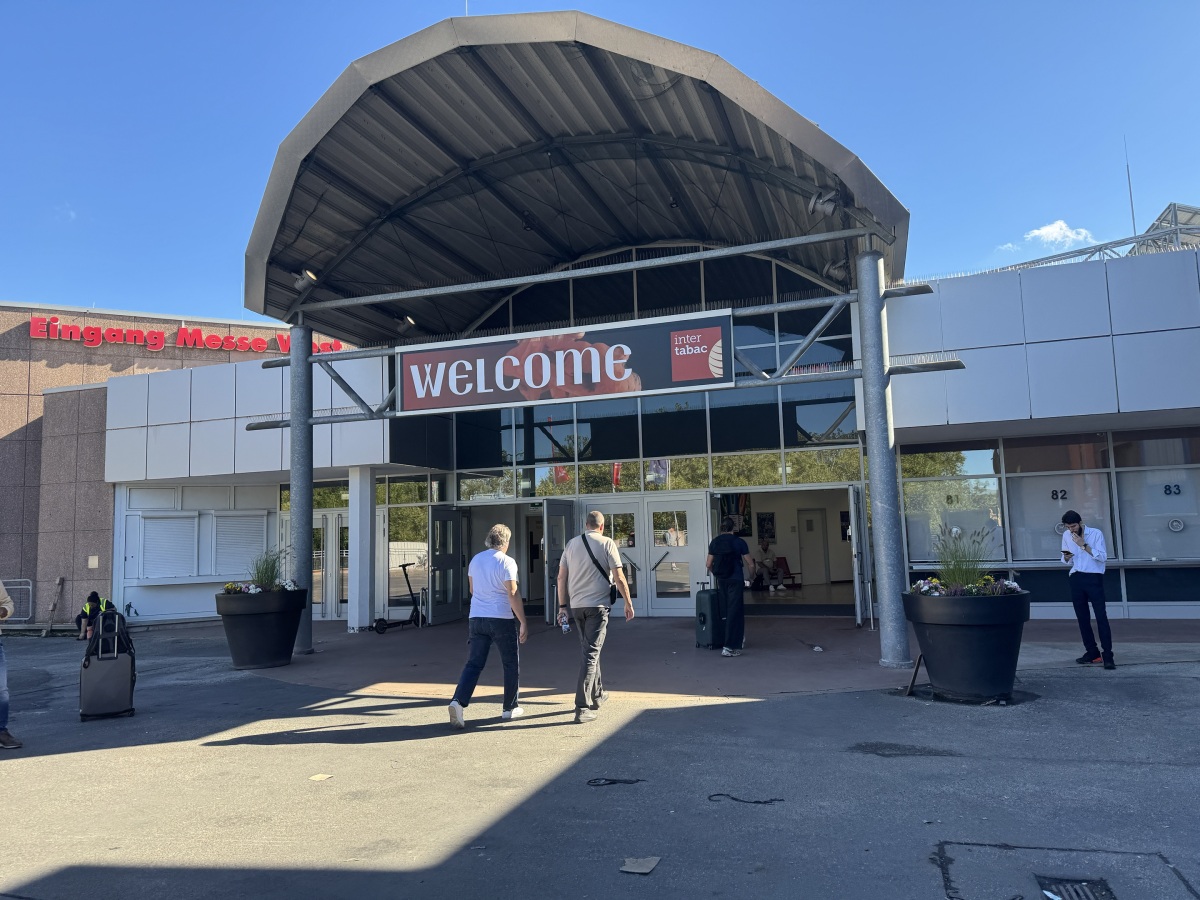
InterTabac 2026 opened in Dortmund, Germany, on September 15 alongside NUBIZ and InterSupply. According to the latest figures released by the organizer, the three trade shows bring together around 750 exhibitors from 64 countries. On site, 2Firsts observed vaping and related brands including VAPORESSO, DOJO, SKE, GREENTANK, GEEK BAR, HQD and ELUX.
Special Report
Sep.15
Yinghe-Controlled Vape Maker SKE Ordered to Post £569,039 Security as It Pursues Crystal Bar Design Infringement Case in UK
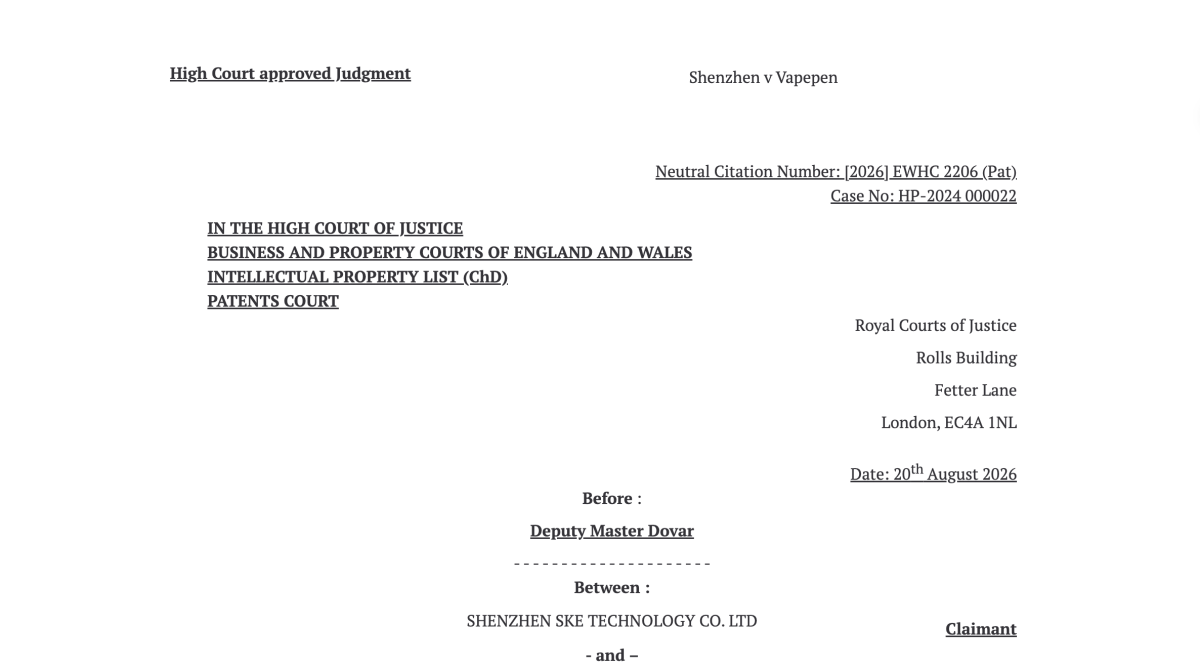
The UK High Court has ordered Chinese vape manufacturer Shenzhen SKE Technology to provide £569,039 ($776,000) in security for costs in its design infringement proceedings against Vapepen London and other defendants over its Crystal Bar vape product. The court did not accept the defendants’ main argument that recovering costs from a China-based company would face significant enforcement obstacles, but found that SKE had not sufficiently disclosed its own financial position. The order is procedural and does not determine the underlying infringement claims.
News
Aug.21
China Discloses First Criminal Case Over Counterfeit Vapes Disguised as “Medical Nebulizers” and “Zero-Nicotine” Products
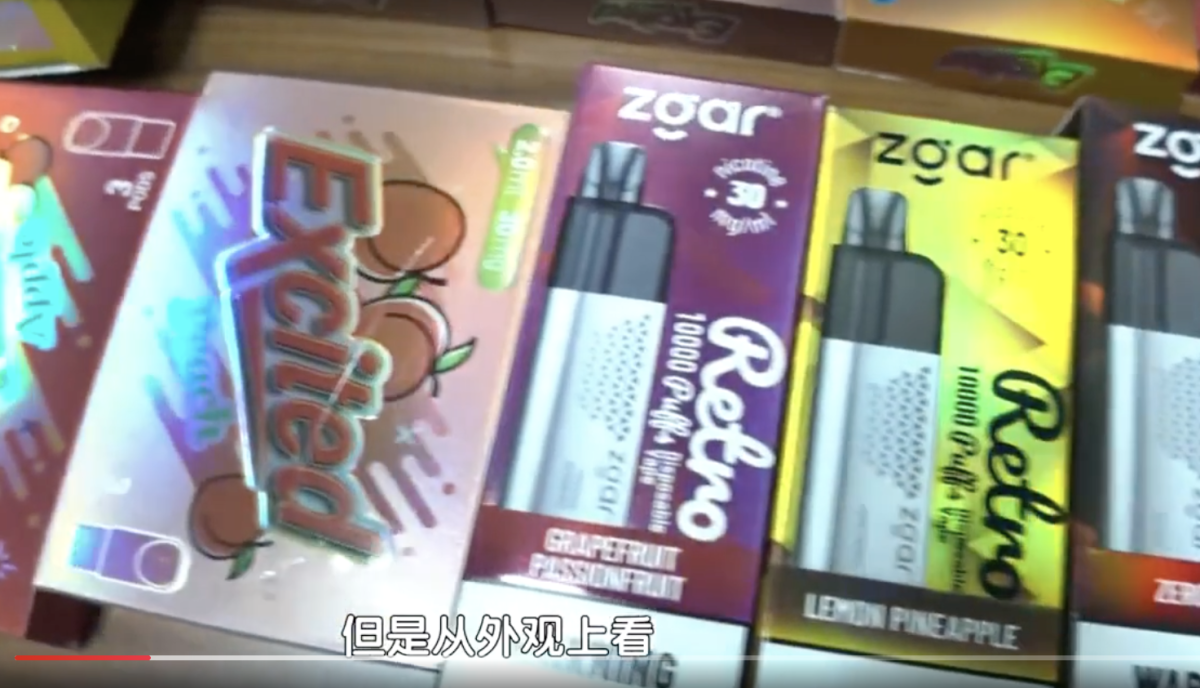
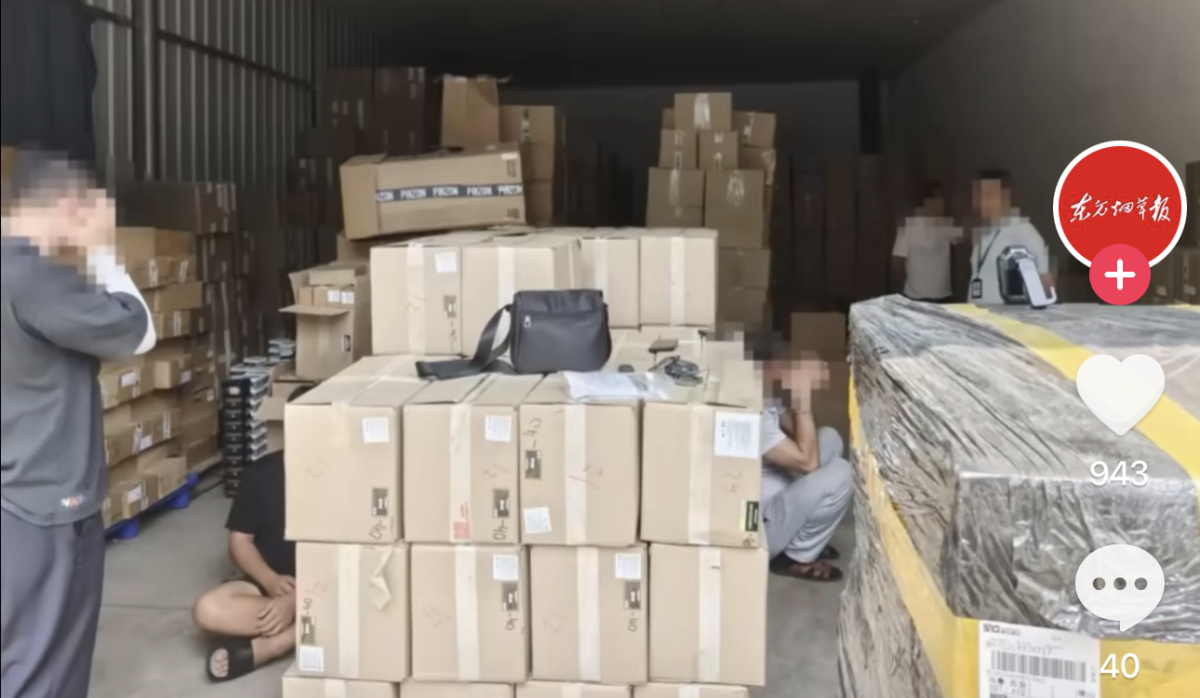
Chinese authorities have disclosed the country’s first reported criminal case involving counterfeit vapes marketed as “medical nebulizers” and “zero-nicotine” products. Authorities determined that the products involved were counterfeit vapes and pursued criminal charges for producing and selling counterfeit goods. According to the report, the case resulted in the seizure of 347,000 counterfeit vape pods and 53,700 vape devices, with physical goods valued at 22.13 million yuan.
Aug.04
China Tobacco Yunnan files patent for cellulose-free nicotine pouch scaffold to replace microcrystalline cellulose
China Tobacco Yunnan Industrial Co., Ltd. has filed a patent application for a cellulose-free scaffold material for nicotine pouches, proposing a combination of bioceramic material, polydextrose and sugar alcohols to replace conventional microcrystalline cellulose and cellulose derivatives. The filing aims to address issues including powdery mouthfeel, residue and limited release control, while also reducing reliance on existing cellulose-based patent portfolios. In patent examples, one fast-release formulation reached a nicotine release rate of 50% at 10 minutes and more than 90% at 20 minutes.
Sep.02
2FIRSTS EXCLUSIVE|China Breaks Up $6.8 Million Illegal Hookah Tobacco Operation as Market Expands
Chinese authorities have dismantled an illegal hookah tobacco operation worth more than 46 million yuan ($6.8 million), detaining five foreign suspects and seizing over 500,000 boxes of tobacco paste. The case comes as hookah expands across China’s nightlife sector and attracts overseas operators, including former vaping entrepreneurs. It also raises a central regulatory question: whether waterpipe tobacco will follow China’s private-sector e-cigarette licensing model or be reserved for the state tobacco system, as with nicotine pouches, in the years ahead.
Jul.31
Special Report | Altria Subsidiaries Sue FDA to Vacate 2021 PMTA Rule as Agency Moves to Speed Reviews
2Firsts reviewed the original federal court complaint filed by Altria subsidiaries Helix Innovations and NJOY on Sept. 2 challenging FDA’s 2021 PMTA rule. The lawsuit questions whether FDA’s review process complies with the Tobacco Control Act’s 180-day timeline, even as the agency moves to accelerate PMTA reviews and issues more marketing orders. Drawing on the complaint, FDA records, government audits and recent court rulings, 2Firsts examines the legal arguments, supporting evidence and potential implications for the U.S. tobacco review system.
Regulations
Sep.03