Key Points:
·The form of the campaign: Using medical-themed toy dolls as the core visual element, imitating collectible packaging to attract the attention of young people, and then revealing health risks, combining satire and warning.
·Background and objectives: Although e-cigarettes are banned nationwide in Singapore, violations related to them in 2022 have increased nearly three times compared to 2020. The campaign aims to break the perception that e-cigarettes are harmless and address the trend of adolescent use.
·Communication strategy: Covering multiple channels such as subways, cinemas, and social media platforms (such as TikTok, Instagram) to accurately reach the target audience.
·Time span: From mid-June to August 2025, utilizing the active periods and platforms of young people for communication.
【2Firsts News Flash】According to adobo magazine on July 11, the Health Promotion Board (HPB) of Singapore has partnered with creative agency TBWA\Singapore to launch a bold anti-e-cigarette campaign called "Don't Toy With Your Life". This impactful initiative aims to challenge young people's perceptions of e-cigarettes by exposing the deceptive allure of e-cigarettes through attention-grabbing visual designs and narrative based on behavioral insights.
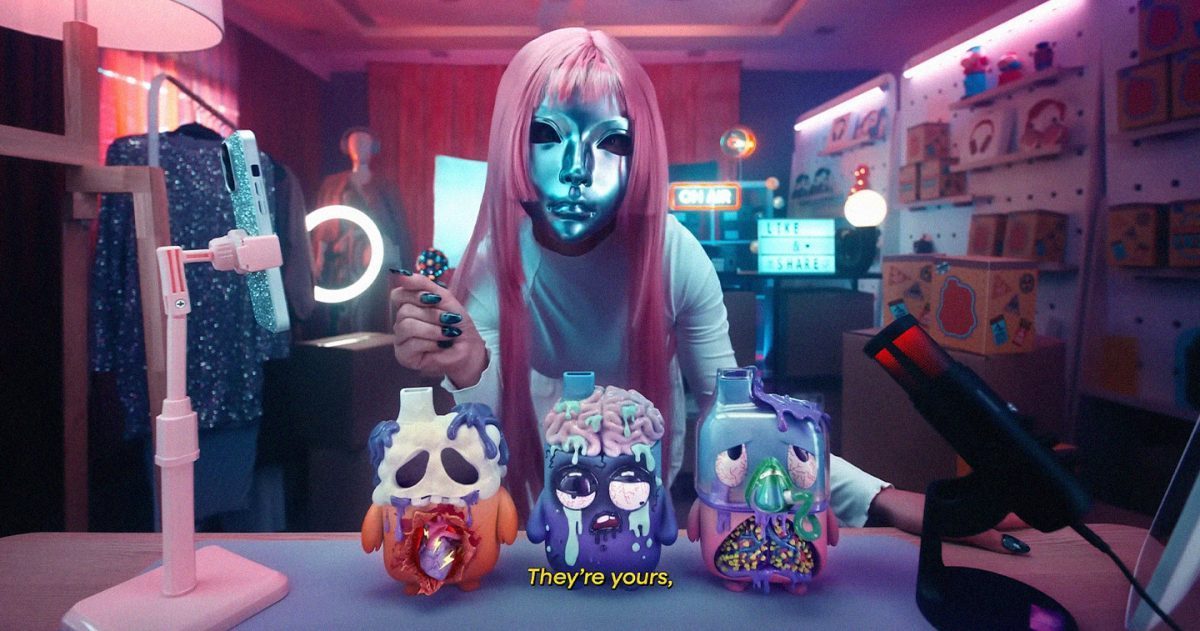
In recent weeks, curious commuters on the Singapore subway have encountered some mysterious toy-like devices - these bizarre yet intriguing bubble-wrapped packages contain toy figurines named "Popcorn Lungs," "Diseased Heart," "Addicted Brain," and more. These ironically designed works have now become the centerpiece of a nationwide campaign by the Health Promotion Board, aimed at addressing the rising rates of e-cigarette use among Singaporean youth.
Despite e-cigarettes being banned nationwide in Singapore, their use continues to spread, especially among young people. Data from the Singapore Health Sciences Authority shows that violations related to the possession and use of e-cigarettes have nearly tripled in 2022 compared to 2020. Research also indicates that peer influence and media depictions are important factors driving teenagers to use e-cigarettes.
The "Don't Treat Life as a Toy" movement aims to break the misconception that e-cigarettes are harmless by juxtaposing the fashionable, toy-like appeal of e-cigarettes with the warning of their long-term health risks, highlighting their dangers. The creative strategy of the movement is to use the familiar limited edition packaging aesthetic that young people are drawn to as a cultural entry point, first capturing their initial interest, and then subverting their expectations with intuitive, medically-based visual elements.
TBWA\Singapore's Executive Creative Director, Loo Yong Ping, explained:
"We deliberately mimic the enticing designs commonly used to attract potential users, aiming to unveil the serious health risks and legal consequences of e-cigarettes. In this way, the campaign emphasizes the deceptive allure of e-cigarettes and urges the public to reject them. Considering the strong interest of young people in limited edition collectibles and current trends, we chose eye-catching toy bubble wrap packaging as a visual hook to capture their attention and build resonance. We not only use design as decoration, but also as a 'cultural trojan horse' — embedding serious information into a familiar and naturally accepted form for young people. By reimagining anti-e-cigarette propaganda from the perspective of collectible packaging, we transform popular culture visual elements into striking warnings, sparking important discussions about the serious consequences of e-cigarettes."
This multi-dimensional campaign covers digital platforms, social media, public transportation networks, and cinema advertisements. At the core of this campaign is a movie that tells the story of a fictional live-streaming blogger who sells these dolls through manipulative sales tactics - a metaphor for how harmful trends like e-cigarettes are promoted and rationalized online. The film also explores how young people's desire for social belonging makes them particularly susceptible to peer pressure and online influence.
This movement will last from mid-June to August 2025, strategically scheduled to reach young people through platforms they frequently use, including TikTok, Instagram, and streaming video platforms.
We welcome news tips, article submissions, interview requests, or comments on this piece.
Please contact us at info@2firsts.com, or reach out to Alan Zhao, CEO of 2Firsts, on LinkedIn
Notice
1. This article is intended solely for professional research purposes related to industry, technology, and policy. Any references to brands or products are made purely for objective description and do not constitute any form of endorsement, recommendation, or promotion by 2Firsts.
2. The use of nicotine-containing products — including, but not limited to, cigarettes, e-cigarettes, nicotine pouchand heated tobacco products — carries significant health risks. Users are responsible for complying with all applicable laws and regulations in their respective jurisdictions.
3. This article is not intended to serve as the basis for any investment decisions or financial advice. 2Firsts assumes no direct or indirect liability for any inaccuracies or errors in the content.
4. Access to this article is strictly prohibited for individuals below the legal age in their jurisdiction.
Copyright
This article is either an original work created by 2Firsts or a reproduction from third-party sources with proper attribution. All copyrights and usage rights belong to 2Firsts or the original content provider. Unauthorized reproduction, distribution, or any other form of unauthorized use by any individual or organization is strictly prohibited. Violators will be held legally accountable.
For copyright-related inquiries, please contact: info@2firsts.com
AI Assistance Disclaimer
This article may have been enhanced using AI tools to improve translation and editorial efficiency. However, due to technical limitations, inaccuracies may occur. Readers are encouraged to refer to the cited sources for the most accurate information.
We welcome any corrections or feedback. Please contact us at: info@2firsts.com