Russia's Perm Legislators Approve Full Ban on Vape Products in Regional Retail Market

Nov.28.2025
Russia's Perm Legislators Approve Full Ban on Vape Products in Regional Retail Market
2Firsts, November 28, 2025 — The Legislative Assembly of Perm Krai has passed a law banning the retail sale of vape products and other nicotine-aerosol devices, effective March 1, 2026. Individuals found selling such items will face fines between ₽15,000–₽20,000 (about US $180–240), while companies face ₽50,000–₽100,000 (about US $600–1,200). The ban covers all electronic nicotine delivery systems (ENDS), heated-tobacco devices, and their components, regardless of nicotine content.

Key Points


 • Ban Effective Date: March 1, 2026.
• Penalties: Individuals fined ₽15,000–₽20,000; companies fined ₽50,000–₽100,000.
• Scope: All vape products and heated-tobacco devices, with or without nicotine.
• Background: Perm already banned kiosk sales of vapes since 2024.
• Wider Context: National licensing law may allow regions to impose vape retail bans from 2026–2031.


2Firsts, November 28, 2025 — According to the press office of the Legislative Assembly of Perm Krai, a regional law banning the retail sale of vaping products will take effect on March 1, 2026. The bill was proposed by Governor Dmitry Makhonin and was approved by the assembly after two readings.


Under the new legislation, individuals who retail vaping or related devices will be subject to fines of ₽15,000–₽20,000 (approximately US $180–240), while companies face fines of ₽50,000–₽100,000 (approximately US $600–1,200). The prohibition applies to all electronic nicotine delivery systems (ENDS), heated-tobacco devices, and any of their components or parts — regardless of whether they contain nicotine.


Perm Krai authorities noted that a partial ban has been in place since 2024, which already forbade the sale of vapes in kiosks. The new comprehensive retail ban strengthens regional efforts to restrict access to vaping products.


Meanwhile, at the federal level, the Ministry of Finance has proposed amendments to allow regional governments to impose retail bans on vapes between September 1, 2026 and September 1, 2031. Retailers and suppliers who violate such bans may face license revocation. The national licensing law’s second reading is expected to consider these amendments.


President Vladimir Putin has previously expressed support for strict measures to control electronic smoking products. However, some market analysts warn that a full ban could boost the black-market trade; a 2024 estimate by consultancy firm NeoAnalytics placed the size of Russia’s e-cigarette market at ₽250 billion.


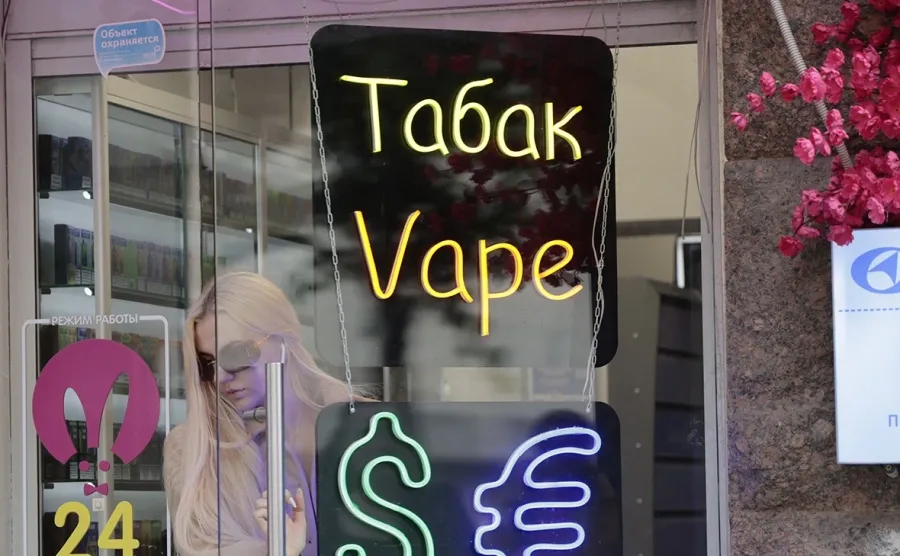
Image source: RBC


We welcome news tips, article submissions, interview requests, or comments on this piece.

Please contact us at info@2firsts.com, or reach out to Alan Zhao, CEO of 2Firsts, on LinkedIn


Notice

1.  This article is intended solely for professional research purposes related to industry, technology, and policy. Any references to brands or products are made purely for objective description and do not constitute any form of endorsement, recommendation, or promotion by 2Firsts.

2.  The use of nicotine-containing products — including, but not limited to, cigarettes, e-cigarettes, nicotine pouchand heated tobacco products — carries significant health risks. Users are responsible for complying with all applicable laws and regulations in their respective jurisdictions.

3.  This article is not intended to serve as the basis for any investment decisions or financial advice. 2Firsts assumes no direct or indirect liability for any inaccuracies or errors in the content.

4.  Access to this article is strictly prohibited for individuals below the legal age in their jurisdiction.


Copyright


This article is either an original work created by 2Firsts or a reproduction from third-party sources with proper attribution. All copyrights and usage rights belong to 2Firsts or the original content provider. Unauthorized reproduction, distribution, or any other form of unauthorized use by any individual or organization is strictly prohibited. Violators will be held legally accountable.

For copyright-related inquiries, please contact: info@2firsts.com


AI Assistance Disclaimer


This article may have been enhanced using AI tools to improve translation and editorial efficiency. However, due to technical limitations, inaccuracies may occur. Readers are encouraged to refer to the cited sources for the most accurate information.

We welcome any corrections or feedback. Please contact us at: info@2firsts.com

Study Says Europe’s Illicit Disposable Vape Market to Reach EUR 6.6 Billion in 2026
A new study by the Fraunhofer Institute says the rapidly expanding illicit market for disposable e-cigarettes is undermining European regulation, fuelling youth vaping and causing significant tax losses. The study says the illicit market is worth EUR 6.6 billion in 2026 and is projected to rise to EUR 10.8 billion by 2030. It adds that a significant share of the disposable vape market now operates outside the regulatory framework established by the EU Tobacco Products Directive.
Mar.13 by 2FIRSTS.ai
2Firsts Interview with Glas |Why a California ENDS Company Believes Its Age-gated Flavored Vape Could Be Next in Line for FDA Authorization
As the FDA advances efforts to streamline its PMTA review process, including support for small businesses, expectations are rising that additional product authorizations may follow. Age-verification technology is emerging as a key consideration in future approvals.In this interview, California-based Glas discusses its G2 platform, integrating smartphone-based identity verification, proximity controls and anti-counterfeit systems, and outlines its positioning under the FDA’s PMTA framework.
Mar.02
Study: Links between internalizing mental health symptoms and nicotine/tobacco use vary by gender identity among U.S. adolescents
A study using 2020–2023 U.S. data from the ITC Youth Tobacco and Vaping Survey (ages 16–19) reports that both nicotine/tobacco use and internalizing mental health (IMH) symptoms vary across disaggregated gender identities, and that gender identity moderates the relationship between IMH symptoms and product use.
Feb.27 by 2FIRSTS.ai
Russia’s Duma Deputy Speaker Davankov calls for a total vape ban, citing drug sales disguised as vapes
Vladislav Davankov, deputy speaker of Russia’s State Duma, urged a nationwide ban on vapes, arguing it would help prevent drugs being sold under the cover of vaping products, including near schools. The remarks come as Russia prepares to enforce a separate ban on vape sales at public transport stops starting Sept. 1, 2026.
Feb.09 by 2FIRSTS.ai
Fontem Drops Texas Lawsuit and Plans to Refile in D.C. Over FDA Handling of Zone Application
Fontem US, the maker and seller of Zone nicotine pouches, has voluntarily dismissed its lawsuit against the U.S. Food and Drug Administration, which it had accused of unfairly delaying its market application.
Mar.25 by 2FIRSTS.ai
BAT faces London shareholder lawsuit over alleged disclosure failures tied to North Korea business
British American Tobacco is facing a shareholder lawsuit in London alleging it failed to properly disclose to markets information about breaches of U.S. sanctions linked to its North Korea-related business. BAT agreed in 2023 to pay more than $635 million to U.S. authorities after a subsidiary admitted conspiring to violate U.S. sanctions by selling tobacco products to North Korea and committing bank fraud from 2007 to 2017.
Mar.05 by 2FIRSTS.ai