Philip Morris International's ZYN Production in Pakistan Supports Harm Reduction.

Feb.27.2025
Philip Morris International's ZYN Production in Pakistan Supports Harm Reduction.
Philip Morris International begins local production of ZYN nicotine pouches in Pakistan, expanding tobacco harm reduction efforts.

Key points:


Philip Morris International (PMI) Pakistan has begun local production of ZYN nicotine pouches to support harm reduction in tobacco use.


The production process is divided into stages and is planned to be fully conducted in Pakistan in the future.


According to a report by Brecorder on February 27th, Philip Morris International (PMI) Pakistan's subsidiary (PMPKL) has started production of ZYN nicotine pouches at its factory in Sahiwal.


The first stage of localized production involves packaging imported raw materials to produce finished goods. The second stage will expand to encompass the full manufacturing process of nicotine pouches locally.


The localization production of ZYN in Pakistan is an important move following the authorization of ZYN nicotine pouches by the US FDA for sale in the US market, according to Nicholas Ricketts, CEO of Global Commercial Oral Products.


The authorization by the FDA in the United States firmly validates our commitment to harm reduction in tobacco. This regulatory advancement sets an important precedent that could influence global policies, leading to a significant reduction in smoking rates and actively promoting public health.


Ali Takesh, General Manager of PMPKL, emphasized the importance of providing better alternative products in Pakistan.


Providing adult smokers with less harmful alternatives is the core goal of PMPKL, which aligns with the global vision of Philip Morris International (PMI) to become a smoke-free company by 2030.


We welcome news tips, article submissions, interview requests, or comments on this piece.

Please contact us at info@2firsts.com, or reach out to Alan Zhao, CEO of 2Firsts, on LinkedIn


Notice

1.  This article is intended solely for professional research purposes related to industry, technology, and policy. Any references to brands or products are made purely for objective description and do not constitute any form of endorsement, recommendation, or promotion by 2Firsts.

2.  The use of nicotine-containing products — including, but not limited to, cigarettes, e-cigarettes, nicotine pouchand heated tobacco products — carries significant health risks. Users are responsible for complying with all applicable laws and regulations in their respective jurisdictions.

3.  This article is not intended to serve as the basis for any investment decisions or financial advice. 2Firsts assumes no direct or indirect liability for any inaccuracies or errors in the content.

4.  Access to this article is strictly prohibited for individuals below the legal age in their jurisdiction.


Copyright


This article is either an original work created by 2Firsts or a reproduction from third-party sources with proper attribution. All copyrights and usage rights belong to 2Firsts or the original content provider. Unauthorized reproduction, distribution, or any other form of unauthorized use by any individual or organization is strictly prohibited. Violators will be held legally accountable.

For copyright-related inquiries, please contact: info@2firsts.com


AI Assistance Disclaimer


This article may have been enhanced using AI tools to improve translation and editorial efficiency. However, due to technical limitations, inaccuracies may occur. Readers are encouraged to refer to the cited sources for the most accurate information.

We welcome any corrections or feedback. Please contact us at: info@2firsts.com

Australia's Illicit Tobacco Market May Have Turned After Five Years of Growth, With Estimates Showing Up to 25% Decline Amid Tax-Cut Debate
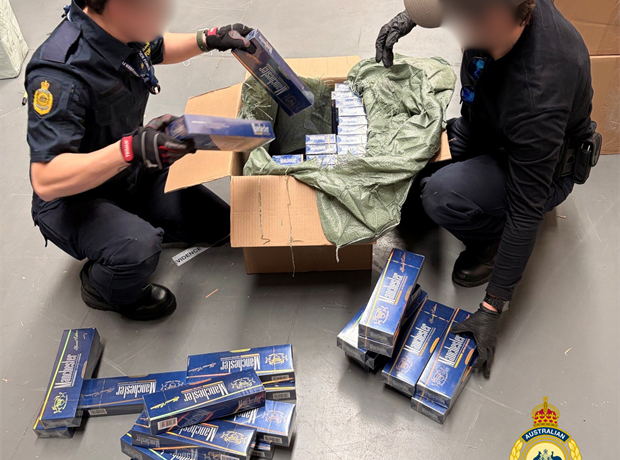
New Australian government estimates released on November 15, 2026, suggest that the country's illicit tobacco market may have contracted for the first time following five years of growth. Estimated market volume fell from a previous peak of 5,972 tonnes to a range of 4,453–5,893 tonnes. The government attributed the change to stronger border enforcement and coordinated domestic operations. Australian Border Force seized more than 2,300 tonnes of illicit tobacco and 13.2 million illicit vaping products in 2025–26, followed by approximately 730 tonnes of illicit tobacco in the first quarter of 2026–27. Separate experimental estimates from the Australian Bureau of Statistics indicate that illicit sources accounted for approximately 80% of nicotine consumption in 2025.
Regulations
Nov.16
Texas Extends Tobacco Tax Interpretation to a 6-Methylnicotine Product, Citing VELO Ruling
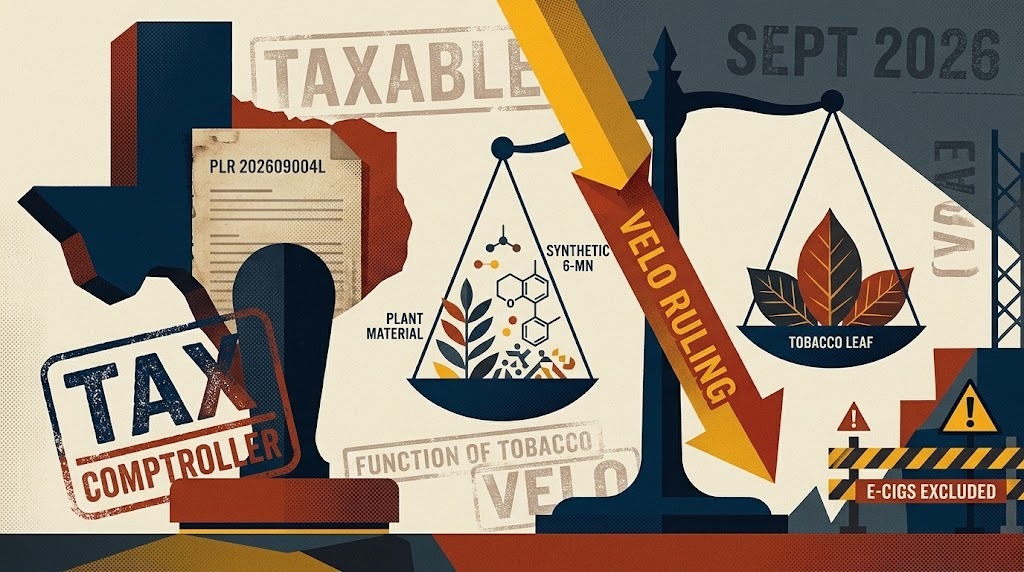
The Texas Comptroller of Public Accounts ruled in September 2026 that a combustible product made with non-tobacco plant material and 6-methylnicotine (6-MN), a synthetic nicotine analog, qualifies as a taxable tobacco product. The applicant said the product contained neither tobacco leaf nor measurable conventional nicotine. The determination applies reasoning from a May Texas Supreme Court decision involving VELO nicotine pouches, finding that the plant material and 6-MN together perform the functions of tobacco in a conventional smoking product. The ruling carries applicable tax, licensing and reporting obligations but is limited to the facts submitted by the taxpayer. It does not establish a blanket tax classification for all 6-MN products or extend the same conclusion to e-cigarettes.
Regulations
Nov.06
Special Report | From Oversupply to Supply Gaps: Global Tobacco Leaf Markets Diverge Ahead of 2027
Global tobacco leaf markets diverged sharply in 2026, with India cutting authorised FCV production amid oversupply while Malawi faced a supply shortfall. U.S. demand improved in some leaf categories, but growers in Brazil, Colombia, Tanzania and Zimbabwe faced pressure from prices, buyer access, costs and weather. With nicotine consumption patterns also shifting, 2027 will test whether supply, demand and grower profitability can move back toward balance.
Oct.26
2Firsts First Look|China to End VAT Export Rebates on Vape Devices and Nicotine in April 2027, Following Earlier Removal for HTP Devices and Nicotine Vapes
China's Ministry of Finance and State Taxation Administration announced on October 12, 2026, that value-added tax (VAT) export rebates for vape devices, nicotine and its salts, and certain non-combustible inhalation products will be eliminated from April 1, 2027. The measure adds four tobacco- and nicotine-related customs codes, including 8543400010, which covers vape devices and qualifying empty pods. China previously eliminated rebates for nicotine-containing vaping products and devices under code 8543400090 in April 2026. According to industry classification information held by 2Firsts, the latter currently corresponds to heated tobacco devices. Export excise tax refund and exemption arrangements will remain unchanged.
Special Report
Oct.12
Virginia Tobacco Retail Permit Takes Effect October 1, Covering Vapes as More Than 3,000 Businesses Apply in September
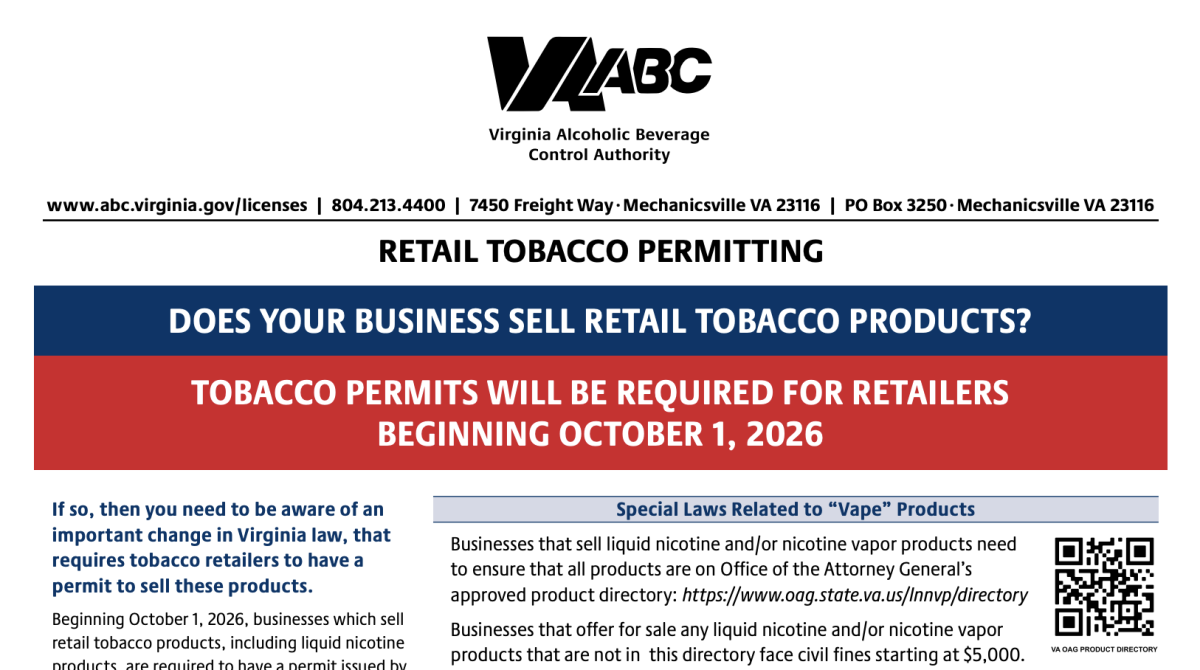
Virginia's new retail tobacco permit system took effect October 1, requiring sellers of vapes, nicotine products and related devices and accessories to obtain a Retail Tobacco Permit for each business location. Virginia ABC said more than 3,000 businesses applied in September alone, creating a processing backlog. Qualifying applicants that filed before October 1 may temporarily operate under a Letter of Authorization. The new store-level permit also sits alongside Virginia's existing vape product directory, where sales of unlisted liquid nicotine or nicotine vapor products can trigger civil penalties starting at $5,000.
Regulations
Oct.03
On-Site Report | CTP Details PMTA Backlog, 180-Day Review Goal and sPMTA Process
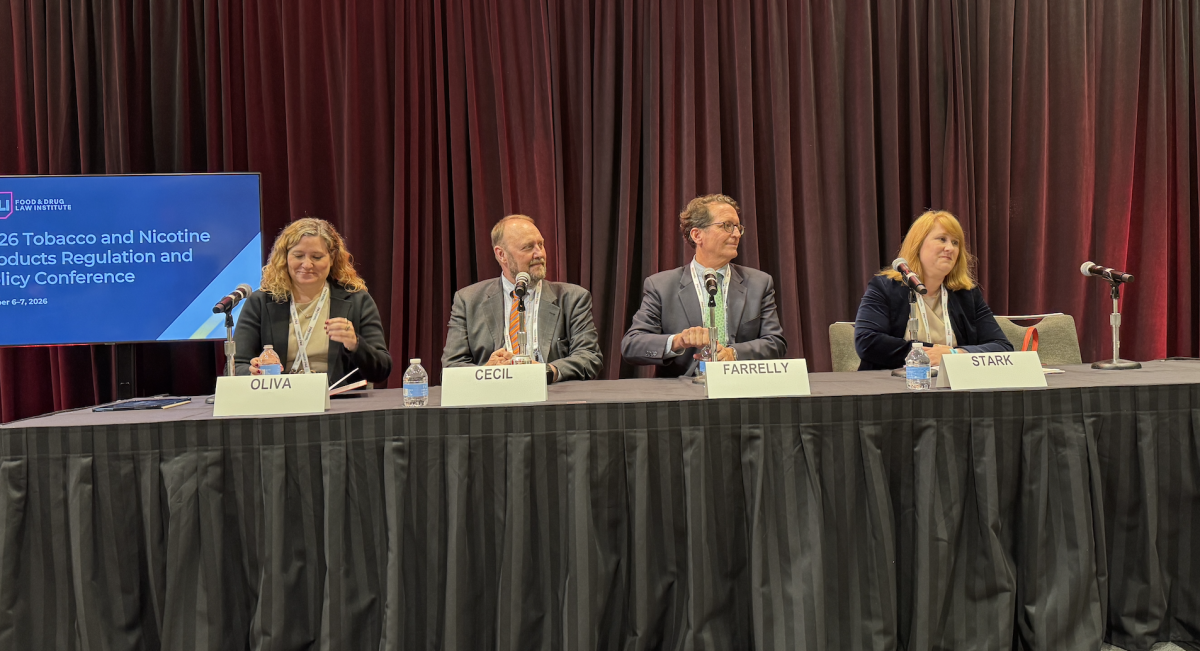
FDA’s Center for Tobacco Products detailed new PMTA review data and process changes at the 2026 FDLI conference. Pending PMTAs fell from about 450,000 at the start of 2025 to 135,000 by September 2026. CTP also discussed its 180-day review goal, current sPMTA pilot, alternate-supplier planning, more than 50,300 pending SE reports, and lessons from the nicotine pouch pilot already being applied to ENDS review.
Regulations
Oct.07