Philip Morris International to Boost Investment in the Philippines, Aiming to Make It a Smoke-Free Products Export Hub

Oct.11.2025
Philip Morris International to Boost Investment in the Philippines, Aiming to Make It a Smoke-Free Products Export Hub
PMI to make the Philippines a smoke-free export hub, citing strong regulation; upgrading local plants, expanding affordable supply; $14bn invested globally.

Key Takeaways:


· Regulatory edge: PMI calls the Philippines’ regulatory environment “very progressive,” with potential to become an export hub for smoke-free products.

· Factory shift: Philippine facilities are being fully converted to produce heated tobacco (HnB) products.

· Large market: With about 16 million smokers, PMI plans to introduce more affordably priced smoke-free products.


2Firsts, October 11, 2025 — Citing The Philippine Star, Philip Morris International (PMI) says that, given the Philippines’ “highly forward-looking” regulatory system and investor-friendly climate, the company is considering building the country into an export hub for its science-based smoke-free products.


The Philippines Could Become a Major PMI Smoke-Free Production Base


PMI CEO Jacek Olczak said the company has not built new cigarette factories over the past decade, instead converting some existing plants—including one in the Philippines—into production bases for smoke-free products.


Christos Kiritsis, PMI’s VP for smoke-free products across South Asia, Southeast Asia, the CIS, the Middle East, and Africa, noted that the Philippines is among the few countries with a comprehensive regulatory framework for smoke-free products. Its “very progressive” system creates favorable conditions for investment and exports. He added that beyond its investment appeal, the Philippines has a large domestic market that is crucial to PMI’s future plans.


Doubling Down on Smoke-Free: $14 Billion Invested Globally


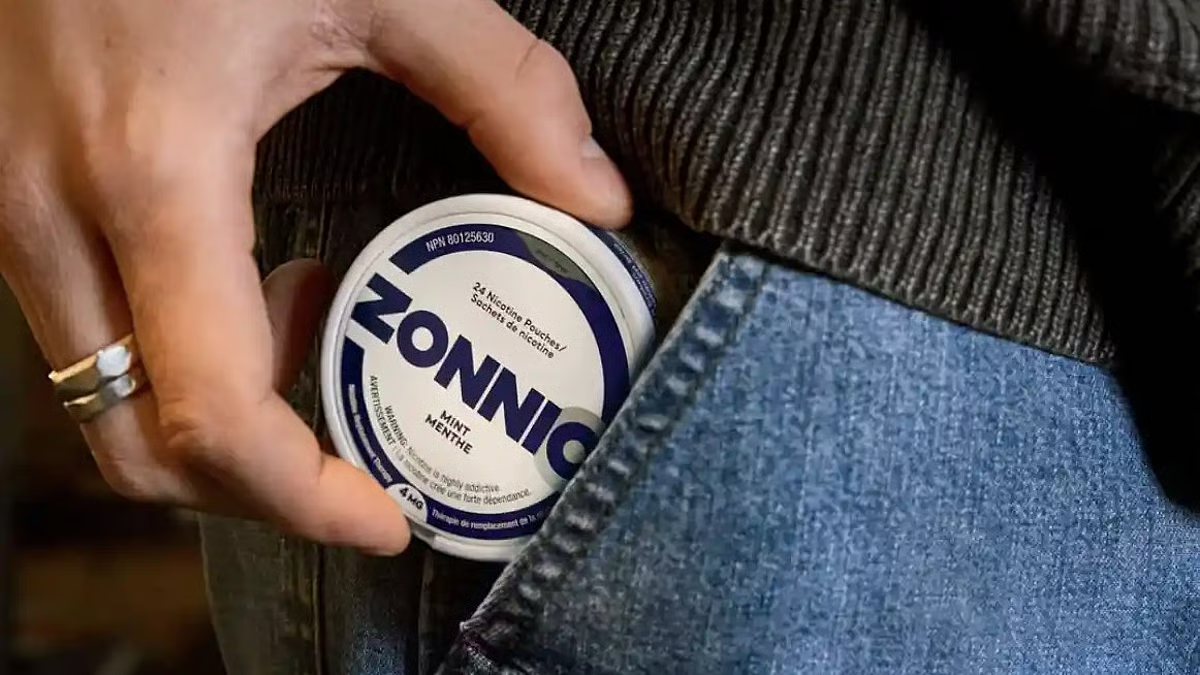
In the Philippine market, PMI currently offers multiple smoke-free alternatives, including the heated tobacco product IQOS and ZYN nicotine pouches, giving legal-age consumers options to consume nicotine without combustion.


Olczak said PMI has invested about $14 billion over the past decade in the R&D and commercialization of smoke-free products, which now account for 41% of the company’s global net revenues. He revealed PMI is developing a next-generation IQOS, improved nicotine pouches, and new vaping devices, and will continue to expand investment.


Philippine Facilities Under Full Conversion


PMI and its local affiliate PMFTC Inc. operate a 1.2-hectare plant in Tanauan, Batangas, opened last year and now dedicated to producing specialized sticks for smoke-free products. Olczak said the company emphasizes employee retraining during the transition to ensure staff can remain engaged in smoke-free production as cigarette operations wind down.


Serving 16 Million Smokers: Expanding More Affordable Options


Kiritsis noted there are still about 16 million smokers in the Philippines. PMI plans to launch more price-competitive smoke-free products locally to broaden market coverage. He said PMI’s second-generation HnB device Bonds—previously piloted in the Philippines—could return, aimed primarily at Asian consumers at price points closer to cigarettes, and, according to PMI, capable of reducing harmful constituents by about 95%.


As of mid-year, among roughly 1 billion smokers worldwide, approximately 41 million adults use PMI’s smoke-free products.


We welcome news tips, article submissions, interview requests, or comments on this piece.

Please contact us at info@2firsts.com, or reach out to Alan Zhao, CEO of 2Firsts, on LinkedIn


Notice

1.  This article is intended solely for professional research purposes related to industry, technology, and policy. Any references to brands or products are made purely for objective description and do not constitute any form of endorsement, recommendation, or promotion by 2Firsts.

2.  The use of nicotine-containing products — including, but not limited to, cigarettes, e-cigarettes, nicotine pouchand heated tobacco products — carries significant health risks. Users are responsible for complying with all applicable laws and regulations in their respective jurisdictions.

3.  This article is not intended to serve as the basis for any investment decisions or financial advice. 2Firsts assumes no direct or indirect liability for any inaccuracies or errors in the content.

4.  Access to this article is strictly prohibited for individuals below the legal age in their jurisdiction.


Copyright


This article is either an original work created by 2Firsts or a reproduction from third-party sources with proper attribution. All copyrights and usage rights belong to 2Firsts or the original content provider. Unauthorized reproduction, distribution, or any other form of unauthorized use by any individual or organization is strictly prohibited. Violators will be held legally accountable.

For copyright-related inquiries, please contact: info@2firsts.com


AI Assistance Disclaimer


This article may have been enhanced using AI tools to improve translation and editorial efficiency. However, due to technical limitations, inaccuracies may occur. Readers are encouraged to refer to the cited sources for the most accurate information.

We welcome any corrections or feedback. Please contact us at: info@2firsts.com

Kumulus Vape2026 H1 Revenue Falls 8.3% but Profit Rises 24% as B2B Weakens and Consumer Channels Grow
French vaping company Kumulus Vape reported first-half 2026 revenue of €25.5 million, down 8.3% year over year, as its core B2B distribution business fell 11% to €21.6 million. B2C and store-network revenue rose 5.6% and 17.8%, respectively. Commercial margin increased to 26.3% from 21.7%, while net profit rose 24.1% to €0.8 million. The company attributed the profitability improvement to catalog optimization, logistics restructuring and the ramp-up of Labster, its in-house production unit for proprietary brands.
Market
Sep.17 by 2Firsts Perspectives
Canada Considers Easing Pharmacy-Only Nicotine Pouch Sales Rules, Potentially Reopening Convenience Store Channel
Canada's federal government is considering changes to current restrictions on where nicotine pouches can be sold, potentially allowing authorized products to return to convenience stores and other general retail channels, although no decision has been made. Since 2024, emerging nicotine replacement therapy products such as nicotine pouches have been largely restricted to behind-the-counter pharmacy sales. Health Canada, meanwhile, continues to recall unauthorized and higher-strength nicotine pouches, indicating that the current discussion concerns retail access for authorized products rather than a broad relaxation of nicotine pouch regulation.
Sep.14
U.S. Customs Plan to Require Foreign Export Declarations Could Deal ‘Devastating’ Blow to China’s Vape Exports, Logistics gl Expert Says
A U.S. Customs and Border Protection proposal to collect foreign export declarations and other overseas customs documents could expose discrepancies in the value, classification and description of China-made vape shipments entering the United States. A veteran Chinese logistics professional told 2Firsts that the measure, if implemented, could undermine the all-inclusive shipping model used by some unauthorized vape exporters and push parts of the trade toward costlier underground channels. The risk extends beyond higher duties: accurately declared products may also be more readily identified as unauthorized e-cigarettes subject to FDA enforcement.
Special Report
Sep.07
Altria’s USSTC Starts $250 Million Kentucky Expansion, Adding More Than 200 Jobs
U.S. Smokeless Tobacco Company, an Altria Group company, has broken ground on an approximately $250 million manufacturing expansion in Hopkinsville, Kentucky. The roughly 270,000-square-foot facility is expected to create more than 200 jobs and absorb processing, manufacturing and packaging operations currently split between Hopkinsville and Nashville, Tennessee. USSTC previously said production at its Nashville facility is expected to wind down by early 2028. The project forms part of Altria’s broader effort to modernize and consolidate its U.S. smokeless tobacco manufacturing network.
Sep.10
JUUL2 Sued Within a Week of FDA Authorization as AJ Marketing Alleges Infringement of Programmable Vape Patent
Less than a week after JUUL2 received U.S. FDA marketing authorization on August 28, 2026, JUUL Labs was sued for patent infringement in federal court in Delaware. AJ Marketing LLC filed the complaint on September 3, alleging that both JUUL 1 and JUUL2 infringe U.S. Patent No. 8,851,068 B2. The patent covers aspects of programmable electronic vaporization devices, including controls over dose delivery, usage frequency and operating parameters. The plaintiff is seeking reasonable royalties and ongoing royalties tied to the remaining life of the patent. JUUL has not yet publicly responded to the case.
Sep.10
Spain Cigarette Volumes Fall 5.2% in August, BAT Drops 14.5%, JTI Gains Share; France Down 8.3% on Adjusted Basis
Spain's cigarette volumes declined 5.2% year over year in August 2026, according to government data cited by UBS and reported by Investing.com on October 7. British American Tobacco's volumes fell 14.5%, followed by Imperial Brands at 8.8%, Philip Morris International at 6.6% and Japan Tobacco at 4.6%. JTI was the only one of the four companies to gain cigarette market share, rising six basis points to 26.7%. In France, official customs data showed an unadjusted 3.7% decline in cigarette deliveries. Adjusting for the difference in delivery days produces a decline of approximately 8.3%, consistent with the UBS figure. The bank also estimated the earnings exposure of major tobacco companies to both markets.
Market
Oct.13