PMI Launches "Invest in America" Campaign as ZYN Factory Set for Full Operation in 2026

Jul.04.2025
PMI Launches "Invest in America" Campaign as ZYN Factory Set for Full Operation in 2026
PMI US has launched the “Invested in America” campaign to spotlight its $600 million investment in a new ZYN nicotine pouch facility in Arizona, projected to create 500 direct and 1,000 indirect jobs.

Key Points:


·Manufacturing layout: The $600 million ZYN factory in Arizona is set to start production by the end of 2025, supplementing the existing production capacity in Kentucky. The annual economic impact is expected to reach $550 million. 


·Market strategy: Addressing the increasing demand for nicotine pouches in the United States. With 2500 employees nationwide, the headquarters are located in Connecticut. 


·Communication strategy: Advertising in mainstream media such as The New York Times, targeting audiences aged 21 and older. Emphasizing job creation and manufacturing industry revitalization. 


【2Firsts news flash】According to CSP's report on July 3, Philip Morris International (PMI) US launched a new "Invested in America" advertising campaign.


This multi-channel publicity campaign, published in major publications such as The New York Times and The Wall Street Journal, emphasizes the role played by Philip Morris International (PMI) in "promoting job growth, revitalizing manufacturing, improving public health by providing better choices for smokers over the age of 21, and strengthening communities across the country.


Stacey Kennedy, President of PMI Americas and Chief Executive Officer of PMI USA, stated:


"This event showcases our innovative spirit and determination to reshape the entire industry and enhance America's strength. It also demonstrates our commitment to meaningful investments, creating real value for our business, employees, and community."


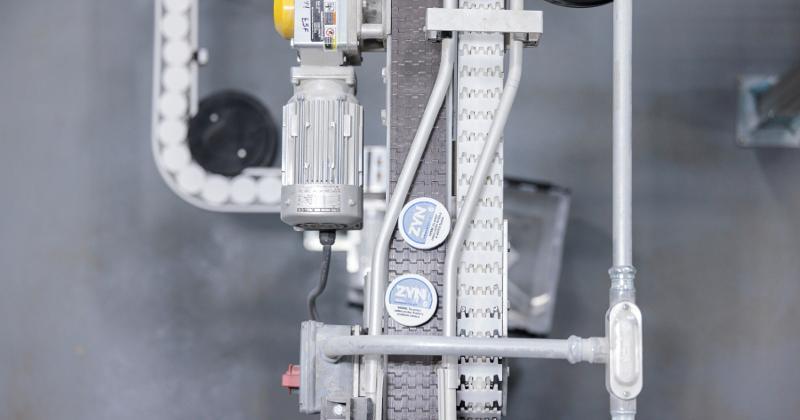
The event comes as Philip Morris International (PMI) prepares to begin construction on its $600 million ZYN manufacturing facility in Aurora later in 2025. The factory's construction plans were initially announced in July 2024. With 500 jobs, the factory represents a significant increase in PMI's smoke-free product production capacity in the United States.


It is expected that the construction period will last approximately two years, with operations set to begin at the end of 2025 and full production commencing in 2026. According to PMI, the factory is projected to generate an annual economic impact of around $550 million and create an additional 1,000 indirect job opportunities in the region.


The Colorado factory will supplement the existing Kentucky factory of Philip Morris International (PMI) in producing ZYN, a nicotine pouch product. PMI acquired the Kentucky factory through the acquisition of Swedish Match in 2022. This expansion aims to meet the rapidly growing consumer demand for nicotine pouches in the U.S. market.


PMI currently has around 2,500 employees in the United States, with its headquarters located in Stamford, Connecticut.


The "Investing in America" event is targeting "key opinion leaders" in the print, digital, social media, and online video channels. Philip Morris International (PMI) stated that its goal is to "spark rational dialogues around change", while adhering to its marketing guidelines by restricting advertising to adults of legal age for nicotine use.


We welcome news tips, article submissions, interview requests, or comments on this piece.

Please contact us at info@2firsts.com, or reach out to Alan Zhao, CEO of 2Firsts, on LinkedIn


Notice

1.  This article is intended solely for professional research purposes related to industry, technology, and policy. Any references to brands or products are made purely for objective description and do not constitute any form of endorsement, recommendation, or promotion by 2Firsts.

2.  The use of nicotine-containing products — including, but not limited to, cigarettes, e-cigarettes, nicotine pouchand heated tobacco products — carries significant health risks. Users are responsible for complying with all applicable laws and regulations in their respective jurisdictions.

3.  This article is not intended to serve as the basis for any investment decisions or financial advice. 2Firsts assumes no direct or indirect liability for any inaccuracies or errors in the content.

4.  Access to this article is strictly prohibited for individuals below the legal age in their jurisdiction.


Copyright


This article is either an original work created by 2Firsts or a reproduction from third-party sources with proper attribution. All copyrights and usage rights belong to 2Firsts or the original content provider. Unauthorized reproduction, distribution, or any other form of unauthorized use by any individual or organization is strictly prohibited. Violators will be held legally accountable.

For copyright-related inquiries, please contact: info@2firsts.com


AI Assistance Disclaimer


This article may have been enhanced using AI tools to improve translation and editorial efficiency. However, due to technical limitations, inaccuracies may occur. Readers are encouraged to refer to the cited sources for the most accurate information.

We welcome any corrections or feedback. Please contact us at: info@2firsts.com

White House Pulls Heidi Overton's FDA Nomination as Vaccine, Abortion Pill and Vaping Disputes Fuel Senate Opposition
The White House withdrew Heidi Overton's nomination to lead the U.S. Food and Drug Administration (FDA) on November 17, 2026, a day before a scheduled Senate committee vote. Overton faced questions from Republican and Democratic senators over vaccines, abortion medication and flavored nicotine products. In May, the FDA granted its first marketing authorizations for non-tobacco, non-menthol e-cigarette flavors, including mango and blueberry pods from Glas. Republican Senator Susan Collins challenged recent authorizations for flavored vaping and nicotine pouch products during Overton's September confirmation hearing. The FDA remains under Acting Commissioner Kyle Diamantas.
FDA
Nov.18
BAT Adds Former Apple General Counsel Bruce Sewell to Board as Finance, Legal, Marketing and Regional Leadership Shift
British American Tobacco has appointed former Apple Senior Vice President, General Counsel and Secretary Bruce Sewell as an independent non-executive director, effective January 1, 2027. He will also join BAT's Audit and Nominations Committees. BAT Chair Luc Jobin highlighted Sewell's experience in technology, government and regulatory affairs, public-company governance and AI-company boards. Over the past 18 months, BAT has changed or announced changes to its CFO, general counsel, CMO and APMEA regional leadership, while the main board has also seen multiple changes. The appointment comes as BAT advances Horizon 2030 and its Fit2Win transformation while expanding New Categories and reshaping parts of its digital, technology and operating structure.
Business
Oct.29
FDA Appoints Former Tobacco Enforcement Deputy Jessica Zeller as Director as Agency Weighs PMTA Framework Changes
The U.S. Food and Drug Administration (FDA) has named Jessica Zeller director of the Center for Tobacco Products' (CTP) Office of Compliance and Enforcement (OCE), effective November 1, 2026. Zeller, the office's inaugural deputy director, returns from medical device manufacturer Edwards Lifesciences with more than 20 years of regulatory and legal experience. The appointment follows CTP leadership changes and adjustments to tobacco regulation. Bret Koplow became permanent CTP director in September; the FDA revised enforcement priorities for unauthorized e-cigarettes and nicotine pouches in May and announced faster PMTA review procedures. On September 28, the agency said it would evaluate changes to the existing PMTA regulatory framework, including potential rulemaking to replace it.
FDA
Oct.20 by 2Firsts Perspectives
Special Report | From New York to Washington: How FDA’s Tobacco Center Is Reworking Product Review
FDA’s Center for Tobacco Products is reshaping how it approaches tobacco product review. Based on 2Firsts’ on-site reporting in New York and Washington, this report traces CTP’s emerging direction: stronger links between PMTA and tobacco harm reduction, more category-specific review, greater emphasis on decision-relevant science, more predictable timelines and expanded use of sPMTA for product modifications. CTP also acknowledged major constraints, including just nine PMTA review teams, persistent backlogs and limits on hiring capacity.
Regulations
Oct.08
On-Site Report | After FDA Announces Review of PMTA Framework, CTP Director Details Reform Priorities
FDA CTP Director Bret Koplow used his FDLI keynote in Washington to outline how the agency is rethinking the PMTA framework. He discussed category-specific review, nicotine pouch and sPMTA pilots, AI-assisted review, a 70% reduction in pending applications, and a major staffing constraint: CTP currently has only nine scientific review teams. He also reaffirmed tobacco harm reduction while stressing youth protection, flavored products, risk communication, and the challenge of unauthorized e-cigarettes.
Regulations
Oct.06
Special Report | Vape bans and tougher rules: the South Caucasus takes different paths
Azerbaijan's sweeping e-cigarette ban has raised concerns over enforcement errors and the emergence of illicit sales, while neighboring Armenia is tightening technical rules and preparing higher excise taxes. Georgia, meanwhile, has resisted calls for broader vape restrictions and introduced preferential taxes for some domestically produced cigarettes. The divergent approaches across the South Caucasus highlight a regional policy dilemma: how to curb nicotine use and protect public health without encouraging black markets or creating unintended economic consequences for businesses and consumers.
Nov.03