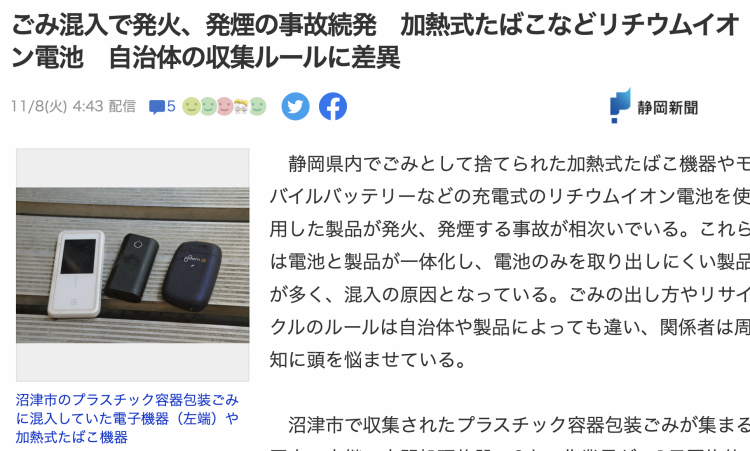
Shizuoka Prefecture has experienced a series of incidents involving the overheating and non-combustion of tobacco products and mobile phone batteries that use lithium-ion rechargeable batteries. Many of these products have integrated batteries, making it difficult to remove them separately and resulting in environmental pollution. Rules for recycling and waste disposal vary among cities and products, making it difficult for authorities to notify relevant personnel.
The intermediate facility for collecting plastic containers and packaging waste in Numazu City receives an average of 7.7 tons of such garbage daily, sorted by six workers on a conveyor belt. Non-burn heating equipment and small electronic devices are also mixed in with the rejected waste. Kazumi Kase, head of the management department at the city's cleaning center, disclosed that they often come across several pieces daily, some of which are difficult to discern and impossible to fully clear.
In April, a lithium-ion battery from a heated tobacco device mixed with plastic waste and caused a fire at a facility in the city. The facility was responsible for collecting garbage in Kitakyushu City. This is the third incident of its kind, as the same thing happened twice last year. As of this fiscal year, the city has started promoting the proper disposal of heated tobacco products, which should be discarded with dry batteries and lighters. If rechargeable batteries can be removed, people are encouraged to use store collection services.
Other municipalities mostly collect at stores, but in Shizuoka City, prior application is required for the collection of non-burnable waste, while Mishima City collects small home appliances. Some local governments have no clear regulations, and Hamamatsu City is considering developing new collection regulations for the next fiscal year to address a series of minor smoke and fire incidents.
In response to the increasing number of firework accidents, an industry group that sells heated non-combustible cigarettes is calling for collection in stores and other places, although some products are not covered.
The Japan Tobacco Association (Tokyo) has responded to the frequent incidents by announcing that from 2021, "Ploom" sold by Japan Tobacco Corporation (JT) and "glo" sold by British American Tobacco Japan will be available for purchase nationwide. Around 50 stores within the county are currently collecting these products. Additionally, since September, the association has been actively raising awareness by utilizing checkout screens at convenience stores.
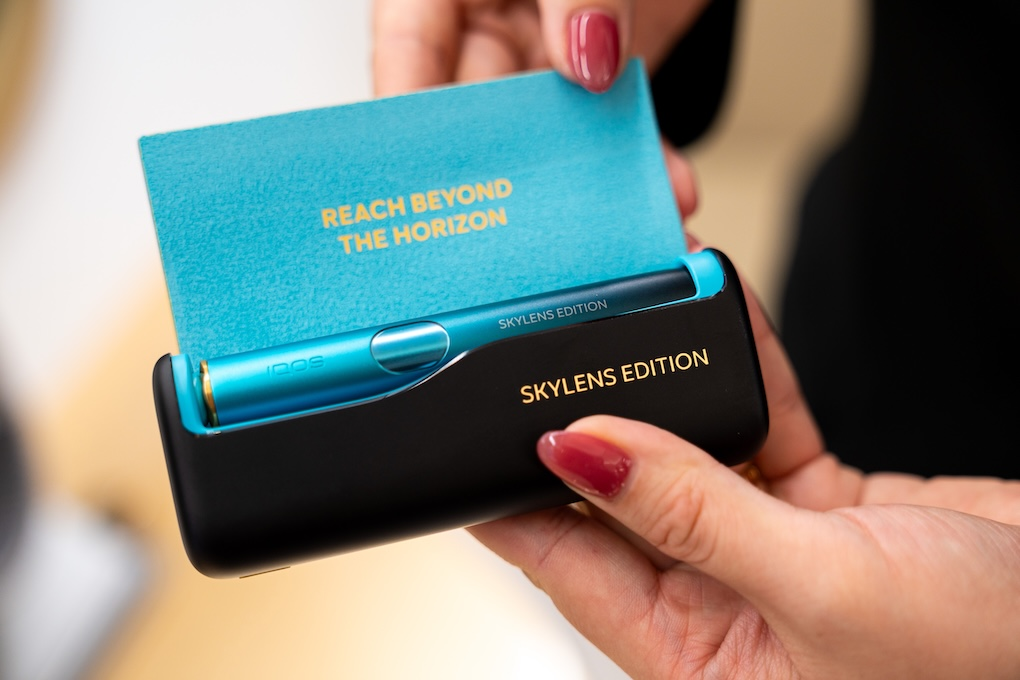
On the other hand, Japan's Philip Morris company's "IQOS", which holds a high market share in the domestic market, is not part of the association's solicitation scope. The company stated, "We are discussing with relevant organizations to establish an efficient collection system at a reasonable cost.
Statement:
This article is compiled from information from a third party, and is intended for industry communication and learning purposes only.
This article does not represent the views of 2FIRSTS, and 2FIRSTS cannot confirm the authenticity or accuracy of the content. The translation of this article is solely for industry exchange and research purposes.
Due to limitations in our ability to translate, the translated article may not accurately convey the same meaning as the original. Please refer to the original article for accuracy.
2FIRSTS maintains complete alignment with the Chinese government on any domestic, Hong Kong, Macau, Taiwan, or foreign related statements and positions.
The copyright of compiled information belongs to the original media and author. If there is any infringement, please contact us for deletion.
Disclaimer
This article is provided solely for professional research, industry discussion, and informational purposes. Any references to brands, companies, products, technologies, or policies are made for factual reporting and analytical purposes only, and do not constitute endorsement, recommendation, promotion, or advertising by 2Firsts.
Nicotine-containing products, including but not limited to cigarettes, e-cigarettes, heated tobacco products, and nicotine pouches, carry significant health risks. Readers are responsible for complying with all applicable laws and regulations in their respective jurisdictions, including age restrictions and access limitations.
The information contained in this article should not be regarded as investment, legal, medical, regulatory, or commercial advice. While 2Firsts strives to ensure the accuracy and reliability of its content, it does not assume liability for any direct or indirect loss arising from errors, omissions, inaccuracies, or reliance on the information contained herein.
This article is not intended for individuals below the legal age for accessing tobacco or nicotine-related information in their jurisdiction.
Copyright Notice
This article is either original content produced by 2Firsts or content reproduced, translated, summarized, or adapted from third-party sources with attribution where applicable. The intellectual property rights of the original content remain with 2Firsts or the respective original rights holders.
No individual or organization may copy, reproduce, distribute, republish, modify, translate, or otherwise use this content without prior authorization. Any unauthorized use may result in legal action.
For copyright-related inquiries, corrections, or removal requests, please contact: info@2firsts.com.
AI-Assisted Translation and Editing Notice
Portions of this article may have been translated, edited, or reviewed with the assistance of artificial intelligence tools to improve efficiency and readability. Due to the limitations of AI-assisted translation and editing, discrepancies, omissions, or inaccuracies may exist when compared with the original source.
Where applicable, readers are advised to refer to the original source for the most complete and accurate information. If you identify any errors or believe that any content infringes upon your rights, please contact us at info@2firsts.com, and we will review and address the matter promptly.