Rising Popularity of E-cigarettes Among Belarusian Teenagers

Market by 2FIRSTS.ai
Nov.21.2023
Rising Popularity of E-cigarettes Among Belarusian Teenagers
According to sb.by, a nationwide study by the Belarusian Health Research Center reveals the increasing popularity of e-cigarettes among teenagers.

According to sb.by news, the Belarusian Center for Health Studies has been conducting nationwide representative surveys on smoking behavior among students for the past 18 years. This year, they have expanded their monitoring scope to include an investigation into the use of e-cigarettes.


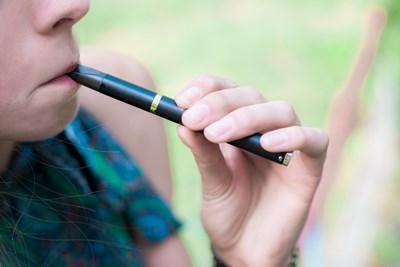
A survey conducted across 39 schools with the participation of 3,493 students in grades 7-10 has revealed that e-cigarettes are highly popular among adolescents. The findings indicate that 15% of the surveyed students reported using e-cigarettes.


A survey has revealed that the number of e-cigarette users has increased as age increases, with 9th grade students aged 15 being the most prominent group. Additionally, there is a gender disparity in e-cigarette usage, as female students are less likely to believe that e-cigarettes are harmful compared to their male counterparts. The data shows that as age increases, there is a decrease in the suspicion regarding the harmful effects of e-cigarettes.


Meanwhile, as individuals grow older, the number of teenagers unwilling to give up smoking is also on the rise, with the utilization of smokeless tobacco growing threefold over the past five years.


We welcome news tips, article submissions, interview requests, or comments on this piece.

Please contact us at info@2firsts.com, or reach out to Alan Zhao, CEO of 2Firsts, on LinkedIn


Notice

1.  This article is intended solely for professional research purposes related to industry, technology, and policy. Any references to brands or products are made purely for objective description and do not constitute any form of endorsement, recommendation, or promotion by 2Firsts.

2.  The use of nicotine-containing products — including, but not limited to, cigarettes, e-cigarettes, nicotine pouchand heated tobacco products — carries significant health risks. Users are responsible for complying with all applicable laws and regulations in their respective jurisdictions.

3.  This article is not intended to serve as the basis for any investment decisions or financial advice. 2Firsts assumes no direct or indirect liability for any inaccuracies or errors in the content.

4.  Access to this article is strictly prohibited for individuals below the legal age in their jurisdiction.


Copyright


This article is either an original work created by 2Firsts or a reproduction from third-party sources with proper attribution. All copyrights and usage rights belong to 2Firsts or the original content provider. Unauthorized reproduction, distribution, or any other form of unauthorized use by any individual or organization is strictly prohibited. Violators will be held legally accountable.

For copyright-related inquiries, please contact: info@2firsts.com


AI Assistance Disclaimer


This article may have been enhanced using AI tools to improve translation and editorial efficiency. However, due to technical limitations, inaccuracies may occur. Readers are encouraged to refer to the cited sources for the most accurate information.

We welcome any corrections or feedback. Please contact us at: info@2firsts.com

Bringing Tax and Insurance Into Nicotine Regulation: Insights From a Tobacco Harm-Reduction Report
A smoke-free nicotine policy report argues that tobacco harm reduction should move beyond product bans and health warnings into tax policy, insurance pricing and risk-based regulation. While some projections remain open to debate, the report highlights a wider challenge: nicotine products, technologies and consumer behavior have changed sharply over the past decade, and regulatory systems may need new tools to better align tobacco control with harm-reduction goals.
Jun.08
Philippine Health Department Pushes Total Vape Ban, With Tobacco-Only Flavor Limit as Alternative
The Philippine Department of Health said it is pushing for a total ban on vape products. If a full ban is not feasible, DOH officer-in-charge Director Dr. Dominic Maddumba said vape products should at least be limited to plain tobacco flavors to reduce their appeal to minors.
May.06 by 2FIRSTS.ai
Belgian Health Minister Calls Tobacco Industry “Criminal” After Court Undermines Supermarket Sales Ban
Belgian Health Minister Frank Vandenbroucke described the tobacco industry as a “criminal” sector with “no future” during an appearance on VRT’s current affairs program Ter Zake. His comments came after Belgium’s Constitutional Court ruled that a government ban on cigarette and vape sales in supermarkets was discriminatory because it allowed small shops to sell tobacco products while prohibiting larger retailers from doing so.
May.07 by 2FIRSTS.ai
BAT Estimates U.S. Unauthorized Vape Market at $9.4 Billion, Plans New Vuse and Velo Launches After FDA Enforcement Shift
British American Tobacco (BAT) CEO Tadeu Marroco said the U.S. unauthorized vape market is worth about £7 billion, or US$9.43 billion. Following a shift in FDA enforcement policy, BAT plans to launch flavored Vuse products in the third quarter and an updated Velo pouch in August or September.
Jun.15
Ispire Reports Fiscal Q3 2026 Revenue of $18.7 Million and Net Loss of $9.5 Million
Ispire Technology reported financial results on May 7, 2026, for the third quarter of fiscal 2026, covering the three months ended March 31, 2026. Revenue was $18.7 million, compared with $26.2 million in the third quarter of fiscal 2025 and $20.3 million in the prior quarter. Gross profit was $2.0 million, with gross margin of 10.7%. Net loss was $9.5 million, or $0.17 per share. The company said it held $18.0 million in cash as of March 31, 2026, up $468,000 sequentially.
May.08 by 2FIRSTS.ai
From Heating Blades to Heating Paper? CTHB Patent Points to Microwave Heated Tobacco Design
According to China’s patent office records, a patent owned by China Tobacco Hubei Industrial Corporation (CTHB) for “cigarette paper and a cigarette for microwave heating” was granted on May 19, 2026. The patent describes cigarette paper with an outer wrapping layer, a heating layer, and an isolation heat-conducting layer, allowing it to absorb microwave energy, convert it to heat, and transfer that heat to the aerosol-generating substrate.
Jun.10