Rising Trend of Illicit e-Cigarette Trade in India

Jul.29.2024
Rising Trend of Illicit e-Cigarette Trade in India
350 cases of e-cigarette violations have been reported in India since 2022, raising concerns about the thriving black market.

According to Mint news, data from the Indian Ministry of Health and Family Welfare's Tobacco Control Office shows that there have been 350 cases of e-cigarette violations since 2022. Despite India's ban on the use of e-cigarettes under the 2019 Prohibition of E-cigarettes (Production, Manufacture, Import, Export, Transport, Sale, Distribution, Storage, and Advertising) Act, these data reveal a potential issue: e-cigarettes are flourishing in the black market.


Specific data indicates that there were 44 cases of misconduct in the current fiscal year (from April 1, 2024, to present), compared to 263 cases in the previous fiscal year.


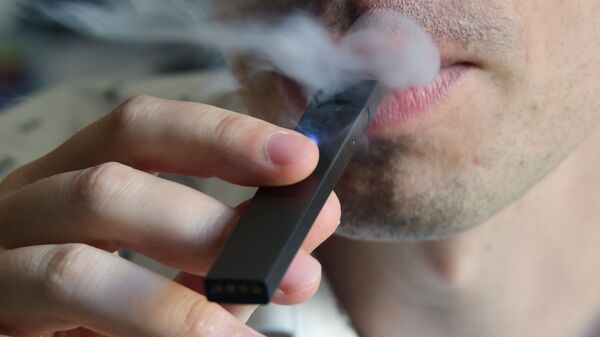
The electronic nicotine delivery system (ENDS), also known as an e-cigarette, is a battery-operated device used to inhale a selected solution containing varying levels of nicotine, an addictive chemical found in tobacco products.


A white paper released by the Indian Council of Medical Research (ICMR) in 2019 pointed out that e-cigarettes, especially when used by infants, have adverse effects on the cardiovascular system, disrupt respiratory and immune cell functions, and damage the airways, similar to the effects of cigarette smoking.


The group Mothers Against Vaping revealed to Mint that they are concerned about their teenage children. Paralympic athlete and member of Mothers Against Vaping, Deepa Malik, expressed:


Banning e-cigarettes is the strategy that India needs. The ban should be strictly enforced to suppress any lobbying that may weaken it. We need children to engage in sports activities to make India proud, rather than succumb to new addictions and lose their future.


Currently, the government has issued a total of 14,795 fines under Section 6 of the 2003 Tobacco and Other Smoking Products Act for selling cigarettes and other tobacco products to individuals under the age of 18.


According to a report by the World Health Organization (WHO), around 30 countries including Mauritius, Australia, Singapore, South Korea, Sri Lanka, Thailand, Brazil, Mexico, Uruguay, Bahrain, Iran, Saudi Arabia, and the United Arab Emirates have banned Electronic Nicotine Delivery Systems (ENDS).


We welcome news tips, article submissions, interview requests, or comments on this piece.

Please contact us at info@2firsts.com, or reach out to Alan Zhao, CEO of 2Firsts, on LinkedIn


Notice

1.  This article is intended solely for professional research purposes related to industry, technology, and policy. Any references to brands or products are made purely for objective description and do not constitute any form of endorsement, recommendation, or promotion by 2Firsts.

2.  The use of nicotine-containing products — including, but not limited to, cigarettes, e-cigarettes, nicotine pouchand heated tobacco products — carries significant health risks. Users are responsible for complying with all applicable laws and regulations in their respective jurisdictions.

3.  This article is not intended to serve as the basis for any investment decisions or financial advice. 2Firsts assumes no direct or indirect liability for any inaccuracies or errors in the content.

4.  Access to this article is strictly prohibited for individuals below the legal age in their jurisdiction.


Copyright


This article is either an original work created by 2Firsts or a reproduction from third-party sources with proper attribution. All copyrights and usage rights belong to 2Firsts or the original content provider. Unauthorized reproduction, distribution, or any other form of unauthorized use by any individual or organization is strictly prohibited. Violators will be held legally accountable.

For copyright-related inquiries, please contact: info@2firsts.com


AI Assistance Disclaimer


This article may have been enhanced using AI tools to improve translation and editorial efficiency. However, due to technical limitations, inaccuracies may occur. Readers are encouraged to refer to the cited sources for the most accurate information.

We welcome any corrections or feedback. Please contact us at: info@2firsts.com

FDA Proposes Foreign Tobacco Factory Registration Rule to Tighten Import Oversight
The FDA has proposed a rule requiring foreign tobacco manufacturers to register facilities and list products before exporting to the U.S. If finalized, the rule could affect overseas OEM/ODM factories, contract manufacturers, specification developers, bulk product makers, and repackaging or relabeling firms. FDA says the proposal would help identify unauthorized imported tobacco products, including e-cigarettes.
Special Report
Jun.26
KT&G’s Lil Strengthens Market Lead in Korea as Heated Tobacco Share Reaches 47.4%
According to South Korea’s UpKorea, KT&G’s heated tobacco brand Lil reached a 47.4% share of Korea’s heated tobacco stick market in the first quarter of 2026. The company is expanding its next-generation products (NGP) business through product development, technology investment and overseas growth. KT&G reported NGP sales of 890.1 billion won (approximately US$650 million) in 2025, up significantly from 279.3 billion won in 2020. Lil products are now available in 34 markets, while KT&G continues building its technology portfolio through patents and multiple product platforms.
Jul.23
2FIRSTS EXCLUSIVE|China Breaks Up $6.8 Million Illegal Hookah Tobacco Operation as Market Expands
Chinese authorities have dismantled an illegal hookah tobacco operation worth more than 46 million yuan ($6.8 million), detaining five foreign suspects and seizing over 500,000 boxes of tobacco paste. The case comes as hookah expands across China’s nightlife sector and attracts overseas operators, including former vaping entrepreneurs. It also raises a central regulatory question: whether waterpipe tobacco will follow China’s private-sector e-cigarette licensing model or be reserved for the state tobacco system, as with nicotine pouches, in the years ahead.
Jul.31
Sesh touts independence, 8VC backing and retail reach as it challenges tobacco-owned pouch brands
U.S. nicotine pouch brand Sesh has emphasized its independence from Altria, Philip Morris International and British American Tobacco, along with backing from investors including 8VC, celebrity supporters and a retail footprint of more than 7,500 stores, as it seeks to differentiate itself in a market where major pouch brands are owned by large tobacco companies.
Regulations
Jul.07 by 2Firsts Perspectives
PMI Expands IQOS and VEEV Presence at Frankfurt Airport Through Travel Retail Pop-Ups
According to The Moodie Davitt Report, PMI Global Travel Retail and Frankfurt Airport Retail have launched new IQOS and VEEV retail spaces at Frankfurt Airport. The installations, located inside and outside duty-free areas, showcase IQOS heated tobacco products and VEEV e-vapor products through product education, consumer interaction and brand experiences. Frankfurt Airport Retail, operated by Fraport Group and Gebr. Heinemann, manages key retail activities at Frankfurt Airport. The initiative follows PMI’s broader strategy of expanding smoke-free products through global travel retail channels. PMI has previously introduced VEEV products across multiple European airports while continuing to expand IQOS and VEEV availability in international markets.
Jul.17
China Discloses First Criminal Case Over Counterfeit Vapes Disguised as “Medical Nebulizers” and “Zero-Nicotine” Products
Chinese authorities have disclosed the country’s first reported criminal case involving counterfeit vapes marketed as “medical nebulizers” and “zero-nicotine” products. Authorities determined that the products involved were counterfeit vapes and pursued criminal charges for producing and selling counterfeit goods. According to the report, the case resulted in the seizure of 347,000 counterfeit vape pods and 53,700 vape devices, with physical goods valued at 22.13 million yuan.
Aug.04